'You're crazy/restless/brave.'
Only when I have to be.
"All Roads Lead Home," at From This Side of the Pond.
Tuesday, April 19, 2016


Fashion Revolution Week: Haulternatives on coats and jackets
The Fashion Revolution people, aiming at a crowd apparently much younger than I am, suggest that those wanting to share creative Haulternatives this week should post a You-tube video. Since I don't make videos, my contribution is here on the blog, and probably two people will see it. But that's okay.
We are actually no strangers here to posting about "haulternatives," since a lot of our frugal homeschooling posts and craft posts over the past decade have been "look what we found, look what we're doing with it." But here's one for clothing. If you want to get involved in this, you can focus on vintage, fixer-uppers, used stuff, or just some favourite piece of clothing that you've worn forever. The point is to get away from "look what I bought new today."
(Some of this you've heard about before, if you climb up here occasionally.)
Awhile ago I read something online about sewing a coat from a thrift-shopped blazer plus its matching skirt. That sounded a little complicated for me, but I did remember passing over several skirt suits at the thrift store, mainly because I don't wear skirt suits, so I decided to have a look the next time I was there. They did have a purple, hand-made, faux-suede suit with an extra-long jacket, so long that you could just wear it as a coat without doing any fixing. But the suit was priced at an incredible $15, so I moved on. It didn't sell (big surprise?), and the next time I was in the store, it turned up on the dollar rack. For a dollar, I was happy to take it home and wear the jacket as a spring coat.
 The skirt, I wasn't so sure about. I could have just sent it back to the thrift store, but I decided to turn it into a tote bag instead. Obviously I can't wear the coat and carry the bag at the same time, but otherwise it was a good idea, and I've used the bag a lot this spring.
My other spring coat also cost a dollar. It was a too-long trench coat that I cut down to jacket length. Getting the front corners sewn down completely was the trickiest part, and I didn't get them 100% perfect (not bad, though); but I don't mind.
 I looked through jean jackets at the thrift store a few times, but what they had was mostly heavier and either younger or more "boy" than I was looking for. Last week we were at a different used-clothing store and I found a denim shirt that can also work as a lightweight jacket. Plus it has some embroidery and other prettiness on it.


We are actually no strangers here to posting about "haulternatives," since a lot of our frugal homeschooling posts and craft posts over the past decade have been "look what we found, look what we're doing with it." But here's one for clothing. If you want to get involved in this, you can focus on vintage, fixer-uppers, used stuff, or just some favourite piece of clothing that you've worn forever. The point is to get away from "look what I bought new today."
(Some of this you've heard about before, if you climb up here occasionally.)
Awhile ago I read something online about sewing a coat from a thrift-shopped blazer plus its matching skirt. That sounded a little complicated for me, but I did remember passing over several skirt suits at the thrift store, mainly because I don't wear skirt suits, so I decided to have a look the next time I was there. They did have a purple, hand-made, faux-suede suit with an extra-long jacket, so long that you could just wear it as a coat without doing any fixing. But the suit was priced at an incredible $15, so I moved on. It didn't sell (big surprise?), and the next time I was in the store, it turned up on the dollar rack. For a dollar, I was happy to take it home and wear the jacket as a spring coat.
My other spring coat also cost a dollar. It was a too-long trench coat that I cut down to jacket length. Getting the front corners sewn down completely was the trickiest part, and I didn't get them 100% perfect (not bad, though); but I don't mind.

At the same store, I found a short-sleeved cardigan. It's labelled several sizes too big for me, but I guess that depends what you want it for. I wanted it longer (on me, that's easy, I'm short), and looser; but still, it seems closer to my own size than to something XXXL.

So the classic piece of thrifting advice is to be flexible and look beyond size labels and rack markers. And categories (suit? coat? skirt? bag?). You can find what you need. Sometimes it just takes time.
Monday, April 18, 2016
Decluttering Scavenger Hunt (want to play?)
The list of items for this decluttering scavenger hunt came from the BeMoreWithLess website. It's supposed to be a family or a group challenge, but I'm playing by myself (occasionally passing something by Mr. Fixit).
1 small kitchen appliance (toaster, food processor, juicer, blender – if you don’t use it, lose it):


3 items from your closet that do not fit you: none, unless you count the Peanuts t-shirt I wore as a toddler
1 item from your closet that still has tags: I couldn't find anything.
20 hidden items (stuffed in your garage, shed, or another hidden storage area):

2 coffee mugs: we already did those
any candle holder that hasn’t held a candle in more than 6 months
 2 winter coats: we already cleaned those out
5 trinkets: I do have a box with some ornaments that could find a new home
10 products in your bathroom that you haven’t used in more than 2 months: n/a
2 pieces of art that you don’t like to look at or haven’t looked at in months because they aren’t on the wall: n/a
any expired food in your fridge or freezer (toss this please): n/a
any unopened, unexpired food in your pantry that you aren’t going to eat (donate this please): n/a
2 tools you haven’t used in more than a year: the tools are Mr. Fixit's domain.
1 collection of goods to support a hobby you gave up (if you stopped camping, sewing, fishing, or coin collecting … it goes): n/a
5 pieces from a junk drawer that you’ve been saving just in case (even though you don’t know how to use them): n/a
2 throw pillows that should have been thrown months ago: already did that
10 books: I've gotten rid of a lot already.
2 cookbooks: already did that
kids' toys in storage: Lydia cleaned out a few things, plus we sent a bagful of crayons and markers to the thrift store earlier this week.
10 mystery items (anything goes):


1 small kitchen appliance (toaster, food processor, juicer, blender – if you don’t use it, lose it):


coffee percolator (an extra) and food processor (we have a newer, smaller one)
3 items from your closet that do not fit you: none, unless you count the Peanuts t-shirt I wore as a toddler
1 item from your closet that still has tags: I couldn't find anything.
20 hidden items (stuffed in your garage, shed, or another hidden storage area):

bunch of kids' mittens and hats; I'm sure those add up to twenty
2 coffee mugs: we already did those
any candle holder that hasn’t held a candle in more than 6 months

5 trinkets: I do have a box with some ornaments that could find a new home
10 products in your bathroom that you haven’t used in more than 2 months: n/a
2 pieces of art that you don’t like to look at or haven’t looked at in months because they aren’t on the wall: n/a
any expired food in your fridge or freezer (toss this please): n/a
any unopened, unexpired food in your pantry that you aren’t going to eat (donate this please): n/a
2 tools you haven’t used in more than a year: the tools are Mr. Fixit's domain.
1 collection of goods to support a hobby you gave up (if you stopped camping, sewing, fishing, or coin collecting … it goes): n/a
5 pieces from a junk drawer that you’ve been saving just in case (even though you don’t know how to use them): n/a
2 throw pillows that should have been thrown months ago: already did that
10 books: I've gotten rid of a lot already.
2 cookbooks: already did that
kids' toys in storage: Lydia cleaned out a few things, plus we sent a bagful of crayons and markers to the thrift store earlier this week.
10 mystery items (anything goes):

Loaf pan cozy

Valentine's Day stash

DVD sets

Pencil case

Unidentifiable objects

Stationery. I decided to rescue the binder, though.
Well, that was fun, wasn't it?
Fashion Revolution Week (something to watch)
Fashion Revolution home page
We never used to ask. Clothes were clothes, stores were stores, fabric was fabric. You bought what you needed, full price or on sale. Usually the stuff held up for awhile. Occasionally you were disappointed.
Things changed. We became more aware. Some of us, for other reasons such as economy, have been doing the now-trendy used clothing thing all along.
But what really surprised me was not more information about working conditions or who makes the clothes. We've heard the same stories about bananas, chocolate, coffee beans, sugar: the big companies, the workers, the question of giving people employment even if it's not great employment. Even as we stir sugar into our coffee or peel a banana, we know all that. We may not know quite what to do with it, but we do know.
The surprise, for me, was the reported amount of clothing dumped in landfills. Clothes in the garbage? Um, well, I do toss spent socks and underthings (most of what gets tossed wouldn't even make cute little toys). But almost anything else that we can't use in some way ourselves gets donated, because I know that even ratty t-shirts can be made into rags and other recycled stuff, if they're given to a place (like our MCC store) that has the volunteer base to sort them out. That, like buying things used, has never been so much a commitment as just a habit, what we do. Who puts that many clothes in the garbage?
Well, according to the video The Life of Used Clothing, an awful lot of people. Which makes me think that the clothes dumpers must be buying an awful lot more clothing, new or used, than I do, or people I know do; if the scenario of buy it, wear it briefly, trash it is so widespread.
And the reason I'm sharing that video link is that, unlike some of the shame documentaries, it offers a positive message. Strangely enough, we can make a good thing out of North American nutty buying habits: donated clothing can be sent overseas and used to start used-clothing microbusinesses in other countries. Somebody buys a bale of clothing, sets up shop in a marketplace or even a mall, and makes some money out of it. There are also businesses that buy up unsalable clothing and turn it into stuffing material and that sort of thing, again providing employment.
That doesn't change the issues of over-advertising, overbuying, or substandard factory production. But it does shed a new light on the power of donating instead of dumping.
We never used to ask. Clothes were clothes, stores were stores, fabric was fabric. You bought what you needed, full price or on sale. Usually the stuff held up for awhile. Occasionally you were disappointed.
Things changed. We became more aware. Some of us, for other reasons such as economy, have been doing the now-trendy used clothing thing all along.
But what really surprised me was not more information about working conditions or who makes the clothes. We've heard the same stories about bananas, chocolate, coffee beans, sugar: the big companies, the workers, the question of giving people employment even if it's not great employment. Even as we stir sugar into our coffee or peel a banana, we know all that. We may not know quite what to do with it, but we do know.
The surprise, for me, was the reported amount of clothing dumped in landfills. Clothes in the garbage? Um, well, I do toss spent socks and underthings (most of what gets tossed wouldn't even make cute little toys). But almost anything else that we can't use in some way ourselves gets donated, because I know that even ratty t-shirts can be made into rags and other recycled stuff, if they're given to a place (like our MCC store) that has the volunteer base to sort them out. That, like buying things used, has never been so much a commitment as just a habit, what we do. Who puts that many clothes in the garbage?
Well, according to the video The Life of Used Clothing, an awful lot of people. Which makes me think that the clothes dumpers must be buying an awful lot more clothing, new or used, than I do, or people I know do; if the scenario of buy it, wear it briefly, trash it is so widespread.
And the reason I'm sharing that video link is that, unlike some of the shame documentaries, it offers a positive message. Strangely enough, we can make a good thing out of North American nutty buying habits: donated clothing can be sent overseas and used to start used-clothing microbusinesses in other countries. Somebody buys a bale of clothing, sets up shop in a marketplace or even a mall, and makes some money out of it. There are also businesses that buy up unsalable clothing and turn it into stuffing material and that sort of thing, again providing employment.
That doesn't change the issues of over-advertising, overbuying, or substandard factory production. But it does shed a new light on the power of donating instead of dumping.
Sunday, April 17, 2016
That's a bit oversimplified
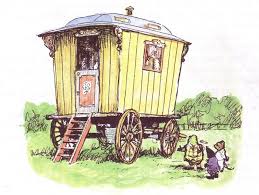
Their idea of helpful advice hasn't changed much since then, at least in this revolutionary new report about decluttering and simplifying.
"Our research shows that happiness spikes when people take deliberate steps to make life more manageable and embrace a philosophy of voluntary simplicity.”Seriously? I don't know exactly what the study studied, but those results seem to be kind of a no-brainer; isn't that what the whole first chapter of The Wind in the Willows is about?

“The most popular step is decluttering the house and getting rid of extra stuff...Other easy steps include managing emails, using a calendar system and even just ordering-in dinners occasionally.”
I hope that was helpful.

Thursday, April 14, 2016
Quote for the day: we are among supernatural things always
From John Inglesant, by John Henry Shorthouse
A young man in the 17th century is caught between religious teachings; everyone tells him something different, everyone has an agenda. Finally he seeks out his first teacher, an old man he hasn't seen in years, and asks his opinion on what is true.
"[You should] not think this life a low and poor place in which to seek the Divine Master walking to and fro. These high matters of which you speak, and this heavenly life, is not to be disbelieved, only it seems to me—more and more—that the soul or spirit of every man in passing through life among familiar things is among supernatural things always, and many things seem to me miraculous, which men think nothing of, such as memory, by which we live again in place and time—and of which, if I remember rightly, for I am a very poor scholar, you doubtless know, St. Augustine says many pertinent things—and the love of one another, by which we are led out of ourselves, and made to act against our own nature by that of another, or, rather, by a higher nature than that of any of us; and a thousand fancies and feelings which have no adequate cause among outward things. Here, in this book which I was reading when you so kindly came to see me, are withered flowers, which I have gathered in my rambles, and keep as friends and companions of pleasant places, streams and meadows, and of some who have been with me, and now are not. There is one, this single yellow flower—it is a tormentilla, which is good against the plague—what is it, that, as I hold it, makes me think of it as I do? Faded flowers have something, to me, miraculous and supernatural about them; though, in fact, it is nothing wonderful that the texture of a flower being dried survives. It is not in the flower, but in our immortal spirit that the miracle is. All these delightful thoughts that come into my mind when I look at this flower—thoughts, and fancies, and memories—what are they but the result of the alchemy of the immortal spirit, which takes all the pleasant, fragile things of life, and transmutes them into immortality in our own nature! And if the poor spirit and intellect of man can do this, how much more may the supreme creative intellect mould and form all things, and bring the presence of the supernatural face to face with us in our daily walk! Earth becomes to us, if we thus think, nothing but the garden of the Lord..."
A young man in the 17th century is caught between religious teachings; everyone tells him something different, everyone has an agenda. Finally he seeks out his first teacher, an old man he hasn't seen in years, and asks his opinion on what is true.
"[You should] not think this life a low and poor place in which to seek the Divine Master walking to and fro. These high matters of which you speak, and this heavenly life, is not to be disbelieved, only it seems to me—more and more—that the soul or spirit of every man in passing through life among familiar things is among supernatural things always, and many things seem to me miraculous, which men think nothing of, such as memory, by which we live again in place and time—and of which, if I remember rightly, for I am a very poor scholar, you doubtless know, St. Augustine says many pertinent things—and the love of one another, by which we are led out of ourselves, and made to act against our own nature by that of another, or, rather, by a higher nature than that of any of us; and a thousand fancies and feelings which have no adequate cause among outward things. Here, in this book which I was reading when you so kindly came to see me, are withered flowers, which I have gathered in my rambles, and keep as friends and companions of pleasant places, streams and meadows, and of some who have been with me, and now are not. There is one, this single yellow flower—it is a tormentilla, which is good against the plague—what is it, that, as I hold it, makes me think of it as I do? Faded flowers have something, to me, miraculous and supernatural about them; though, in fact, it is nothing wonderful that the texture of a flower being dried survives. It is not in the flower, but in our immortal spirit that the miracle is. All these delightful thoughts that come into my mind when I look at this flower—thoughts, and fancies, and memories—what are they but the result of the alchemy of the immortal spirit, which takes all the pleasant, fragile things of life, and transmutes them into immortality in our own nature! And if the poor spirit and intellect of man can do this, how much more may the supreme creative intellect mould and form all things, and bring the presence of the supernatural face to face with us in our daily walk! Earth becomes to us, if we thus think, nothing but the garden of the Lord..."
Wednesday, April 13, 2016
There's still some roooom (AO Conference in Texas)

Join us at the AmblesideOnline Deep in the Heart of AO Conference, May 19-21 2016.
(Cow graphic courtesy of Brandy Vencel)
Wednesday Hodgepodge: Spaghetti Dreams Edition
Notes from our Hodgepodge hostess: "Here are the questions to this week's Wednesday Hodgepodge. Answer on your own blog, then hop back here tomorrow to share answers with the universe."
 1. What's the last thing you did that could be described as 'taxing'?
Shovelling slushy snow when we should have been seeing dry pavement.
2. If you could plant a garden of anything, what would be in it?
Oh, that's fun...real or imaginary? Something to eat? How about...muffin bushes?
Or if you were serious: I would plant some tomatoes, zucchini and peppers, and hope that the bugs and critters didn't get to them before I did. We must be the only people on the planet who don't have much luck with zucchini.
3. April 10-16 is National Library Week...will you celebrate with a visit to your nearest library? When did you last make a trip to the library? What are you reading right now? What's one title on your want-to-read list?
I am having trouble even getting to our regular library because of road construction; and the one further away has to be a special trip. So I've been splitting my reading between what's already on the shelf, and the library books I can download for free through Overdrive. But the sun is shining and I might try walking over there today.
On the list of books I don't own, and that I don't think are at our library, is The Singing Bowl, poems by Malcolm Guite. And along with that, I want to actually read Twenty Thousand Leagues Under the Sea. The Apprentice (our oldest) read it for homeschool, but she read it to herself and I never got through the whole thing.
4. Share a saying or an old wives tale you heard while growing up, you believed to be true or that you paid attention to 'just in case'?
That eating anything strange before bed would give you bad dreams. It always seemed to come true in stories.
5. Are you a fan of onions? Garlic? Ginger? What's a dish you love that contains one, two or all three items listed?
Of the three, ginger. But honey-garlic chicken is good too.
6. Where does nurturing end and indulging begin? What are some skills or qualities you think a person needs to posess in order to be viewed as mature?
Some friends and I had a discussion about this awhile ago. Indulging is a parent having to phone their adult offspring's boss to say that said offspring is too sick to come in to work, since if offspring was not living at home, they'd have to do the phoning themselves anyway. Most of us agreed with that, although I was willing to plump for "well, there might be circumstances..."
7. What leading figure in any field would you like to hear speak, and why?
Oh, I can think of several writers and thinkers and teachers I'd wish would make a stop by here.
How about Frederick Buechner?
8. Insert your own random thought here.
We get a NYT section in the weekend paper, and there was a column this week that mentioned the idea of "erasing" people, or groups of people, that we don't like. Not physically killing them, but, perhaps, moving them out of our awareness. We were watching the Mr. Selfridge television series (which I have mixed feelings about, but we're still watching it), and one storyline in the first season concerned a store employee who was let go for petty theft, who then could not get another job and was so desperate that she threw herself in front of an underground train. This caused her co-workers to wonder if they were wrong to try to "erase" this woman from their lives, because of her mistake. One of the best articles I've read this week is Compassion Needs Imagination at the Circe Institute blog. The last church sermon I heard spoke about the definition of grace (shouldn't every sermon be about grace? The Lutherans at least would say yes), and grace definitely includes compassion. The article quotes Atticus Finch and his attempt to define compassion to his daughter:

Shovelling slushy snow when we should have been seeing dry pavement.
2. If you could plant a garden of anything, what would be in it?
Oh, that's fun...real or imaginary? Something to eat? How about...muffin bushes?
Or if you were serious: I would plant some tomatoes, zucchini and peppers, and hope that the bugs and critters didn't get to them before I did. We must be the only people on the planet who don't have much luck with zucchini.
3. April 10-16 is National Library Week...will you celebrate with a visit to your nearest library? When did you last make a trip to the library? What are you reading right now? What's one title on your want-to-read list?
I am having trouble even getting to our regular library because of road construction; and the one further away has to be a special trip. So I've been splitting my reading between what's already on the shelf, and the library books I can download for free through Overdrive. But the sun is shining and I might try walking over there today.
On the list of books I don't own, and that I don't think are at our library, is The Singing Bowl, poems by Malcolm Guite. And along with that, I want to actually read Twenty Thousand Leagues Under the Sea. The Apprentice (our oldest) read it for homeschool, but she read it to herself and I never got through the whole thing.
4. Share a saying or an old wives tale you heard while growing up, you believed to be true or that you paid attention to 'just in case'?
That eating anything strange before bed would give you bad dreams. It always seemed to come true in stories.
Peter and the Story Girl, so it appeared, had wooed wild dreams to their pillows by the simple device of eating rich, indigestible things before they went to bed. Aunt Olivia knew nothing about it, of course. She permitted them only a plain, wholesome lunch at bed-time. But during the day the Story Girl would smuggle upstairs various tidbits from the pantry, putting half in Peter's room and half in her own; and the result was these visions which had been our despair.
"Last night I ate a piece of mince pie," she said, "and a lot of pickles, and two grape jelly tarts. But I guess I overdid it, because I got real sick and couldn't sleep at all, so of course I didn't have any dreams. I should have stopped with the pie and pickles and left the tarts alone. Peter did, and he had an elegant dream that Peg Bowen caught him and put him on to boil alive in that big black pot that hangs outside her door. He woke up before the water got hot, though." L.M. Montgomery, The Story Girl
5. Are you a fan of onions? Garlic? Ginger? What's a dish you love that contains one, two or all three items listed?
Of the three, ginger. But honey-garlic chicken is good too.
6. Where does nurturing end and indulging begin? What are some skills or qualities you think a person needs to posess in order to be viewed as mature?
Some friends and I had a discussion about this awhile ago. Indulging is a parent having to phone their adult offspring's boss to say that said offspring is too sick to come in to work, since if offspring was not living at home, they'd have to do the phoning themselves anyway. Most of us agreed with that, although I was willing to plump for "well, there might be circumstances..."
7. What leading figure in any field would you like to hear speak, and why?
Oh, I can think of several writers and thinkers and teachers I'd wish would make a stop by here.
How about Frederick Buechner?
8. Insert your own random thought here.
We get a NYT section in the weekend paper, and there was a column this week that mentioned the idea of "erasing" people, or groups of people, that we don't like. Not physically killing them, but, perhaps, moving them out of our awareness. We were watching the Mr. Selfridge television series (which I have mixed feelings about, but we're still watching it), and one storyline in the first season concerned a store employee who was let go for petty theft, who then could not get another job and was so desperate that she threw herself in front of an underground train. This caused her co-workers to wonder if they were wrong to try to "erase" this woman from their lives, because of her mistake. One of the best articles I've read this week is Compassion Needs Imagination at the Circe Institute blog. The last church sermon I heard spoke about the definition of grace (shouldn't every sermon be about grace? The Lutherans at least would say yes), and grace definitely includes compassion. The article quotes Atticus Finch and his attempt to define compassion to his daughter:
“If you can learn a simple trick, Scout, you’ll get along a lot better with all kinds of folks. You never really understand a person until you consider things from his point of view—”Which, we hope, is one of the things that reading does for us.
“—until you climb into his skin and walk around in it.”

Tuesday, April 12, 2016
Planet June, smart crocheting lady (a new technique)

We never stop learning.
Re-posted quote for the day: Broken plates and broken plans
"There is completely no secret: just plunging in, allowing time, making space, giving energy, tending each situation with warm-hearted effort. The spoon, the knife, the food, the hunger; broken plates and broken plans. Play, don't work. Work it out." ~~ Edward Espe Brown, Tassajara Cooking (1973)
Friday, April 08, 2016

Thursday, April 07, 2016
Who's counting? The problem of minimalism
From a 2013 post: Many of our houses contain several-times-over-enough stuff already to be beautiful, functional, and express our dreams, values, and individuality. At church we are watching a DVD series with Dallas Willard, and in yesterday's session he stated that humans are "treasuring creatures." Our "things" are important to us; they give us identity; they give us comfort. As Edith Schaeffer says, they also give us continuity when housing has to change or life gets difficult. It's not unnatural to want to have treasured possessions, cherished things...The issue of creative homemaking for us now is often cutting down, cleaning out, detaching ourselves from enough of the "stuff" so that we can cherish the most meaningful, most memorable, most beautiful. Charlotte Mason talks about using our will to make choices, rather than just accepting whatever default options present themselves; in making our homes more homelike, that would include making conscious choices about the things you want in a room, and what you don't want.I recently read a book, Scaling Down, which had good suggestions for those who need or want to fit themselves into smaller spaces. It also deals with the issue of moving (a.k.a. uprooting) someone else, such as a senior family member. How do we manage that with empathy, when our ideas of necessary, important, cherished, may not line up with theirs? In fact, almost any attempt to tell someone else what's superfluous can be rightly seen as disrespectful and interfering. Don't love what doesn't love you back, says a popular letting-go cliche, but loving back isn't usually the real issue. Don't base your identity on possessions, says one thoughtful person; it's true that things come and go, moths and dust corrupt, paper crumbles, colours fade, and knives lose their edge. All quite right. But at the same time, the old, the saved, sometimes the hidden and then rediscovered, gives us a sense of our own history, our story; and we can't get away from that. Near where I live, modern construction was recently halted when a pioneer-era log road was uncovered several feet down. What does it matter, why didn't they just continue the work? Because people still cared about their community's past.
We have thought many times about moving from the Treehouse, probably to a smaller space. When that time comes, we may not take all the vintage Christmas balls with us; but we'll take some of them. We can't take all the books, but we'll take enough; scanned-in and downloaded ones aren't the same. We have cleared out many of the things that were easy come, easy go, and left what we really use: 80/20, as some put it.
But the old debate continues: what is necessary, and who decides? In some times and places, a pretty ribbon was vanity, a novel was a time waster, a rug in the parlour was excess. Is stuff bad in itself? If some is good or okay, how much is too much? Is it a spiritual question, or an economic one? Is it more liberating to live with almost nothing, or to have more and yet hold onto it lightly?
"...I have learned the secret of facing plenty and hunger, abundance and need. I can do all things through him who strengthens me." Philippians 4:12-13, ESV

From the archives: Knowledge and nonsense
First posted April 2006
My friend the DHM at The Common Room quoted Charlotte Mason today:
"There is absolutely no avenue to knowledge but knowledge itself, and the schools must begin, not by qualifying the mind to deal with knowledge, but by affording all the best books."--Towards a Philosophy of Education (Vol. 6), pg. 347
Did she mean the most serious books? The hardest books? The longest books?
Just before Miss Mason gets to that point in the chapter, she has been describing the sad case of two young men who had a half-baked education (in her view), who "laboured indefatigably" at making sense of the books they picked up as young adults, but who admitted themselves that "You and I go at a subject all wrong!"
What was one of the books they couldn't make sense of? Alice in Wonderland.
I found this posted on the Catholic Culture blog:
My friend the DHM at The Common Room quoted Charlotte Mason today:
"There is absolutely no avenue to knowledge but knowledge itself, and the schools must begin, not by qualifying the mind to deal with knowledge, but by affording all the best books."--Towards a Philosophy of Education (Vol. 6), pg. 347
Did she mean the most serious books? The hardest books? The longest books?
Just before Miss Mason gets to that point in the chapter, she has been describing the sad case of two young men who had a half-baked education (in her view), who "laboured indefatigably" at making sense of the books they picked up as young adults, but who admitted themselves that "You and I go at a subject all wrong!"
What was one of the books they couldn't make sense of? Alice in Wonderland.
Deeply impressed he bought the book as soon as he returned to London and read it earnestly. To his horror he saw no sense in it. Then it struck him that it might be meant as nonsense and he had another try, then he concluded that it was rather funny but he remained disappointed.So we have to give our children more than facts, more than vocabulary drills. Knowledge, yes...the DHM's post points that out well, along with the sad fact of our culture's anti-knowledge bent. But also another kind of knowing...an understanding of laughter and nonsense that goes beyond the usual nose-picking humor found in childrens' books. They need to meet characters like my aged Uncle Arly, sitting on a heap of barley...and the Humbug...and the White Knight, one of my favourite characters in any book. They need some silliness, some furry squirrel puppets (I promise we'll do a post about Dewey soon), some knock-knock jokes, some James Thurber, and eventually some Wodehouse and Chesterton. They need to let their brains learn to play and dance and jump around with all the wonderful connections that a sense of nonsense allows. They need some nonsense so they can understand inventiveness...and a mandatory credit in inventiveness and creativity will not substitute.
Here, again, is another evidence of the limitations attending an utter absence of education. A cultivated sense of humour is a great factor in a joyous life, but these young men are without it. Perhaps the youth addicted to sports usually fails to appreciate delicate nonsense; sports are too strenuous to admit of a subtler, more airy kind of play....
I found this posted on the Catholic Culture blog:
A friend said all this reminded him of the scene in The Chronicles of Narnia where Aslan (God) creates Narnia, including an odd little bird which, like all the animals, can talk. The bird says something ridiculous and all the other creatures laugh. Turning to Aslan, the bird says, “Oh, Aslan, have I made the first joke?” “No,” Aslan replies, “you are the first joke.” My friend says there is a moral here.I think he's right.

Wednesday, April 06, 2016
Once upon a time and a very good time it was there was a moocow coming down along the road
Join us at the AmblesideOnline Deep in the Heart of AO Conference, May 19-21 2016.
(Cow graphic courtesy of Brandy Vencel)

Oh yes, please do read this today
More than once, I've gone back to Wendell Berry's novel Hannah Coulter; even posted about it here in relation to the way the children in the Branch family grew up, learning what they needed to learn and doing what they needed to do. One of the latest Circe Institute blog posts looks at the theme of education throughout the book, discussing what happened to Hannah's own children (who became successful in the modern sense, but lost too much personally). As the article asks, does schooling (and then work outside the home) have to mean the loss of one's roots?
Monday, April 04, 2016

Wednesday, March 30, 2016
Some special stuff coming on Project 333
For anyone interested in Courtney Carver's Be More with Less / Project 333, she has an upcoming webinar planned, and you can also win a personal session with her. Details here.
(Nobody's asked me to post that, I just thought I'd pass it on.)
Wednesday Hodgepodge: almost an April Fool
From our Hodgepodge hostess: "Here are this week's questions to the Wednesday Hodgepodge. Answer on your own blog then spring back here tomorrow to share answers with the universe. See you there!"
1. What are two or three expectations you have of yourself?
Oh dear, you're not starting us off easy this week!
And I'm honestly not sure how to answer that one. Are expectations different from wishes, goals, or things we take for granted?
2. In what way does your outdoor space need sprucing up this spring?
It's too early for gardening here. But we have been doing a bit of yard raking and cleanup, since the last snow melted: Mr. Fixit makes the piles, I fill the bags.
Yesterday we saw the first violet in the yard.
3. According to this site (Roadtrippers), six of North America's most wondrous waterfalls are-Webster's Falls in Ontario, Upper Whitewater Falls in North Carolina, Havasu Falls in the Grand Canyon, Multnomah Falls in Oregon, The Lower Yellowstone Falls, and Niagara. Have you seen any on the list? Which one on the list would you most like to visit? Prettiest waterfall not on the list that you've seen in person?

I haven't even been to Webster's Falls, although that's the closest of those on the list. But I have seen Niagara Falls a few times, and Montmorency Falls in Quebec. I like the Elora Gorge Falls, also in southern Ontario.
4. Looking back, what's something you wish you'd done as a teenager?
Learned to drive.
5. Ham...yes please or no thank you? If you said yes please which of the following do you like best-baked ham with all the trimmings, a ham and cheese sandwich, prosciutto with melon, a ham biscuit, a bowl of split pea and ham soup, or a slice of pizza topped with ham and pineapple?
Ham (pork in general) seems to be unfashionable now, but we still eat it. Not "with all the trimmings," usually, but just baked in a roaster, and then the leftovers made into sandwiches the next day.
6. Are you typical of your generation? How so?
Another tough one. I would say somewhat yes, somewhat no. Most women my age have spent more time working away from home than I did, although some of them may be winding down their careers. Some of them already have grandchildren, but we're not there yet. I do blog, but don't Facebook; I don't go to a gym or jog. But if we're talking about fiftyish mindsets compared to thirtyish or twentyish...yes, I think I'm more like my own age group. I grew up when phones were attached to walls, and we used to go to our trailer without any phones whatsoever...or an answering machine at home. T.V. shows were on once a week (and if you missed an episode of Mork and Mindy, maybe you could catch the rerun later in the season), and photocopies were something maybe your dad could get done for you at the office, if you asked nicely and didn't need too many. Computers were something you wrote programs for in tenth grade math class (and they came with tape recorders to hold your work). Record clubs actually sent records. Gift certificates came on paper, not plastic cards.
It's not that we haven't kept up with technology and the times, it's more that we remember when there were other ways to do things.
7. April rolls in at the end of the week, and in keeping with that theme...'act the fool', 'nobody's fool' 'a fool's errand', 'could have fooled me'...which foolish idiom most recently applies to you?
One of my favourite poems right now is Eliot's "The Love Song of J. Alfred Prufrock." In spite of being done to death in English classes, it's quite marvellous, and Anthony Hopkins does a great job reading it. It's about many things, but one of them is worry about getting old (he says the eternal footman is holding his coat and snickering), people's expectations, trying to see or talk about things beyond the everyday routine, but worrying either that he'll look like a fool or just be ignored.
8. Insert your own random thought here.
It's definitely a random week. There are scenes or two I'd like to see start, but I'm trying to be politic, cautious, and meticulous. I'm waiting for certain things to transpire, another shoe or three to drop, before I can make plans for more than just the stretch of road immediately ahead. But, on the other hand, who can ever do much more than that?
Linked from No Foolin', It's the Hodgpodge at From This Side of the Pond.
Oh dear, you're not starting us off easy this week!
And I'm honestly not sure how to answer that one. Are expectations different from wishes, goals, or things we take for granted?
2. In what way does your outdoor space need sprucing up this spring?
It's too early for gardening here. But we have been doing a bit of yard raking and cleanup, since the last snow melted: Mr. Fixit makes the piles, I fill the bags.
Yesterday we saw the first violet in the yard.
3. According to this site (Roadtrippers), six of North America's most wondrous waterfalls are-Webster's Falls in Ontario, Upper Whitewater Falls in North Carolina, Havasu Falls in the Grand Canyon, Multnomah Falls in Oregon, The Lower Yellowstone Falls, and Niagara. Have you seen any on the list? Which one on the list would you most like to visit? Prettiest waterfall not on the list that you've seen in person?

I haven't even been to Webster's Falls, although that's the closest of those on the list. But I have seen Niagara Falls a few times, and Montmorency Falls in Quebec. I like the Elora Gorge Falls, also in southern Ontario.
4. Looking back, what's something you wish you'd done as a teenager?
Learned to drive.
5. Ham...yes please or no thank you? If you said yes please which of the following do you like best-baked ham with all the trimmings, a ham and cheese sandwich, prosciutto with melon, a ham biscuit, a bowl of split pea and ham soup, or a slice of pizza topped with ham and pineapple?
Ham (pork in general) seems to be unfashionable now, but we still eat it. Not "with all the trimmings," usually, but just baked in a roaster, and then the leftovers made into sandwiches the next day.
6. Are you typical of your generation? How so?
Another tough one. I would say somewhat yes, somewhat no. Most women my age have spent more time working away from home than I did, although some of them may be winding down their careers. Some of them already have grandchildren, but we're not there yet. I do blog, but don't Facebook; I don't go to a gym or jog. But if we're talking about fiftyish mindsets compared to thirtyish or twentyish...yes, I think I'm more like my own age group. I grew up when phones were attached to walls, and we used to go to our trailer without any phones whatsoever...or an answering machine at home. T.V. shows were on once a week (and if you missed an episode of Mork and Mindy, maybe you could catch the rerun later in the season), and photocopies were something maybe your dad could get done for you at the office, if you asked nicely and didn't need too many. Computers were something you wrote programs for in tenth grade math class (and they came with tape recorders to hold your work). Record clubs actually sent records. Gift certificates came on paper, not plastic cards.
It's not that we haven't kept up with technology and the times, it's more that we remember when there were other ways to do things.
7. April rolls in at the end of the week, and in keeping with that theme...'act the fool', 'nobody's fool' 'a fool's errand', 'could have fooled me'...which foolish idiom most recently applies to you?
One of my favourite poems right now is Eliot's "The Love Song of J. Alfred Prufrock." In spite of being done to death in English classes, it's quite marvellous, and Anthony Hopkins does a great job reading it. It's about many things, but one of them is worry about getting old (he says the eternal footman is holding his coat and snickering), people's expectations, trying to see or talk about things beyond the everyday routine, but worrying either that he'll look like a fool or just be ignored.
No! I am not Prince Hamlet, nor was meant to be;
Am an attendant lord, one that will do
To swell a progress, start a scene or two,
Advise the prince; no doubt, an easy tool,
Deferential, glad to be of use,
Politic, cautious, and meticulous;
Full of high sentence, but a bit obtuse;
At times, indeed, almost ridiculous—
Almost, at times, the Fool.
8. Insert your own random thought here.
It's definitely a random week. There are scenes or two I'd like to see start, but I'm trying to be politic, cautious, and meticulous. I'm waiting for certain things to transpire, another shoe or three to drop, before I can make plans for more than just the stretch of road immediately ahead. But, on the other hand, who can ever do much more than that?
Linked from No Foolin', It's the Hodgpodge at From This Side of the Pond.
Subscribe to:
Posts (Atom)