I have never been one to minimize on books. But you probably knew that already.
So recently I was thinking through that clothes problem of "if I buy one more thing, I'll have to get rid of something else, and I really don't want to, because I like what I have." I have a similar issue with books: they come home, by ones and twos; or long-awaited holds drop into my Overdrive account; and, like taking an overfilled buffet plate, I sometimes don't get more than a taste of them before the next clear-out. I do finish a lot of books too, but sometimes they go by too fast.
I made a list of what I need to and want to read and re-read in the coming months, including some bit-by-bit books. Where do I want to be, reading-wise, when 2020 rolls in? I have textbooks, they're high priority. Bible reading as well. But then what? Do I want to be here in a year and a half and say that I didn't crack the cover of Pilgrim's Progress in that time? Or that I made no steady progress through a Charlotte Mason volume? Or that I never did finish Wendell Berry's Sabbath poems, or The Invention of Clouds?
It's a pretty serious-looking list, but it's not impossible. Here's the thing, though: if I start throwing in more books, even good ones, something good I wanted to read is going to get edged out. See the parallel?
Of course plans can change. Books turn out to be boring, and pants ride up. Replacements are sometimes necessary. But in the meantime, I'm looking at books that didn't make the list, and thinking, "Do you really deserve shelf real estate if I have no plan to even look at you until 2020?"
Some of them do, because I know I will pull them out when I know just where that quote is, or because I suddenly want to re-read that Elizabeth Goudge forest scene. Some of them are just treasures.
Others...they're falling into the "so many books, so little time" category. Like thriftworthy clothes, great titles pop up all the time in our sorting space, between the romance novels, the diet books, and the multiple copies of Eat Pray Love. But I'm just one reader with just so much time. Knowing which books I'm looking forward to reading (textbooks included) makes it easier to thin out the rest.
Showing posts with label keeping it simple. Show all posts
Showing posts with label keeping it simple. Show all posts
Friday, August 31, 2018


Thursday, November 09, 2017
KonMari Closet, or, I'll try anything once (photos)
This wasn't so much a declutter as a reorganization and folding spree.
One thing I didn't like about the way things were was the big plastic bin full of summer clothes. I've never quite trusted it; I had the feeling it made things smell funny. The bin is still there, but now it's holding some other non-clothes stuff (that still needs sorting). About half the summer clothes (like t-shirts) came out and got put with the other clothes; the rest are in the blue fabric bin on the top shelf.

The hanging shelf used to be scarves but is now t-shirts plus winter gloves and hats.

Bin of pullovers and sweater dresses. I had the dresses hanging up, but decided to fold them since they're really long pullovers.

Basket of scarves. I seemed to have a mess of scarves, so it was nice to corral them. I am donating a few that didn't spark-so-much-joy.

Drawer of folded tops
(I did do the socks etc. etc. too, but no photos--sorry.)
Thursday, November 02, 2017
About home stuff: something to read today
Blogger Leah at StyleWise has a post up about the way homes have become, more than ever, public fishbowls for our "image." It might not be a bad image; it might be a very sharp minimalist or delightfully retro image. The point is that what you had in your house didn't matter so much in years past, any more than what your lunch looked like. Now there's a push to keep ourselves on display, and even to keep changing and updating so that "our" social media pics don't get stale.
I put "our" because even that idea is a bit contrived. Probably only a handful of people you know in real life worry about those things. Contrary to expectations, not everybody has a phone-plus. Some people I know don't even have email. Gasp.
But the push on expectations is there, and we're probably going to run into it or up against it. Like our family story about taking a Squirreling to the fast-food indoor playland for a birthday party, and discovering that it was no big deal for her little friends, who were probably there every week. Or like inviting people over who Just Don't Get It.
Well, it happens.
But read the post anyway.
Saturday, October 28, 2017
Minimalism: sometimes it's hard to count on
I've said before that my "second Bible" during our early married life was the 1990's Tightwad Gazette. Amy Dacyczyn wrote about her life as a dedicated yard-saler, stuff-stretcher, dupe-it-yourself-er, and occasional do-without-er. She described her wardrobe at the time as consisting of three pairs of jeans (this year's, last year's, and the year before's), and three pairs of sneakers (ditto).Like Amy, I have a mostly-casual lifestyle, so for a long time, I was pretty happy to follow suit. Or rather, jeans. If it came along, fit more or less, and was cheap enough, I would probably wear it. (I drew the line at mustard and orange.)
A couple of years ago, after a period of too much black stuff, I dumped almost everything and started from scratch. I also noticed the growing trend towards minimalism of all kinds. Japanese. Ecological. Inner-peaceful. What that meant for me was zeroing in on a few clothes I really liked and that fit, rather than trying to deal with my previous thrifted and freebie mishmash.
The funny part was that, once I started looking a little harder at my favourite thrift stores, I kept finding stuff I liked. (Was it all there before? I don't know.) Following the Project 333 tiny-wardrobe plan, plus our move to a smaller space, helped to keep a limit on what was hanging in the closet. But I wasn't sure if I could or should aspire to Courtney Carver's level of non-self-consciousness about clothes. (Been there, done that.) It's possible to say that time spent shopping and figuring out what to wear is, essentially, time wasted, because (Courtney asserts) nobody really notices or cares what you wear. But for me, that negative side of minimalism feels like the equivalent of "nobody notices what you cook" (well, sometimes that's true), or "nobody cares what you say." Why bother?
I find it to be the other way around. I think about and enjoy what I'm wearing, the texture of a corduroy skirt, the shade of a scarf, the way my boots fit. I like the furniture and art that we've arranged in our apartment, the flowered teapot we found on an antiquing trip, my grandfather's little chair, the doily a friend crocheted, Mr. Fixit's electronic works-in-progress spread on the table. I like the poetry books, including Wendell Berry's Sabbath poems that I found for sale along with beeswax candles and essential oils in the "hemp cafe." (I bought the book and a vegan brownie, left the rest.) I like the unexpectedness of late corn on the cob from the farm stand, and the bowl of red grapes that's waiting for dessert tonight.
My conclusion is that sometimes I just like to bother. I am happier bothering. The mistake would be if I counted on clothes, food, or other stuff to fill the empty places. Or if I started keeping score of compliments, or worrying about negative remarks.
And for that reason, I decided two things. First, I pulled out my few extra non-capsule clothes, and added them to the closet where they can be responsible for any bouts of wardrobe indecision I may incur as a result. (I'm not too worried.) Second, I won't be posting a new clothes page for the winter. I feel like I've barely gotten started wearing the fall clothes, and anyway I don't own any others to rotate them with. Snow boots, maybe, but that's it.
So: fewer numbers, less planning, at least for the next few months. Less guilt if I add in a thrifted sweater or two (I could actually use one), or wear a top I thought I wouldn't see for awhile. A little more freedom to bother...so I won't have to bother.
Friday, May 26, 2017
Quote for the day: The beauty in a working home
"Thus I find myself dreaming of the day I can go up to the checkout stand and see [my imaginary] Working Home magazine, with pictures of real people in their gardens, the old wooden tools and the bursting eggplant alongside the real gardeners...showing what life looks like in a real and functional home. There is so much in the rich potential for beauty in made-over and made-do, in homegrown and home-cooked, in mended and patchwork, in home-built and fresh-made, and the art of hybridity--the transformation of an ordinary suburban ranch or an apartment in the Bronx into a place that is full of art, and life." ~~ Sharon Astyk, Making Home
Monday, November 14, 2016
From the archives: Making it Christmas
First posted November 2012 (links edited)
This post is not about the spiritual side of Christmas, because that part of Christmas...the real, Joy-to-the-World Christmas... is there no matter what. This is more about the fun stuff: the gifts, the food, the trimmings. The things that take time, take money, or just take thought.
For some people, Christmas trimmings are new window blinds and ginger beer.
For years, people said "Dickens' Christmas stories." Plum pudding, holly and all that. But I think in more recent years a more common answer has been the Little House on the Prairiebooks, slightly ad nauseum. Tin cups, mittens, and a stick of candy, and they were so happy! For those who didn't bother to read the books, there was always that oh-so-sweet first-season T.V. episode. And it is a classic, I admit.
Okay, okay, Mama Squirrel has never quite grown up? But apparently I'm not the only one who fondly recalls the part where Betsy and the other snowbound children rummage through the storeroom for anything that might make good Christmas gifts. They come up with all kinds of kid-made crafts, and then have a sort of bazaar and do their "shopping."
In The Light at Tern Rock, those who end up using a trunkful of stored-up holiday plunder aren't there by choice, but because of a trick by the man who filled up the trunk in the first place. But never mind about the deceitful lighthouse keeper for now...it's the trunk that interests me, and it's an image that often comes to mind when I'm storing away things like the cans of cranberry sauce I bought on sale today, or a package of candles, or a crocheted bookmark. Who's the bookmark for? Sometimes I don't even know...I just keep filling the pantry shelf, and the box under the bed (or wherever it is), here and there. Then it's just as much fun pulling everything out again and figuring out: yes, there's enough chocolate for Quick Fruit and Nut Fudge...I still have lots of that blue yarn, enough to make a quick pair of slippers (yes, I do know who those are for)....I saw some cool plaid ornaments in the Chapters Christmas flyer, and I bet I could make something like that with the felt and Wonder-Under in the craft stash...Everyone's "box" is different. For one family, it's filled with MCC and World Vision catalogues, the ones where a donation pays for goats, soccer balls, clean water. Their children spend days figuring out what they can give this year. (Definitely beats the big gimme catalogue.)
And if you get to December and the box is still too empty to look like Christmas?
Then you read, or re-read, Little House in Brookfield (not the abridged version, please) and give thanks for Christmas bread. Sing a few choruses of "Christmas Day is in our grasp, So long as we have hands to clasp." And maybe read this practical post by the Prudent Homemaker: Christmas on a Zero Budget.
 As a postscript to this, there's one other magazine article I saved from several years back. It also appeared in the Chicken Soup books, and I found a version of it online. It's about a mother and two little girls who were given a Christmas food box during a difficult year--but the girls, not understanding how "poor" they were, decided to give the whole thing away to a neighbor who was even worse off. ("Even her dog was sick.") The mother's immediate reaction was "Stop! You're giving away our Christmas!" Then she thought again: no, that is how you make it Christmas.
This post is not about the spiritual side of Christmas, because that part of Christmas...the real, Joy-to-the-World Christmas... is there no matter what. This is more about the fun stuff: the gifts, the food, the trimmings. The things that take time, take money, or just take thought.
For centuries men have kept an appointment with Christmas. Christmas means fellowship, feasting, giving and receiving, a time of good cheer, home. --W. J. TuckerThese are not necessarily--in fact they're almost never--the same as the things that are advertised. They're certainly not along the lines of "buy her a diamond for Christmas."
For some people, Christmas trimmings are new window blinds and ginger beer.
Marjorie Gibson is another Guyanese who believes that Christmas in the USA cannot even come near those she experienced in Guyana.
“In Guyana you would get up in the morning and look over at your neighbour to see what type of blinds (curtains) they put up, if they have new ones. Here the blinds could be up for the whole year and it does not matter,” Gibson stated....“We do have all the traditional Christmas food," [said Marilyn Harper.] "I try to make Christmas the way I remember it in Guyana. I have everything, my ginger beer, sorrel, the black cake as usual and everything.”--"U.S.-based Guyanese Dream of Christmas in the Motherland"What has inspired your ideas about how to make Christmas? Or what a really good Christmas would be...realistic or not?
For years, people said "Dickens' Christmas stories." Plum pudding, holly and all that. But I think in more recent years a more common answer has been the Little House on the Prairiebooks, slightly ad nauseum. Tin cups, mittens, and a stick of candy, and they were so happy! For those who didn't bother to read the books, there was always that oh-so-sweet first-season T.V. episode. And it is a classic, I admit.
Christmas is for children. But it is for grownups too. Even if it is a headache, a chore, and nightmare, it is a period of necessary defrosting of chill and hide-bound hearts.--Lenora Mattingly WeberHowever, much of Mama Squirrel's holiday inspiration has come from a smaller, stranger assortment of books and even magazine articles. One was a Focus on the Family Magazine article, saved from a time before the Squirrellings were even thought of; it was an adaptation of the Advent and Christmas chapters in Together at Home, by Dean and Grace Merrill. One was The Light at Tern Rock, about Christmas spent in a lighthouse. Another was Carolyn Haywood's Snowbound with Betsy.
Okay, okay, Mama Squirrel has never quite grown up? But apparently I'm not the only one who fondly recalls the part where Betsy and the other snowbound children rummage through the storeroom for anything that might make good Christmas gifts. They come up with all kinds of kid-made crafts, and then have a sort of bazaar and do their "shopping."

In The Light at Tern Rock, those who end up using a trunkful of stored-up holiday plunder aren't there by choice, but because of a trick by the man who filled up the trunk in the first place. But never mind about the deceitful lighthouse keeper for now...it's the trunk that interests me, and it's an image that often comes to mind when I'm storing away things like the cans of cranberry sauce I bought on sale today, or a package of candles, or a crocheted bookmark. Who's the bookmark for? Sometimes I don't even know...I just keep filling the pantry shelf, and the box under the bed (or wherever it is), here and there. Then it's just as much fun pulling everything out again and figuring out: yes, there's enough chocolate for Quick Fruit and Nut Fudge...I still have lots of that blue yarn, enough to make a quick pair of slippers (yes, I do know who those are for)....I saw some cool plaid ornaments in the Chapters Christmas flyer, and I bet I could make something like that with the felt and Wonder-Under in the craft stash...Everyone's "box" is different. For one family, it's filled with MCC and World Vision catalogues, the ones where a donation pays for goats, soccer balls, clean water. Their children spend days figuring out what they can give this year. (Definitely beats the big gimme catalogue.)
And if you get to December and the box is still too empty to look like Christmas?
Then you read, or re-read, Little House in Brookfield (not the abridged version, please) and give thanks for Christmas bread. Sing a few choruses of "Christmas Day is in our grasp, So long as we have hands to clasp." And maybe read this practical post by the Prudent Homemaker: Christmas on a Zero Budget.
Gifts of time and love are surely the basic ingredients of a truly merry Christmas. - Peg Bracken.
Monday, October 17, 2016
Thought for a Monday: Shorter is better.
Need I say more?"The mind concerns itself only with thoughts, imaginations, reasoned arguments; it declines to assimilate the facts unless in combination with its proper pabulum; it, being active, is wearied in the passive attitude of a listener, it is as much bored in the case of a child by the discursive twaddle of the talking teacher as in that of a grown-up by conversational twaddle; it has a natural preference for literary form; given a more or less literary presentation, the curiosity of the mind is enormous and embraces a vast variety of subjects." ~~ Charlotte Mason, Towards a Philosophy of Education
But you might want to check out The Science Behind TED's 18-Minute Rule.
Thursday, October 13, 2016
From the archives: Wendell Berry on the complexity of simplifying
First posted October, 2009. From this interview with Jeff Fearnside in The Sun Magazine.
Berry: They didn’t have electricity. All their technology was nineteenth century. But they were satisfied, and they lived a great life — they made a great life. It was a work of art.
Fearnside: So their answer was to simplify their lives so that they required less income and could do the things they were passionate about.
Berry: They reduced costs, but when you do that, you make your life more complex. It’s much simpler to live by shopping.
Saturday, October 01, 2016
October 1st, and the Project 333 Challenge: what's your simple thing?


Enjoy it, and welcome to October.
Monday, June 13, 2016
Something to read today: "Who will you give it to?"
This blog post is about a year old, but still interesting because it goes deeper than many frugal or pare-down books and articles: The Myth of Minimalism, at Revive Rethink Simplicity (a Canadian blog).
What I take from it: that no method, or system, or clean empty space, is going to solve all our problems. Particularly, as Jesus noted in Luke 11, because when our spaces (spiritual, mental, or physical) are swept clean, the old unsolved issues have a habit of coming back. Especially when the physical distractions or addictions are no longer there for a covering, what's left can seem just too empty. We turn off the T.V., but that doesn't magically make us able to talk to one another. We stop wasting time online, but then wonder what else we should be doing. We finally finish (maybe) decluttering the house; every last unused, excessive thing has been dealt with; then what?
"Minimalism is only the first step towards a life of more. More time, focus, energy, purpose, drive and love. What will drive us and where we will go is up to us.
There is no right answer or one path in life. Some of us will use our new freedom to invest more into our families and neighbourhoods. Others will take their expanded energy and bank accounts and cross an ocean to help those on the other side. None of us can do it alone, but as a community we can have a greater impact on the world. What does having less of give you more of? And who will you give it to?" ~~ "The Myth of Minimalism"
Wednesday, May 11, 2016
Project 333, Mama Squirrel Summer Edition
Spring may be a bit chilly here, but summer is around the corner. I've posted my 33 summer clothing items, if you want to take a look.
Sunday, April 17, 2016
That's a bit oversimplified
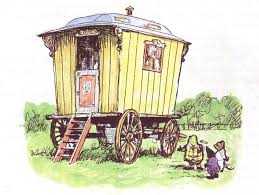
Their idea of helpful advice hasn't changed much since then, at least in this revolutionary new report about decluttering and simplifying.
"Our research shows that happiness spikes when people take deliberate steps to make life more manageable and embrace a philosophy of voluntary simplicity.”Seriously? I don't know exactly what the study studied, but those results seem to be kind of a no-brainer; isn't that what the whole first chapter of The Wind in the Willows is about?

“The most popular step is decluttering the house and getting rid of extra stuff...Other easy steps include managing emails, using a calendar system and even just ordering-in dinners occasionally.”
I hope that was helpful.

Thursday, April 07, 2016
Who's counting? The problem of minimalism
From a 2013 post: Many of our houses contain several-times-over-enough stuff already to be beautiful, functional, and express our dreams, values, and individuality. At church we are watching a DVD series with Dallas Willard, and in yesterday's session he stated that humans are "treasuring creatures." Our "things" are important to us; they give us identity; they give us comfort. As Edith Schaeffer says, they also give us continuity when housing has to change or life gets difficult. It's not unnatural to want to have treasured possessions, cherished things...The issue of creative homemaking for us now is often cutting down, cleaning out, detaching ourselves from enough of the "stuff" so that we can cherish the most meaningful, most memorable, most beautiful. Charlotte Mason talks about using our will to make choices, rather than just accepting whatever default options present themselves; in making our homes more homelike, that would include making conscious choices about the things you want in a room, and what you don't want.I recently read a book, Scaling Down, which had good suggestions for those who need or want to fit themselves into smaller spaces. It also deals with the issue of moving (a.k.a. uprooting) someone else, such as a senior family member. How do we manage that with empathy, when our ideas of necessary, important, cherished, may not line up with theirs? In fact, almost any attempt to tell someone else what's superfluous can be rightly seen as disrespectful and interfering. Don't love what doesn't love you back, says a popular letting-go cliche, but loving back isn't usually the real issue. Don't base your identity on possessions, says one thoughtful person; it's true that things come and go, moths and dust corrupt, paper crumbles, colours fade, and knives lose their edge. All quite right. But at the same time, the old, the saved, sometimes the hidden and then rediscovered, gives us a sense of our own history, our story; and we can't get away from that. Near where I live, modern construction was recently halted when a pioneer-era log road was uncovered several feet down. What does it matter, why didn't they just continue the work? Because people still cared about their community's past.
We have thought many times about moving from the Treehouse, probably to a smaller space. When that time comes, we may not take all the vintage Christmas balls with us; but we'll take some of them. We can't take all the books, but we'll take enough; scanned-in and downloaded ones aren't the same. We have cleared out many of the things that were easy come, easy go, and left what we really use: 80/20, as some put it.
But the old debate continues: what is necessary, and who decides? In some times and places, a pretty ribbon was vanity, a novel was a time waster, a rug in the parlour was excess. Is stuff bad in itself? If some is good or okay, how much is too much? Is it a spiritual question, or an economic one? Is it more liberating to live with almost nothing, or to have more and yet hold onto it lightly?
"...I have learned the secret of facing plenty and hunger, abundance and need. I can do all things through him who strengthens me." Philippians 4:12-13, ESV
Wednesday, March 30, 2016
Some special stuff coming on Project 333
For anyone interested in Courtney Carver's Be More with Less / Project 333, she has an upcoming webinar planned, and you can also win a personal session with her. Details here.
(Nobody's asked me to post that, I just thought I'd pass it on.)
Wednesday, November 05, 2014
The Christmas Stick (book review)

What bad things could one say about a well-illustrated picture book that promotes low-tech, natural playthings for somewhat spoiled princes (and princesses)? Not many.
The prince (he's nameless) receives a lot of toys one Christmas that move by themselves, don't offer much scope for the imagination, and end up broken before too long. His grandmother, on the other hand, gives him a long stick, which (as you can guess) becomes his favourite plaything. In an interesting twist at the end, the prince finds a way to pass the gift on, having learned the intended lesson. Or maybe it wasn't a lesson. Maybe his grandmother just wanted him to have fun.
Taken on its own terms, The Christmas Stick is a cute story, and yes, it does have a message of simplicity (though nothing specifically about the Christian meaning of Christmas). But is it the princes (and princesses) themselves who need this message, or their parents and other lavish gift-givers? The fact that the prince never gets a name, for instance, creates a certain distance, makes him a bit less real; and the thought that the story might just be propaganda for fewer toys (and more wrapped-up sticks) might not go over well with some kids. The difficulty is not that we don't remember and acknowledge instances in our own lives when simple playthings won out; it's just that slightly defensive feeling that we, the parents, are getting a sermon here on the appeal of long sticks.
But maybe it wasn't intended that way. Maybe the author just wanted us to have fun too. And in that case, I'd give this enough Christmas stars to pass it on to some little ones I know.
Please note that families who do not allow talk of wizards etc. will find a few references in this book offensive.
I was sent a complimentary copy of this book from the publishers, for review purposes, but received no other compensation.
Saturday, October 18, 2014


Saturday, November 23, 2013
Engineering, yes, what every tot dreams of at Christmas
"...a few exciting, against-the-grain developments: Toys R Us’ announcement in September that it will put an end to gender-specific marketing in the UK; Lego’s recent introduction of a female-scientist mini-figure to its lineup; and a just-gone-viral video from startup toy company GoldieBlox encouraging little girls to ditch sparkly pink pretend for play based on engineering."
Oh brave new world.
(Found here.)
Oh brave new world.
(Found here.)
Sunday, December 06, 2009
Two boxes: more than enough
Meredith at Like Merchant Ships recently referred to an old post of hers about how and why she keeps their holiday decorations limited to two boxes.
Consider her reasons why...and then could we consider applying the same logic to homeschool materials?
Now there are many different ways to think about that, and part of it is defining what we call "homeschool materials." The Mennonite Central Committee has an ongoing project where churches and individuals fill drawstring bags with school supplies: notebooks, pencils, a ruler and so on. It's hard to learn without having access to those most basic items. Then there are the "book basics" that most homeschoolers have, like reference books; and homeschool gadgets and gizmos, like timelines and maps, letter tiles, math rods. And beyond those, there are Books--often hundreds, sometimes even thousands of them. Some people don't even think of Books as school supplies, but for us they're basic too.
No way you're getting all that in one box.
And even if you limited the "box" to one year's worth of school for one child, you'd still probably want to store the rest for future years. Children aren't like Christmases, after all; you can use the same angel year after year, but you can't do the same math book over and over.
But the concept is still worth thinking about; and it's something I'm pondering even more during this year of being given access to extra freebies and gadgets (some of them very good and useful). It's something I have to deal with when I consider our array of well-used electric kitchen appliances--you all know how fond I am of my toaster oven, and the Crockpot is a pretty close second. What's good? What's useful? What's too much?
Many of us are blessed with a whole Treehouse to live in...but could you move your homeschooling, cooking, decorating to a tiny apartment or a trailer? What would stay, what would go? Would the kids' desire to hold on to every old toy suddenly be resolved by necessity?
What if someone came and asked you to put everything out on the front lawn for a photo? That thought's enough to make me finish this post and go clean up the living room.
Two boxes? It may not be practical in all respects...but it's worth thinking over.
Wednesday, December 03, 2008
How not to get caught: a family Advent time
We divide up these readings for an evening time around our Advent wreath.
Light the first Advent candle and sing one of our Advent songs.
Read "How to Catch a Monkey."
"If what we have
we believe we have gotten,
and if what we have
we believe we must hold onto,
and if what we have
is not available to others,
then we will live in anxiety.
"Such persons will never know simplicity
regardless of the outward contortions they may put themselves through
in order to live “the simple life.” –Celebration of Discipline
Another old Sunday School illustration: have you ever had somebody ask you to fill a jar with unshelled walnuts and rice? If you put the rice into the jar first and then try to put the walnuts on top, they don’t fit. But if you put the walnuts in first, the rice fills in the space around them, and then everything fits.
"The goal of simplicity is to seek the kingdom of God and the righteousness of his kingdom first, and then everything necessary will come in its proper order….
"It can’t be about just wanting to get away from the noise and the “rat race.”
"It can’t be about giving things up just so that we can spread things out more fairly among rich countries and poor countries, rich people and poor people.
"It can’t be just about saving the earth.
"But: when the kingdom of God is genuinely placed first, ecological concerns, the poor, the fair distribution of wealth, and many other things will be given their proper attention.
"And just because you don’t have much doesn’t mean that you’re truly living in
simplicity. Paul taught us that the love of money is the root of all evil, and often those who have it the least love it the most. It is possible for a person to be living simply on the outside and to be filled with anxiety on the inside." (adapted from Celebration of Discipline)
When our Apprentice was little, we read two picture books that showed both of those different attitudes. One was Journey Cake Ho! by Ruth Sawyer. The old man in the story liked to say, “A bother, a pest! All work and no rest! Come winter, come spring, Life’s a nettlesome thing.” When times get hard, he and his wife send their hired boy off on his own because “what will feed two won’t feed three.”
The other book was Good Times on Grandfather Mountain. "When his cow, Blanche Wisconsin, jumps the fence and runs away, Old Washburn whittles the useless milk pail into a milk bucket drum. When the raccoons sneak in at night and eat every ear of sweet corn, he makes corn cob whistles. And when a fierce mountain storm causes the worst misfortune of all by blowing his cabin down, he finds the wood for a new fiddle. And the new fiddle starts one of the "best times" on Grandfather Mountain." (from the author's website)
"Freedom from anxiety is characterized by three inner attitudes.
If what we have
we receive as a gift,
and if what he have
is to be cared for by God,
and if what we have
is available to others,
then we will possess freedom from anxiety.
This is the inward reality of simplicity."--Celebration of Discipline
Blow out the candle and read the Advent Prayer posted on Beck's Bounty.
Saturday, November 01, 2008
Artisanal puppets anyone? (Holiday grace)
Marsha at Hot Water Bath echoes something we've said here before in her post Plus ça change :
But other years we have depended heavily on the dollar store.
And we have occasionally bemoaned the trend to artisanal-and-homemade (anybody else getting tired of that word artisanal?) that's so artisanal-and-homemade that even regular-old-homemade doesn't cut it.
But, as one woman put it in a Canadian Living article several years ago--Christmas "isn't about the flippin' wrapping paper." Or the flippin' cookies. Or where the flippin' hand puppets come from, although it's true enough that how we shop or where we shop for holidays does say something about our worldview (and that's what Christmas is all about, Charlie Brown).
Christmas is about grace.
(As an update on that last link...when I read Shepherds Abiding last Christmas, I hadn't read any of the later (or earlier) books in the Mitford series. I didn't know that the character "hammering down on a cashew"--the one who unexpectedly points out the need for grace--would die in the next book. But somehow it adds even more poignancy to his words.)
"Who among us wants to be the one who tells a working-two-minimum-wage-jobs mom that she needs to be getting online (digital divide, anyone?) and ordering artisanal puppets for her children because that's better for the environment....Or that she should kitting up to make those puppets, with the required expenses of fabric and glue gun and needle because that's what moms of yesteryear would have done....Meanwhile, the dollar store has adorable puppets in a range of styles that are deemed by a privileged class to be less-than because of where they were made or how much energy they required to get here. Well, that's not a conversation that I am willing to have."Last Christmas we did make a lot of our gifts (more, more, more). It was just that kind of a year. I posted some frugal thoughts about it afterwards.
But other years we have depended heavily on the dollar store.
And we have occasionally bemoaned the trend to artisanal-and-homemade (anybody else getting tired of that word artisanal?) that's so artisanal-and-homemade that even regular-old-homemade doesn't cut it.
But, as one woman put it in a Canadian Living article several years ago--Christmas "isn't about the flippin' wrapping paper." Or the flippin' cookies. Or where the flippin' hand puppets come from, although it's true enough that how we shop or where we shop for holidays does say something about our worldview (and that's what Christmas is all about, Charlie Brown).
Christmas is about grace.
(As an update on that last link...when I read Shepherds Abiding last Christmas, I hadn't read any of the later (or earlier) books in the Mitford series. I didn't know that the character "hammering down on a cashew"--the one who unexpectedly points out the need for grace--would die in the next book. But somehow it adds even more poignancy to his words.)
Subscribe to:
Posts (Atom)