Showing posts with label organization. Show all posts

Friday, January 18, 2019

Gotta thank somebody (KonMari tidying)

I probably don't need to repeat this, but I'm old. I've been around through a lot of decluttering and organizing fads. I always wished for a magic clean-up wand, but I never connected success with seriously purging my belongings (weren't they all important?), or with not buying more yarn on sale. I grew up without much sense of "stop, that's enough stuff." If someone gave you a present, you were supposed to keep it. When the dolls on your dresser outgrew the dresser,  you didn't stop collecting, you built them a shelf. I had no idea that anyone could have too many books.

But I did try. I moved out on my own with books by Don Aslett and Sandra Felton (and stayed just as Messie), I survived house moves with It's Here...Somewhere and Deniece Schofield, and I watched Peter Walsh do the Clean Sweep.  I attempted Sidetracked Home Executives, but somehow escaped the FlyLady. The old advice to Keep What You Need is about as obvious as Don't Spend Money So You Don't Go Into Debt, but we got better at that than we did at keeping a handle on Stuff. We didn't buy a lot of new Stuff, but we did find a lot of used Stuff, and had a lot of free Stuff given to us, to the point that we had trouble sorting out the Keeper Stuff from the rest (or what one person called Keeper, the rest of us called the rest).
Pop psychology time: Mr. Fixit and I are both firstborns, and both of us were close to our grandparents. We felt a lot of expectation that we would be keepers of the family story. You can figure out the rest. 
Fast forward through our full-on decluttering and downsizing, which brought in more library books, Tiny House videos, and Apartment Therapy posts, plus Project 333, but not much awareness of Marie Kondo or KonMari. (I did post something about it once.) When I went to the Tiny Wardrobe Tour lecture the summer before last, I got there early and sat beside a woman who introduced herself as a professional KonMari organizer. She didn't know much about Project 333, and I didn't know much about KonMari, but our attempt to compare notes got cut short by a loud argument over priority seating. I seemed to be sitting in the middle of the war zone, and I think the KonMari lady blamed me somehow, so I did not learn any more about it that night.

Then Tidying fell into my lap while I was sorting books at the thrift store. Our move to a smaller space had sparked a new kind of Tiny-House-ish deliberateness about what we were keeping and where it should go, so the book helped us get over some storage bumps.

Now, suddenly,  Marie Kondo is on the Lifestyle page of our local paper, not to mention all over Youtube and everybody's media. Folding your clothes is suddenly cool. And the Big Thing that I am picking up from this came from a brief review where, I think, they got the reason for her popularity absolutely right. Even if you don't literally hug your sweater to see if it sparks joy (I don't), KonMari appeals to our emotions, because it is about valuing and thanking. If you arrange your shoes on a rack from lightest to heaviest, top to bottom, you're not saying "look at all the shoes I have" but "I am taking the time to appreciate how each pair fits into my life and into my space." If you're a bit animistic, you add "And I want the shoes to know that." If you're a Christian, you use that boring term stewardship, which means, essentially, that you're Jeeves cheerfully polishing Wooster's silverware. Stewardship is just taking care. Guardianship, sort of. You get the privilege of living with and caring for the shoes, but you know Who really owns them. When they're dirty, you clean them. When they wear out, you get them fixed.

And here's the rub: you can't do that with as much stuff as North Americans typically live with. Lots, in this sense, is not better than a few. Or one. We are finite beings, with limited time and attention spans. But, as Charlotte Mason says, we can develop habits of attention. We can invest time into knowing where pieces in our collection came from, hearing their stories. We can value loyalty. We can be thankful. We just can't do it so well with an overload of stuff.

Saturday, January 05, 2019

A year of KonMari tidying here

Marie Kondo seems to be getting more popular than ever--she now has a show on Netflix (which I can't watch because we just unsubscribed). The word most often applied to her personally is "cute," but she also has her firm side. In one You-tube video, the owner of a messy pantry shows her a package of spoon-shaped cookies, drawing appreciative coos from Kondo but followed quickly by a pointing out of their months-old expiry date. Cute cookies aren't worth much if you don't eat them.

In 2017, I read The Life-Changing Magic of Tidying Up, and described some of my early experiments on the blog. Someone commented (kindly) that it would be interesting to know how long I'd stick with it.

Well, it's been a year-plus since I made my first t-shirt stand up straight, so I guess that's long enough now to call a habit. The food in our storage room has remained organized (and the wrapping paper I used on the bins has held up pretty well). The bathroom has stayed uncluttered. We had already gone through a lot of decluttering, during our downsize to the apartment. I had also done quite a lot of putting things into containers, and containers within containers, before I read Tidying Up. 

What I think KonMari added to our vision for a newer, cleaner space here was a sense of aesthetic pleasure, an extra bit of harmony. One of the odd bits I picked up from Kondo's books was the idea that containers and boxes with clashing labels and random printing may contribute to a sense of info-overload. They can feel like commercials that never get turned off. Solutions to garish containers include peeling off a label, painting or covering the box (as I did with the very miscellaneous pantry bins), or emptying the contents into a jar or something else neutral. If it's a shoebox or something to be repurposed as a drawer organizer, then the outside printing doesn't matter. But if the storage container is going on a shelf, you might want to pretty it up a bit. That doesn't mean crocheted cozies for the toilet paper, but just keeping in mind how what we look at every day can boost moods (or bring them down). If we have to look at words in our homes, let's make them important and beautiful words.

I appreciate Kondo's encouragement to use whatever you have instead of buying new (often plastic) storage goods. One thing she does like are the sets of large plastic drawers for closets, partly because they keep storage behind closed doors. I don't have any, but I've compromised by treating a couple of under-bed baskets as if they were drawers. (We don't get as many dust-bunnies here as we did at our old house, so under-bed storage is workable.)

Another KonMari idea that I found useful was sorting by categories, especially with seemingly miscellaneous stuff. Not that we hadn't already done a lot of that, but I appreciated her emphasis on its usefulness. It helps us know not only where things are in the apartment, but also when we need to re-stock.

Finally, Kondo's knack for turning even an underwear drawer into a sort of Bento box array should lead not to obsession with one's undies, but to appreciation and gratitude for what we have. This is something we can share with and model for children. Look--we have socks! They're nice colours! They're clean! They're (mostly) hole-free! Let's take care of them! Even small things arranged carefully can make our days brighter, and that echoes Edith Schaeffer's thoughts on tabletop flowers, sandwich plates for hobos, and writing little notes to cheer people up.

I still don't talk to my shoes. But I'm glad for the help KonMari has given us.
"Yet it was chiefly her body that was tired now; her mind, which had been so weary and fretted in London, had been wonderfully rested by this house that was now her home....[Nadine] stretched out a hand and laid it upon the paneled wall beside her; it was warm in the sun, as though it were alive....This house was maison-dieu [a house of God], and the stripping away of all that was unworthy and the building up of new beauty was in the nature of a crusade.  And the house had agreed and collaborated."  ~~ Elizabeth Goudge, The Herb of Grace (Pilgrim's Inn)

Monday, November 05, 2018

A Quick Book Review: Decluttering at the Speed of Life

Decluttering at the Speed of Life: Winning Your Never-Ending Battle with Stuff, by Dana K. White (Amazon link)

If you want to hear an original and practical voice in the clutter of decluttering books, check this one out. One reason it resonated with me is that Mr. Fixit and I followed very similar methods when we downsized, so we know they can work!

One example: think of your house (or apartment), clothes closet, purse shelf, and dinner-knife compartment as a collection of big and small containers. Each one is designed to hold just so much stuff, no more; so we should keep no more than the container allows. Sounds like a no-brainer, but how many times do we try to keep it all, or to bring in more, rather than working with the space we have? Most of us recognize this reality when we pack a suitcase: it's only so big, we can't take all those shoes plus a hairdryer plus presents for the relatives. But we're often not as careful when it comes to home spaces.

In the past year, for example, I have turned down free drinking glasses, because I knew all our designated drinking glass space was taken, and I did not want to give something else up so that we could have more drinking glasses.  But at some point we might decide we don't need as many coffee mugs and we do want more drinking glasses. It's all about choices.

Mr. Fixit's half of our bedroom closet is mostly storage cubes and shelves for things he uses. He has very few hanging clothes, so that's fine with him; or he can hang things in the hall closet. But my side is all hangers.

I was happy to be able to fit in as many bookcases as we did into our apartment space. That is (not counting Lydia's room and Mr. Fixit's closet shelves), exactly three: two in the dining area and one in the bedroom. I do have a small space in another cupboard for university textbooks, and we often have books living on the coffee table. But that's it! There are no good places to put more bookshelves, and the ones we have are pretty full. If I started bringing home piles of books from the thrift store, I would soon have a problem. So respecting the limits of our space helps us stay with "enough" and not "too much."

Check out Decluttering at the Speed of Life for more uncluttered decluttering talk.

Wednesday, November 29, 2017

Let's talk minimalism theories (and a bit of clothes stuff)

How to Get Dressed, a book by a show business costumer, says that you should hang every possible piece of your clothing, to keep everything visible. You can even pin small things to muslin-covered hangers.

Japanese organizing expert Marie Kondo's advice is to fold almost everything. No muslin-covered hangers, but you can decorate the few hangers you do use with old hair ties and keychains.

Project 333 and similar capsule wardrobe plans tell you to keep only a limited number of items out for use at one time, and no shopping is allowed during the three-month period except right near the end when you're thinking about the next season. This is supposed to make your getting-dressed decisions easier (here's my hat and my scarf, not plural), and may help you to think less about appearances and more about big ideas. A tiny wardrobe can also be a source of more-with-less creativity; or an opportunity for absolute uniformity (t-shirts and jeans). (One thought I have is that the three-month experiment, like a Whole 30 month, may be most effective if you do it only once or twice or occasionally, and follow the rules exactly, rather than trying to follow it longterm but haphazardly.)

On the other side, Marie Kondo recommends doing a major closet purge once, but then keeping most of the joy-sparking remainder available to wear year-round...because clothes, like Toy Story characters, don't like "going in the box." The final amount is up to you, your needs, and your drawer space. One blogger suggested that this approach is perhaps more honest than storing non-capsule clothes in boxes, because you are not just delaying a decision on what to do with them.

Note that this hasn't addressed issues such as fast fashion, polluted rivers, overseas labour, poverty, and shopping addiction. And we haven't even gotten to the rest of the house, the dishes, books, vacuum cleaners, and guinea pig bedding.

So what's a confused home organizer to do?

Michael Pollan's famous food advice is “Eat food. Not too much. Mostly plants.” It's a principle that can be translated into practice. It also opens up discussion. What is "food?" How much is too much? What is "mostly?" What kinds of plants? Where should they come from? But you start with the principle.

So here's an adapted version of Pollan's motto: "Wear clothes. Not too many. Mostly low-impact."

How you hang or fold them is up to you.

Thursday, November 09, 2017

KonMari Closet, or, I'll try anything once (photos)

This wasn't so much a declutter as a reorganization and folding spree.

One thing I didn't like about the way things were was the big plastic bin full of summer clothes. I've never quite trusted it; I had the feeling it made things smell funny. The bin is still there, but now it's holding some other non-clothes stuff (that still needs sorting). About half the summer clothes (like t-shirts) came out and got put with the other clothes; the rest are in the blue fabric bin on the top shelf.
The hanging shelf used to be scarves but is now t-shirts plus winter gloves and hats. 
Bin of pullovers and sweater dresses. I had the dresses hanging up, but decided to fold them since they're really long pullovers.

Basket of scarves. I seemed to have a mess of scarves, so it was nice to corral them. I am donating a few that didn't spark-so-much-joy.
Drawer of folded tops

(I did do the socks etc. etc. too, but no photos--sorry.)

Tuesday, October 25, 2016

Doesn't everyone want books?

Helene Hanff, 1916-1997 (photo from GoodReads)

And maybe the question should be, does anyone?

I recently commented on a book-related blog post, and out of approximately 27 comments, I think mine was the only one that did not say "love my e-reader, love the library, do not want books around the house unless they're cookbooks or something with an obvious purpose."

I understand the freedom of decluttering, the value of empty or near-empty spaces, especially in this often-overwhelming culture of much and more. In the novel In This House of Brede, the Benedictine nuns lived under a rule of simplicity, and the number of books each one could have in her own room depended on her needs
“I love inscriptions on flyleaves and notes in margins, I like the comradely sense of turning pages someone else turned, and reading passages someone long gone has called my attention to.” ― Helene Hanff, 84, Charing Cross Road
I do love my e-reader, Kindle app, and Overdrive. (Archive.org is what's giving me access to the vintage book that Afterthoughts is blogging through right now.) And the actual, physical library. I love books that have an obvious purpose. I also love books that do not have an obvious purpose.
“I do love secondhand books that open to the page some previous owner read oftenest. The day Hazlitt came he opened to "I hate to read new books," and I hollered "Comrade!" to whoever owned it before me.” ― Helene Hanff, 84, Charing Cross Road
One of the first times I ever got in real trouble as a preschooler was by disobeying a parental command not to take a certain book outside. But I wanted it with me...

I haven't come up with a one-line answer to this yet, but I do think the answer is a personal one (like the nuns), and it depends largely on what books do in your life, and what you do with them. I'll go so far as to agree that, for 26 out of 27 people (or maybe more like 20 out of 27), physical books are clutter. For whatever reason, they are just more weight to move, more things to dust, more stuff that people don't know how they acquired and why they're holding on to them. If that's the case, I agree wholeheartedly that it's time to move to library books and e-books. And if it comes down, as at least one commenter said, to having to move overseas or something where you do not have a choice, I agree also that books do weigh you down and that they should not hold you back from adventures. There will always be more books.

But for the other seven or so of the group...we are the spiritual grandchildren of Helene Hanff.
“I'll have mine [The Book-Lovers' Anthology] till the day I die - and die happy in the knowledge that I'm leaving it behind for someone else to love. I shall sprinkle pale pencil marks through it pointing out the best passages to some book-lover yet unborn.” ― Helene Hanff, 84, Charing Cross Road

Saturday, October 01, 2016

October 1st, and the Project 333 Challenge: what's your simple thing?

For the past several months I've been following Courtney Carver's Project 333 wardrobe challenge. In short, fewer clothes, and fewer hangups. What it's not: a list of clothes that says you have to own a white shirt and a pair of black pumps. What it is: a bit of rebellion against the consumer culture that never stops saying "more." 
We are living in a crazy world full of inequalities, injustices, and many things too bad to go into. On the other hand, we're living in a beautiful world full of wonderful things that we could be doing and exploring, if we didn't spend so much time deciding what to wear (and saying that we don't have anything to wear so we have to go buy something else), what to add to the house, what to eat, what new thing to watch or listen to, and what to watch or listen to it on, before we rush on to the next. We now have to talk about "slow fashion" and "slow food" to make the point that more is often less.
Project 333's official  new season starts today, October 1st. I'm already in the middle of my "fall," because I set my own timeline based on when we tend to get a big change in the weather here, mid to late November. Also there's still a psychological thing for me about September: September was always about new things, new focus, new pencil crayons, new shoes. So I'm not really changing anything around for October.
Lesley, a style-minded Canadian blogger, decided recently that she is also going to pare down to 33 clothing items for the next three months. When she posted her own rules for the challenge, she explained why she's not including accessories in her 33: "My accessory collections have always been minimal; selecting sunglasses from one of my four pairs, or grabbing a necklace from a half dozen options, doesn’t stress me out or cause decision fatigue."
Which is, I think, a big point about any decluttering, downsizing, streamlining, and minimizing you might be thinking of. What is it in your own life or house or bookshelf or closet that makes you crazy? What causes you stress, guilt, or frustration?  If you have three hundred cookbooks, bookmark tons of recipes, and still can't decide what to make for dinner, maybe you need a simplified menu plan that lets you focus on something else for awhile, even if you end up eating the same thing a lot (and what's wrong with that?). If your book wish list is a book in itself, but your shelves are already full, it might make sense to do a Howards End is On the Landing year. If you need serenity in the closet, Project 333 (or one of its cousins) is a reasonable plan, with accessories or without them.
On the other hand, what are you just fine with and can't understand why anyone would have too many of or need to get under control? What's your simple thing?
Enjoy it, and welcome to October.

Sunday, July 03, 2016

Saturday yard sales: just one find this weekend

Canada Day weekend is not that great for yard sales, since everybody knows that everybody else will be out of town, if everybody else has a cottage or trailer to go to. We don't, so we stopped at one yard sale on the way to the grocery store. I found four of these bamboo drawer dividers, for fifty cents apiece, brand new.
They freshened up our drawer of cooking tools.

Saturday, June 25, 2016

Saturday yard sales: "As seen on T.V.?" (Updated again)

Found for $2: a new-in-box set of Kangaroo Keepers. Commercial: "Do you have a messy purse like this? Buy the Kangaroo Keeper and your life will be perfect!"

Or something like that.

According to several You-tube reviews, the KK doesn't really live up to the commercial; it's not as big as it looks on the box, and its pockets are also small. And yes, as the reviewers note, it does have a bit of a shower curtain smell. Nobody else suggested this, but it seems to me that clear or coloured pockets instead of black ones would better keep small things from being misplaced. Some of our brains function better with a bit of colour-coding.
But for $2, I think I can find some use for these bags. They could work for toiletries, or office supplies, or crochet tools, or as travel pouches (ignoring the pockets). They do pull  closed with drawstrings, although I found you have to pull pretty hard on the larger one, and it still doesn't close completely.  But maybe they could be used for carrying snacks and lunches, inside a larger bag. I'm thinking mini ice packs stuffed into some of the small pockets.
For something where you're storing a bigger piece along with some little pieces or attachments--the KK's might work well. 

And it's probably a better idea than trying to organize your purse with them.

UPDATE:  A way to use the larger organizer: as an in-drawer keeper for hairbrushes and that sort of stuff. I think I'll use the smaller one for some pens, sticky notes, and the little notepad I use to write school "please excuse" notes.

UPDATE #2: I decided to keep my pens in their basket, and use the smaller pouch inside my tote bag. Since it has a clip on it for keys, I was able to hook it onto the bag's zipper pull. (You could also fasten a loop inside the tote bag.) The reviewers complained that the KK's weren't really big enough to organize all the stuff people carry around, and that's true; but even the smaller one is enough to hold a few basics that otherwise have to swim around inside my tote.

So there you go.

Tuesday, June 07, 2016

Pedalling backwards?

The BeMoreWithLess website once posted this list of things not to do, regarding clothes:
"22. Hold on to clothes that might fit someday. (that haven’t fit in years)
23. Save clothes for sentimental reasons. (take a picture instead)
24. Worry about what other people will think
25. Buy stuff to organize your stuff.
26. Worry about trends.
27. Wait for a better time.
28. Keep things just because they are expensive. (or you will just keep paying)
29. Let your clothes speak for you.
30. Stress … this isn’t brain surgery.
31. Just move things around.
32. Compare.
33. Act on the impulse to fill up the empty space."
Courtney Carver, "33 Things to Do and Undo When Simplifying Your Wardrobe"
But, like many good lists, most of this can be applied elsewhere. In our home recently, we have cleared out enough things (including the couch that went sproing) to create some empty spaces. We're not in a hurry to fill them in. I try not to buy too much stuff that just organizes other stuff, if we don't need that other stuff. And no, we're not really worrying about trends.

In the area of education, there is also some good advice here. Leave spaces in your scheduling. Don't hurry narrations; wait for the answers. (As a friend once said, don't talk over the music.) Don't hold onto what doesn't fit: not just the math your children didn't connect with, but the bits of institutional-schooling eggshell that may still be sticking to us. Do certain practices serve a real purpose, or do we do them just because everybody does or everybody did? And don't wait for a better time to introduce "the riches," to take time outside, to read the book together, to go somewhere and make memories.

And then there's the rest of life. We stress to get it right, to think we're finally on top of our game. We think we are voyaging, to quote T.S. Eliot; we think we've gotten somewhere. In the big picture, that may be about as far as our Apprentice used to go on her first little tricycle; and she didn't understand that you have to pedal forwards. Someone out there must be chuckling (I hope kindly) at our small, busy endeavours, and our frustrations over the failures.

In God's upside-down Kingdom, sometimes the meaning is in the emptiness and the quietness. We are told to consider birds and flowers that know they are cared for, and to remember that each day has enough trouble of its own (so we don't need to draw any in advance). We are told that where our real treasures are, our hearts will be as well.

There is practical value in decluttering a closet. But there is also a serenity in finding that truth in the deeper places.

Thursday, April 28, 2016

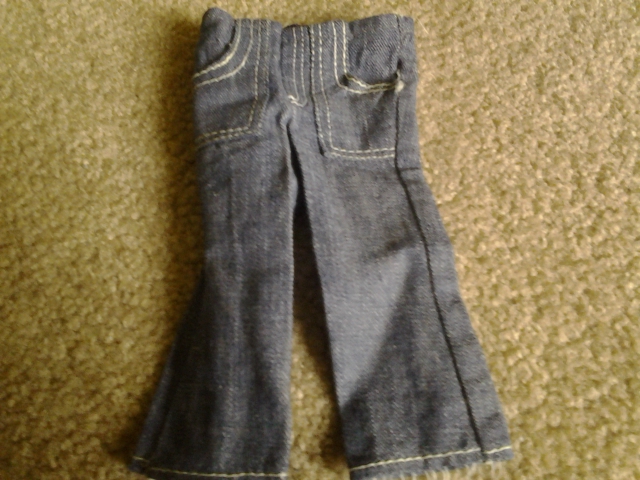
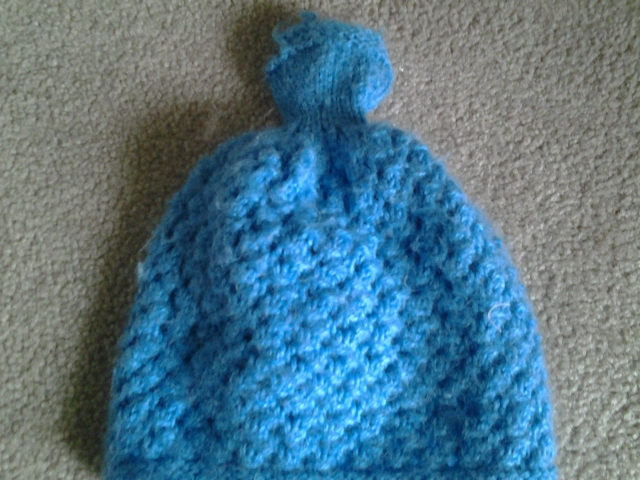
Declutter with Barbie

Even Barbie needs to clean out her closet sometimes. After all, she's been shopping for years.

List of "33 Things To Eliminate From Your Closet" from BeMoreWithLess/Project 333.

Anything with shoulder pads, even if they are making a comeback. 
Your high school jeans that haven’t buttoned since high school. 
That formal outfit you bought for one occasion. 
Your ex-anyone’s anything. 
Christmas sweaters
Things that are ripped or have holes that aren’t supposed to be there. 
Pieces you can see through unintentionally. (see above)

Those super cute shoes that you can’t walk in. 

Sentimental items that make you sad. 
The warm coat you don't wear. Someone needs it more than you.
Sentimental items that don’t fit. Take a picture. 
Clothes you are saving for your children. 
Pieces that need to go to the tailor that never get to the tailor. 
A bridesmaid’s dress they said you could wear again, and you know you won’t. 
Hats you don’t wear even though everyone says you look good in hats. 
Ill-fitting bras. Feature your features. 
Purses. You only need one. 
Clothes that don’t belong to you. Give them back.
Anything with a weird smell that won’t wash out. 
Clothing or shoes that leave a mark or blister. 
Scarves that don’t go with anything you currently own. 
Clothes that don’t allow your underwear to be under. 
Anything you have to squeeze into. 
Clothes you bought on vacation that you won’t wear where you live. 
Pants that are shorter than they are supposed to be. 
Shirts that are longer than they are supposed to be. 
Sequins and sparkles if you prefer simple and subtle. 
Anything with a stain that won’t come out. 
Guilt items. If you spent too much for it, dump the guilt. You’ll keep paying for it in time and attention if you don’t let it go now. 
Multiples. Just because the blazer looked good in cream doesn’t mean you need it in every color. One is enough.  (unless it's shoes?)
The top or bottom of a suit. They aren’t sold separately for a reason. 
Clothes you can pet. 
Yoga pants that don’t go to yoga.

Bye-bye.