Showing posts with label literature. Show all posts

Saturday, September 19, 2020

From the archives: Squiggly Lines and Paper Pages

First posted September 2012

So Michael Reist says that "literature will never die, but if we keep force-feeding it to the kids of cyberspace, its integrity will certainly suffer."
And since he has thirty years of classroom experience, and has written and lectured extensively on the problems of both teenagerhood and education, we assume that he does know what he's talking about.  The tone of the editorial made me think at first that he was actually cheering the demise of English literature; but I think he sees the situation more as sad but true; lamentable, but inevitable.

His conclusion?  "There are two ways to resolve this tension: Lower the standards in English class so the poor kid can go and make video games, or stop the mandatory study of English at, say, Grade 10. For many kids, the only thing they learn in Grade 11 or 12 English class is to hate it even more."

Those alternatives sound like the equivalent of "you don't get a real dinner tonight, but you can choose between fries, candy, and vitamin-mineral supplements."  Or, more closely, since the diners refuse to eat "real" food, we will no longer bother to cook and serve it.  Let them find their nourishment as best they can.
“But I’m going to be a video game designer!” protests one of my Grade 10 English students. “I don’t need to be able to read novels or write essays.” --Michael Reist
Need to be able to?

Would anyone dispute the idea that human bodies still need to eat? Public school lunches are all about enforced nutrition, these days. So don't human minds still need to think, and to know what has been thought?

Around here, school IS, largely, reading.  If you search this blog for the word "subversive," you will find that every occurrence, with the single exception of a tuna recipe, has been in connection with books and reading.  In our view, the immeasurable value of Real Books has not changed and will not change. 

But in Michael Reist's opinion, the rest of the world has stopped caring, and there's no turning back.  The occasional Matilda is simply an odd exception; the other "students" are shut out.

Prove him wrong.
"All the reading she had done had given her a view of life that they had never seen. If only they would read a little Dickens or Kipling they would soon discover there was more to life than cheating people and watching television."--Roald Dahl, Matilda

Wednesday, September 05, 2018

Quote for the day: Northrop Frye on the subversive career of an English teacher

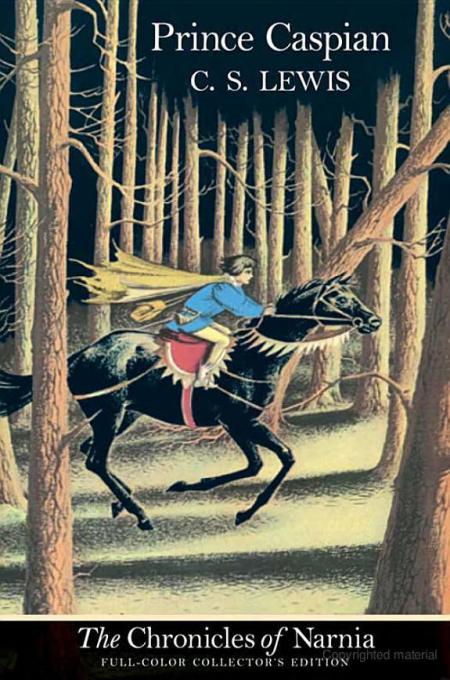
Image result for "prince caspian" doctor cornelius 
"At his trial Socrates compared himself to a midwife, using what for that male-oriented society was a deliberately vulgar metaphor. Perhaps the teacher of literature today might be called a kind of drug pusher. He hovers furtively on the outskirts of social organization, dodging possessive parents, evading drill sergeant educators and snoopy politicians, passing over the squares, disguising himself from anyone who might get at the source of his income. If society really understood what he was doing, there would be many who would make things as uncomfortable as they could for him, though luckily malice and stupidity usually go together. When no one is looking, he distributes products that are guaranteed to expand the mind, and are quite capable of blowing it as well. But if Canada ever becomes as famous in cultural history as the Athens of Socrates, it will be largely because, in spite of indifference or philistinism or even contempt, he has persisted in the immortal task granted only to teachers, the task of corrupting its youth." ~~ Northrop Frye, keynote address to the Ontario Council of Teachers of English, October 30, 1980. Published in Indirections 6 (Winter 1981). Republished in Frye's book On Education.

Friday, April 20, 2018

Four thrifted books


 The Gospel in a Pluralist Society, by Lesslie Newbigin
"What comes home to the heart of the hearer must really be the gospel and not a product shaped by the mind of the hearer...But of course the truth is that every communication of the gospel is already culturally conditioned...[the need is] to speak God's word to the total context in which people are now living and in which they now have to make their decisions."
The Art of Facilitation: How to Create Group Synergy
"The way to bridge the gap between groups is to establish commonality of values, purpose, vision and shared experiences. Full humanity covers the whole range of human emotions including love, joy, sadness and loss. Consciousness leads us towards one another, unconsciousness leads us away."
UnPoverty: Rich Lessons from the Working Poor, by Mark Lutz
"When we lived in South Africa, my family constantly heard our white friends rationalize the injustice of apartheid, unable to see wrong in what they were doing and unwilling to recognize rampant exploitation. Knowing this propensity, I must force myself to stand back and look objectively at my position in the world, lest I continue in blissful ignorance."
Tales from Ovid, translated by Ted Hughes
"Some are transformed just once / And live their whole lives after in that shape. / Others have a facility / For changing themselves as they please." ~~ "Erysichthon," in Tales from Ovid

Friday, March 24, 2017

From the archives: Exploding with creative energy

First posted April 2005

The Deputy Headmistress at The Common Room has been troubled by something on another blog that wonders how those who support conservative politics can also happily mingle with poetry (and, to extend the thought, with intelligence).

At the risk of boring with yet another quote from Northrop Frye, I'd like to offer this, from the very same page of The Bush Garden where I found the quote about weasel words.

"[Poet Irving Layton] speaks of 'the holy trinity Of sex revolution and poetry', and each of these is conceived as an explosion of creative energy against the inhibitions of prudery, exploitation, and philistinism respectively; a trinity more or less incarnate in Freud, Marx, and Whitman." ("Letters in Canada," 1953)
(Again on Layton, 1954)"....the ironic eye does not have free play; it is oppressed by a conscience-driven and resentful mind which sees modern society as a rock pile and the poet as under sentence of hard labour."
It might help to remember what was going on with a lot of poetry during the 1950's when Frye wrote these reviews of Layton: there were a lot of Angry Young People doing the coffeehouse thing, Ginsberg and Kerouac and all that. But I think the basic thought hasn't changed so much in 50 years. Some people still think that to be into the third part of the "trinity," you have to be into the first two as well. I think that's why some of the people in Mama Squirrel's creative writing classes were so weird, or really wanted everyone to know they were weird, or just pretended they were weird, because it kind of went with the turf. Anger poetry was good, exploding against things was good (even if it wasn't good poetry, it was Saying Something, right?). So do poets, or those who read poetry, have to have a rock pile to pound at? Was Whitman as revolutionary as Freud and Marx? Is that why Mama Squirrel doesn't like Whitman much?

And can Christians still manage to have an intelligent discussion about something like this without being called pseudo-intellectuals? Francis Schaeffer thought so, and so did C.S. Lewis.

Monday, February 09, 2015

Quote for the day: the danger of an educated imagination

Quoted in a post of September 2010.
"Because we remain human beings, despite the best efforts of our enemies to get past that fact, we can also visualize the pain and the suffering and the horror that are the essential parts of the bomber's objectifying obliteration. This intellectual leap, sadly, is the great strength of what Northrop Frye called the educated imagination. If we've learned to share the strong feelings of characters in War and Peace and Madame Bovary, how can we not also identify with the sufferings in our own time and place?" ~~ John Allemang, "Can the liberal arts cure jihadists?"Globe and Mail, September 3, 2010

Tuesday, January 13, 2015

Re-posted quote for the day: Gladys Hunt on literature

First posted January 2006.
"Books are wonderful ways to learn the possibilities of being human. We can define character traits with words, but they take shape only when you see what they look like in a person. How can we understand honor or valor or courage unless we have sometimes seen these traits in someone's life? Good literature may so move the reader that is seems impossible to verbalize about it. The experience is what counts.... 
"This is why an evil character in a story may reveal the real nature of evil more clearly than a sermon on sin. Reading stories is also a vicarious way to see how goodness and humility and honesty and beauty play out in life. Literature does instruct us, even thought it may not be our main reason for reading. Malcolm Muggeridge wrote in Jesus Rediscovered that books like Resurrection or The Brothers Karamazov gave him an overpowering sense of how uniquely marvelous a Christian way of looking at life is, and a passionate desire to share it. Good books have a way of instructing the heart." ~~ Gladys HuntHoney for a Woman's Heart

Tuesday, July 22, 2014

Probably the first time anyone used "ectoplasmic" in a literary book review

I just found this and thought it was cool:

"...in 1922, the year that Proust died with his great mythical Recherche complete, the appearance of The Waste Land, Ulysses, and the more ectoplasmic Fantasia of the Unconscious startled the literary public also into realizing the importance of myth.  It was the next year that Cassirer began to bring the problem into systematic philosophy, and in the thirty years since then the word myth has continued to produce that uninterrupted flow of talk which is generally called, and sometimes accompanies, a steady advance in thinking."

(Northrop Frye, 1953 review of Ernst Cassirer, Philosophy of Symbolic Forms, vol. 1, trans. Ralph Manheim.  Included in Northrop Frye on Culture and Literature: A Collection of Review Essays, edited and with an introduction by Robert D Denham.)

Wednesday, April 03, 2013

Southey quote for the day: Daniel's Books


From The Doctor, &c., by Robert Southey
Happily for Daniel, he lived before the age of Magazines, Reviews, Cyclopedias, Elegant Extracts and Literary Newspapers, so that he gathered the fruit of knowledge for himself, instead of receiving it from the dirty fingers of a retail vender [sic]. His books were few in number, but they were all weighty either in matter or in size. They consisted of the Morte d'Arthur in the fine black-letter edition of Copeland ; Plutarch's Morals and Pliny's Natural History, two goodly folios, full as an egg of meat... Ripley Revived by Eirenaeus Philalethes, an Englishman styling himself 'Citizen of the World'... the Pilgrim's Progress; two volumes of Ozell's translation of Rabelais; Latimer's Sermons ; and the last volume of Foxe's Martyrs, which latter book had been brought him by his wife. The Pilgrim's Progress was a godmother's present to his son : the odd volumes of Rabelais he had picked up at Kendal, at a sale, in a lot with Ripley Revived and Plutarch's Morals:  the others he had inherited.

Daniel had looked into all these books, read most of them, and believed all that he read, except Rabelais, which he could not tell what to make of. He was not, however, one of those persons who complacently suppose every thing to be nonsense, which they do not perfectly comprehend, or flatter themselves that they do. His simple heart judged of books by what they ought to be, little knowing what they are....The Morte d' Arthur therefore he received for authentic history, just as he did the painful chronicle of honest John Stowe, and the Barnesian labours of Joshua the self-satisfied : there was nothing in it indeed which stirred his English blood like the battles of Cressy and Poictiers and Najara; yet on the whole he preferred it to Barnes's story, believed in Sir Tor, Sir Tristram, Sir Lancelot and Sir Lamorack as entirely as in Sir John Chandos, the Captal de Buche and the Black Prince, and liked them better. 

Sunday, February 24, 2013

Sunday reading

Life Under Compulsion: The Dehumanities, by Anthony Esolen at Front Porch Republic.  Part of a series mentioned at Suitable for Mixed Company.  
“Here is one,” says the father [of a new baby], “who will possess the capacity to embark upon independent research, who will present arguments that balance claim and counterclaim.”

“Here is one,” says the mother, “who will meet the Common Core Requirement anchor standards and high school grade-specific standards, which work in tandem to define college and career readiness expectations, the former providing broad standards, the latter providing additional specificity.”

I did not make that last sentence up.

Sunday, September 16, 2012

Where do you even START? ("Literature is the new Latin")

This kind of editorial just leaves me gasping for breath.

When English teachers with thirty years' experience propose that we make the last two years of high school English optional, I know that we really are in Ray Bradbury territory.

I think I need to sleep on this one and come up with some kind of semi-coherent response tomorrow.


Sunday, September 02, 2012

Homeschool things to do for Tuesday: Robert Frost's poetry

In the that-was-easy department:   We will be reading the 51 poems in Robert Frost's You Come Too: Favorite Poems for Young Readers.


(Warning: there are extremely rude comments below this video.)

We own the 80-page junior biography Robert Frost: America's Poet, by Doris Faber.  What do you do with a junior biography, a sixth grader, and a homeschool curriculum based mostly around just reading the poems?

Taking a leaf from the Ordo Amoris tree, I think the best way to include things like this is to put them in a "Morning Time."  A gathering where maybe you don't always have to stick to the regular books.  Even if you are homeschooling just one, you can make a habit of getting together for some reading, maybe singing or memory work, close to the start of school or at another time that works well--maybe even at tea-time, if you have a regular time for that.  We have gotten out of tea-time in recent years, but what I remember was that by that time of the day, the Squirrelings were often impatient if I tried to thrust yet another book on them.  Individual poems, yes, but not whole chapters--they were ready to go and play.  So I guess it depends.

So Faber's book can go into some kind of a "Morning Time" reading basket.

What else can you do with poems beside read them, memorize them, copy them out, sometimes sing them?  Ruth Beechick has lots of ideas:  experimenting with word choice, changing verse into prose, and so on.  We also have a copy of Rose, where did you get that red? Teaching Great Poetry to Children, by Kenneth Koch, which has some good writing suggestions based on poems by Wallace Stevens, John Donne, African tribal poems, and more.

You can illustrate them.  We recently acquired several volumes in Scholastic's Graphic Poetry series, in which each book takes one or two poems by one author, and sets them up in what's basically picture book format--but for older readers, not little ones.  I think this would be a fun project in combination with the simpler book-binding and booklet-making ideas in Erin Zamrzla's At Home with Handmade Books.  Is that art, literature, handicrafts, or what?  Does it matter?  We'll work it in to an afternoon time.

Monday, January 09, 2012

Do we pick our mental mentors, or do they pick us? (and more long sentences)

Best thing I read in this weekend's papers:
“Who are these figures who take residence inside our heads,” Pico Iyer asks in The Man Within My Head, “to the point where we can hear their voices even when we’re trying to make contact with our own?”

“Who put them there?... “ Iyer adds, noting how, if he were to choose a “secret companion, an invisible alter ego,” he would select someone more “dashing” than British novelist Graham Greene. Greene, he admits, “is not a hero or a counsellor” to him. Instead, he is the ongoing presence who whispers the “secrets and fears” that burrow to the core of Iyer’s preoccupations. --Charles Foran, "He shoots! He waits! How a young writer found Samuel Beckett", in The Globe and Mail
For Pico Iyer, it's Graham Greene.

For Charles Foran, it's Samuel Beckett.  Foran doesn't try to write like Beckett, he says: "Much as I adore his mordant, cadenced prose, I’ve never tried to write like him. Nor do I have either the temperament or courage to address so frontally the strangeness, and unease, of being human. Most writers, it should be said, stop short of where Samuel Beckett starts."  For him, Beckett is more of a reminding voice, something that keeps him on track with where he wants to be in his own writing.
George Bailey: Well, you look about the kind of angel I'd get.
Do you have an imaginary "mentoring relationship" with someone you've never met?  Is it someone you "chose", or did they "choose you?"

P.S. Pico Iyer has an essay here called "The Writing Life: The point of the long and winding sentence." "Not everyone wants to be reduced to a sound bite or a bumper sticker."

Wednesday, August 31, 2011

Quote for the day: whose psyche?

"....modern criticism is obliged to distinguish between the universal myth (or archetype) of almost all art and literature created before the nineteenth century and the personal symbolism of most modern creativity.  Curiously, this signal fact is assumed by the modern teacher to render three thousand years of art and literature inaccessible to the student.  Instead, students are encouraged to kick around in the private symbolic universes of Yeats, Joyce, and D.H. Lawrence.  Can anyone wonder why psychological survival seems so much more difficult in the modern era?"--David V. Hicks, Norms and Nobility

Thursday, August 25, 2011

Hit the Northrop Frye motherlode...or, The calm before the storm

Yesterday was our thrift store volunteer afternoon.  The wind was blowing a bit and there was a tornado warning when we arrived after lunch...but not much seemed to be happening, at least outside.

Inside, there was an absolute wall--we're talking room-divider size--of cardboard cartons of books.  Yow!  Even the book-happy among us quailed a bit at that.  And there were already quite a few books on the sorting shelves needing to be priced and move out to the store. 

But we dug in.  There really was some good stuff in there, all kinds of books...sometimes when there's a big load like that, they're all one kind of thing.  Like somebody's entire self-help library from the 1980's.  This was more of a mix.  Of course there were some many books that hit the recycle box, but there were some neat things too.  A boxed set of the Borrowers books.  Hardcover biographies of Joseph Conrad and Alec Guinness.  A vintage copy of Through Gates of Splendour.  Lots of classics.  One Mitford book.

But the only things that Mama Squirrel actually ended up buying were three Northrop Frye books, ones we didn't have:  Words with Power, Spiritus Mundi, and Northrop Frye on ShakespeareYeah! 

Did the book mountain shrink at all?  Just a bit.  Mama Squirrel estimates that she cleared out between six to eight cartons in three hours, which does not sound like a lot, but we had to spend time pricing and shelving what was already there plus what came out of the boxes.  And then the receiving guys brought more in...

Ponytails helped Mama Squirrel some with the books, and then helped another volunteer price VHS movies...lots and lots of them.  Crayons tidied toys and did some miscellaneous jobs.  I think she helped with the movies too.

The Apprentice (who had been working all day at the hair salon) picked us up after four, Mama Squirrel slid some fish sticks in the oven to go with Crockpot vegetables and salad, Mr. Fixit came home, and we all went out to look at a potential new Treehouse (don't get too excited, it was just a look) and to pick up bananas and milk.  The wind was starting to blow and it was just spattering rain when we got home.  Mr. Fixit and The Apprentice started putting together a new bookcase for her room that arrived yesterday morning (the bookcase, not the room).  (Mama Squirrel is getting the old bookcase, and she's happy about that.)  Mama Squirrel found some funky jazz to listen to on the CBC.

And then our real evening entertainment?

Tuesday, March 08, 2011

Why there weren't enough children's books...and why there aren't enough children's books

[Baker:] Where are you off to?
[Belle:] The bookshop. I just finished the most wonderful story about a beanstalk and an ogre and a -
[Baker:] That's nice. ...
Have you ever found your own particular suddenly meshing with a much larger general?  For instance, when you read those books about Boomers and GenXers and Beepers, and you suddenly realized that that 40ish guy you knew who worked a McJob and lived in his parents' basement with a reel-to-reel tape recorder wasn't that unique?

I started thinking awhile back about what kids' books used to be like, back when I was growing up--we'll say from the '60's through the '80's.  There were some things that puzzled me, or that I thought I had misremembered.  But I put a lot of that down to growing up in Ontario (rather than in the catalogue-happy U.S.) and in a small-town, working-class kind of place where you wouldn't expect to find a lot of bookstores.

I don't remember most kids I knew owning a lot of books.  My sister and I actually did better than most:  our mom got us the Parent's Magazine Press picture books by mail (Miss Suzy and the rest), plus we got several monthly magazines over the years, plus we were taken to flea markets and odd places where we found older treasures, plus my mom had been a teacher and had a few anthologies and such things around.  Also, we had a great public library, and a fairly good school library. But the standard at-home books of the time were the drugstore, supermarket and discount department store books:  Wonder Books, Little Golden Books, Dr. Seuss, anything printed by Whitman-Golden...and some series books that were easy to come by like Trixie Belden and the purple-bound Bobbsey Twins.  Most homes might have a few older hand-me-down classics around--Grandpa's copy of The Water Babies, or an older sister's cache of Scholastic books.

What there weren't a lot of...from the way things looked to me then...were places where grown-ups bought interesting books--or a lot of grownups who seemed to want to buy or read them.  Most living rooms had chairs, ash trays, televisions, but not bookshelves.  (One of my great-aunts was the exception--she had a little painting/sewing room with a wallful of books.)  And most children's picture books--again, other than the inexpensive ones like The Poky Little Puppy--and novels--other than the short list of real classics--were borrowed from the library.
 
So I thought about this--realizing that I was fortunate to have been gifted early on with old-but-cherished copies of Winnie the Pooh, Heidi, and Fifty Famous Fairy Stories...and wishing we had held on to that long-gone Mother Goose that I've never been able to identify...and wondering when all that changed...

And then recently I came across this, in Perry Nodelman's 1990's book The Pleasures of Children's Literature:
"In the mid-1980's, the sales of children's books in North America skyrocketed.  The most obvious reason was that the children of the so-called baby-boomers....were beginning to read.  Furthermore, the baby-boomers seemed more willing, or able, than their parents had been to buy children's books.  Because many of them had put off having children until much later in their lives than had been typical, many had already established careers.  Even those well off were often in two-career marriages.  There was more money to spend on relatively nonessential things like children's books."
Yes!--I thought--everybody during the '70's worried about money.   And yes, I think it's true that the later, younger '80's parents wanted more for their kids, wanted to buy them more stuff, wanted them to "read" more (in a qualified sense), had higher expectations (also in a qualified sense).  The inconsistent part, though, is that the parents of the kids I knew were usually as generous as they could afford to be when it came to Christmas and birthday toys...but we hardly ever asked for specific books.  First of all, the Sears catalogue didn't carry books, except for a few Dr. Seuss and baby titles. Besides, wasting your Christmas wishes on books seemed akin to the dentist suggesting you ask Santa for an electric toothbrush.

And though I loved books myself, I didn't have a strong desire to own more than a few.  The library had all my favourites, and surely they would be there forever.
"Meanwhile, the political climate meant that government at all levels had less money to spend on libraries.  According to Adam Hochschild [New York Times Book Review 1994], 'fifteen or twenty years ago, some 85% of all children's books were sold to school or public libraries.  This figure has plummeted'....The dramatic increase in the proportion of books purchased by parents and other relatives transformed the children's book business....Now, the people who buy the most books aren't experts, and they have no way of choosing books other than to try to figure out what the children they know might like.  This means, primarily, things they or their children are already familiar with."--Nodelman, 1996/1992
So there's the crunch, you see.  All of a sudden there was more money and more interest in buying children's books.  But according to Perry Nodelman, that did not mean that parents (and kids with money to spend) immediately went out and started buying the same sorts of books that discriminating librarians and teachers had once chosen for them.  Other than picture books, which did survive as something fairly easy to market, the rapidly changing publishing industry and bookselling industry started to concentrate only on
"1.  Reprintings and new editions of favorite books from the baby-boomers' youth: books by Dr. Seuss, book versions of classic Disney cartoons.

"2.  Other movie and TV tie-ins; books about characters the baby-boomers' children were already familiar with from other media.

"3.  Books about new characters, but ones that came in series, so that once children became familiar with these characters they could read new books about them again and again."--Nodelman, 1996/1992
Now obviously there is more to the last twenty years of children's publishing than that; otherwise how could the Horn Book have survived?  Obviously there are still at least a few good books for older children still being written and still being published and still being sold.  But I think Perry Nodelman makes some good points...and his timeline of the change in the mid-1980's comes more than coincidentally close to that pre-1985 CPSIA ruling (outlawing pre-1985 children's books because of supposed lead hazards).  Why have we been fussing about that for the last few years?  Because those pre-1985 books, lots of them, are the good ones, the lasting ones.  Not the TV tie-ins, not the "classic Disney," but the real stuff.

And I learned something else from Nodelman's chapter about publishing.  This is about the U.S., so I'm not sure how it relates to Canada (other than the major publishers being in the U.S.), but it's interesting anyway:
"In the early 1980s, in order to encourage aggressive sales, the U.S. government raised the taxes charted on goods left in warehouses at the end of each year.  As applied to books, this meant that publishers could no longer afford to keep large numbers of titles on their backlists.  Books that had been in print for decades suddenly became unavailable.  Now, only those titles that still sell widely remain in print for very long."
I mentioned this to The Apprentice, and she pointed out that maybe this will change again with the advent of electronic book readers and publishing on demand. Maybe so.  Maybe in the near future there won't be any such thing as an out-of-print book.

But will there be anything left that we care to read?

When I realized myself that it was getting harder to find the kind of children's books that I used to like myself, and the books that were recommended by authors like Gladys Hunt and Dorothy Butler, I started bringing home any of the good ones that I could find at library sales and thrift shops, from other homeschoolers' for-sale lists, from yard sales, from anywhere.  I have a lot more children's books now than I did as a child.  That's all right, because I've had the excuse of having young Squirrelings for almost two decades now.  But am I going to sell them all off (the books, not the Squirrelings) when the last one leaves home?

Not on your life.

Image obviously copyright and owned by Walt Disney, although I found it on somebody else's blog

Tuesday, March 01, 2011

What's been happening in the Treehouse?: School Plans

Usually I have written out a daily schedule for each girl, for a month at a time, based on where we need to be by the end of the month.  But as always happens, some things you get ahead in and some things you get behind.  This month I'm planning more by the week, and we'll see how that goes.

The notes are deliberately rough--they're at the kind of "maybe" stage that such plans usually take on before you get really doing them.

SCHOOL SCHEDULE FOR MARCH 2011

This month’s composer studies:  Edward Elgar--later works

This month’s picture studies:  Woldemar Neufeld

This month’s nature studies:  TBA

This month’s hymns and folk songs:
Review:  Christian Dost Thou See Them; All My Hope on God is Founded
New:  Tell me the story of Jesus; At Calvary (need links to music)

This month’s art and craft activities:
Homemade cornstarch clay/bread dough clay/Sculpey
Crocheting (doll vest, hat)
Ponytails: Sewing group during March Break

Sugar study / maple syrup
Edith Schaeffer on writing and on reading together

Other planned activities:

Preparing for Easter
Possible field trip:  syrup museum
Games:  Quiddler, ?
St. Patrick’s Day
Homeschool drama performance


WEEK ONE

It Couldn't Just Happen, by Richards (week’s chapter):  Family Tree
Week’s poetry:
Week’s Latin:  Finish lesson 7 (review & quiz), start lesson 8
Week’s French:  Zoo study
These Happy Golden Years:  13-18
Marva Collins' Way:  5, 6
Week’s Age of Fable, by Bulfinch:  18, 19, 20

Ponytails:
Continue Christian studies and lit  
Continue math and science
Week’s history:  Story of the World Volume 4 by Susan Wise Bauer, chapter 26; Canadian history
Continue composition and grammar

Crayons:
Week’s math:  p 60-64, geometry
Week’s English:  Alpha Omega 149-155, copywork based on those spelling rules
Week’s science:  Physics Lab in the Home, chapter 1: Plumbing.  Science Alphabet A-E.
Crusoe:  pages 106-121
Week’s history:  George Washington's World by Genevieve Foster, pages 209-211, 212-215, 215-216; timeline book
Bible lessons

Monday, Feb 28

Picture study

Tuesday, March 1

Ponytails:  Whatever Happened to Justice:  Instability chapter

Homemaking: Writing

Wednesday, March 2  (afternoon appt.)

Ponytails: Foster: Golden Eagles Come Home

Thursday, March 3

Jack & Jill 15
Homemaking: Writing

Friday,  March 4

Ponytails: Foster: Out of Persia

Shakespeare:  Macbeth


WEEK TWO (3 days)


Richards (week’s chapter):  Amazing & Wonderful
Week’s poetry:
Week’s Latin:  Finish lesson 8 (quiz)
Week’s French:  Finish lesson 7
Finish chapter from The Fearless Treasure by Noel Streatfeild (London Town)
Happy Golden Years:  19, 20
Marva Collins:  7
Week’s Bulfinch:  21

Ponytails:
Continue Christian studies and literature
Continue math and science
Week’s history:  Bauer 27, Canadian history
Continue composition and grammar
Work on French with Mom

Crayons: 
Week’s math:  p 65-68
Week’s English:  Alpha Omega p 155-157; copywork
Week’s science:  Physics Lab chapter 2: Faucets & Pipes.  Alphabet F, G, H.
Crusoe:  pages 121-126
Week’s history:  GW’s World 217-218
Bible lessons

Monday, March 7
?

Tuesday, March 8  (Shrove Tuesday)

Hidden Art of Homemaking:  “Drama”

Ponytails:  Justice:  Democracy & the Constitution

Wednesday, March 9   (Ash Wednesday)

Ponytails:  Foster:  We Still Call it Sunday

Thursday, March 10:  EXAMS

Friday, March 11:  EXAMS


SPRING BREAK: March 14-18


WEEK THREE

Richards (week’s chapter):  In God’s Image
Week’s poetry:
Week’s Latin:  Do Lesson 9, including quiz
Week’s French:  Start Lesson 8
Happy Golden Years:  21-25
Marva Collins:  8, 9
Week’s Bulfinch:  22, 23

Ponytails:
Continue Christian studies and literature
Continue math and science
Week’s history:  Bauer 28, Canadian history
Continue composition and grammar

Crayons:
Week’s math:  p 69-74, geometry
Week’s English:  Alpha Omega p 157-161; copywork
Week’s science:  Physics Lab chapter 3:  Water Seeks its Own Level.  Alphabet I-L.
Crusoe: pages 126-143
Week’s history:  GW’s World 219-220, 220, 221, 222
Bible lessons

Monday, March 21

?

Tuesday, March 22

Homemaking: “Drama”

Ponytails:  Justice:  The Constitution

Wednesday, March 23

Ponytails:  Foster:  Herod & the Temple

Thursday, March 24

Homemaking: practical skills / Sugar Study

Jack & Jill 16

Friday, March 25

Ponytails:  Foster:  Hillel

Shakespeare:  Macbeth

WEEK FOUR


Richards (week’s chapter):  A Sure Word
Week’s poetry:
Week’s Latin:  Start lesson 10; finish if possible
Week’s French:  Finish lesson 8
Happy Golden Years:  26-end
Marva Collins:  10, 11
Week’s Bulfinch:  24, 25, 26

Ponytails:
Continue Christian studies and literature
Continue math and science
Week’s history:  Bauer 29, Canadian history
Continue composition and grammar

Crayons: 
Week’s math:  p75, 76, chapter test; geometry
Week’s English:  Alpha Omega p 161-168; copywork
Week’s Science:  Phys Lab chapter 4 & 5:  Surface Tension, Hot & Cold.  Alphabet M-P.
Crusoe:  pages 144-161
Week’s history:  GW’s World 223-225, 226-228, 229-230
Bible lessons

Monday, March 28
 ? 
Tuesday, March 29

Homemaking:  practical skills / Sugar Study

Ponytails:  Justice:  Competing for Privilege

Wednesday, March 30  (afternoon volunteering)

Ponytails:  Foster:  Law of Moses

Thursday, March 31

Homemaking: practical skills / Sugar Study

Jack & Jill 17

Friday, April 1

Shakespeare:  Macbeth

Wednesday, February 02, 2011

Quote for the day: the centre is poetry

"To try to teach literature by starting with the applied use of words, or 'effective communication', as it's often called, then gradually work into literature through the more documentary forms of prose fiction and finally into poetry, seems to me a futile procedure.  If literature is to be properly taught, we have to start at its centre, which is poetry, then work outwards to literary prose, then outwards from there to the applied languages of business and professions and ordinary life."--Northrop Frye, The Educated Imagination

Tuesday, September 28, 2010

What is Mama Squirrel reading?

(besides school books)

Come Walk with Me: A Woman's Personal Guide to Knowing God and Mentoring Others, by Carole Mayhall--I bought this from a Choice Books rack in a store at the airport. It covers a lot of good basics on the Christian life--things you thought you did know but maybe needed spelled out--or pounded in a bit harder. This is something that I thought might work for our adult Sunday School class, especially if we decide to do a separate women's study for awhile, especially because we have women of very different ages in the class--some mentors, some mentees, and some in the middle.

At Home in Mitford (re-read)

The Great Code: The Bible and Literature, by Northrop Frye. (partly re-read--I know I never quite finished this one before, so I'm starting it again)

Thursday, September 23, 2010

Books and writing, around the blogworld

Lizzie weighs in on a literature-based education at A Dusty Frame.

If you haven't already heard, Melissa has an exciting announcement about the foreward she was asked to write for a new edition of Carney’s House Party/Winona’s Pony Cart .

And if you haven't also heard, Ann Voskamp's book One Thousand Gifts will be available soon.

Katie posts about Liberty and Constraint in Writing.

The Deputy Headmistress writes about How Reading Alters Your Mind.

And she should know.

Thursday, August 26, 2010

Ambleside Online...isn't that too much British history?

If you want to consider this a commercial for Ambleside Online, that's fine...maybe it is. Come check it out if you like. But it's more just an unfolding of what we are doing for our history studies this year.
"We, believing that the normal child has powers of mind which fit him to deal with all knowledge proper to him, give him a full and generous curriculum, taking care only that all knowledge offered to him is vital, that is, that facts are not presented without their informing ideas."--Charlotte Mason, Towards a Philosophy of Education
A question that comes up a lot about the curriculum we use is that it seems--especially at first glance--to be first of all very British-centered, and second of all American (as in United States of America, white, European). What about world cultures? What about globalism? What about the Incas and the Songhai Empire and the Haida? What about Canadian Confederation? Why is the American history book written by an English author?

I have a couple of things to say in response. First of all, I have to be very honest: none of my Squirrelings (so far) just love history best and can't get enough of it; the family tendency is more towards science. I am saying that only so that I can't be accused of teaching the kids more history than what I consider the minimum; and they don't usually go searching for extra. Even The Apprentice did her one Ontario-required history credit in Grade Ten, and that was it--chemistry and mathematics and graphic design and English and hairstyling didn't leave much extra schedule room or homework time for more courses requiring a lot of reading. (Yes, you heard that right--Ontario secondary school students are only required to take ONE history course, and that's 20th-century Canadian history.)

BUT...even doing the minimum, and mostly using the suggested Ambleside Online books (with some substitutions for Canada and for what we can't find), our Squirrelings are still getting a very broad look at a lot of history. I would venture to say that it's as extensive as some of the other homeschooling programs out there--you just don't notice it right away. Now some of this is just going to be touched on during any school year--there is no way that we can go into everything in depth. But isn't that the same no matter what your method or curriculum? Nobody can teach or learn everything there is about everything.

Some examples...

Ponytails is doing what Ambleside calls Pre-Year-7. It's a combination of Year 6 books plus a few other books from previous years, plus a couple of others from higher years since she is really in Grade 8. One of the main books used in Year 6 and/or Pre-Year-7 is Genevieve Foster's Augustus Caesar's World. Roman history, right? More classical dead white guys?

Well, in addition to the life of Augustus Caesar, a summary of The Aeneid and a chapter on Roman gods, this book covers a fair amount of Old Testament history, Egyptian mythology, famous Greek and Roman philosophers, Mayan civilization, "Children of the Sun" (Incas), Lao-tzu, Confucius, Hindu beliefs, the story of Buddha, Zoroaster, and the life of Jesus. Not all in great detail, as I've said--but how much can you do in 325 pages?

Along with that book, Ponytails will be reading Susan Wise Bauer's Story of the World, Volume 4: The Modern Age, the chapters covering from 1865 to probably just past World War II (depending on time). Just grabbing some topics at random from those chapters, she'll be reading about Japan's Meiji Restoration, the Dutch East Indies, the War of the Pacific (in South America), Ned Kelly (Australia), the colonization of Africa, Brazil's republic, and Abdulhamid the Red (events involving Turkey and Armenia). And we'll be adding in chapters from a book of Canadian history, because our perspective on the late 19th, early 20th century is a bit different from what you get in the U.S. history books, and because that's what Ontario school kids study in grade 8.

To me, that sounds like we're going to have more trouble sticking down all the loose pieces than we are getting out of any Anglo/European history rut. And that doesn't include what might come up through studies in geography (Kon Tiki, Heidi's Alp the Book of Marvels), Christian Studies, and other subjects.

Crayons, in Grade 4, will be basing her history readings on Genevieve Foster's George Washington's World. Oh--a year all about the War of Independence, right? Maybe we can sneak the United Empire Loyalists in there somewhere...

Well, yes. But the book also includes chapters on Catherine the Great, Captain Cook, Quianlong/Ch'ien Lung, the French Revolution, the Kalmucks, Hokusai, Fray Junipero, and ballooning with the Montgolfiers...and the Loyalists are in there on page 174. Not bad for a fourth-grade history book. Besides that, she'll be doing some Bible Geography and Archaeology, learning about Pompeii (in Fabre's Story Book of Science, and supplemented with an illustrated book we have), reading about Christians who made an impact on several different countries (Hero Tales), and hearing about some important periods in British history (Noel Streatfeild's The Fearless Treasure). Oh, and reading stories from classical mythology (Bulfinch's Age of Fable) and from Native Canadian traditions (Canadian Children's Treasury). (Note: only Foster's book and Age of Fable are specifically included in AO's Year 4. The others are our own choices, but they are similar to books used in AO years.)

Again, that's almost too much, too wide--not too little, too narrow. If we can fit even two-thirds of that in and have each girl remember maybe half of that two-thirds--that may still be better than what some public-schooled children will take away from social studies this year. There's a reason we've stuck with AO all these years, even when we've had to adapt it a little...well, there's more than one reason, but the one I'm thinking of is this: we have a big long paper timeline, the Timechart History of the World. When it's sitting on my desk (it's too tall for the bookshelf), it kind of blends into the wall and you don't notice it much. But when you really want to look at it, you have to fold it out--and it goes all the way across the room--and that's just the last six thousand years or so that it covers. And then you start looking at the timelines, seeing the connections, seeing the empires come and go, seeing the little thumbnail drawings of people; and you not only start to get a sense of how big history is, but how interconnected we all are. It's a bit tricky too to get it all folded back up again.

Ambleside Online is a bit like that--you have to unfold it to see what's in there, but once you do, you get kind of immersed and start to make connections. Even if you're not a born history student.
"The days have gone by when the education befitting either a gentleman or an artisan was our aim. Now we must deal with a child of man, who has a natural desire to know the history of his race and of his nation, what men thought in the past and are thinking now; the best thoughts of the best minds taking form as literature, and at its highest as poetry, or, as poetry rendered in the plastic forms of art: as a child of God, whose supreme desire and glory it is to know about and to know his almighty Father: as a person of many parts and passions who must know how to use, care for, and discipline himself, body, mind and soul: as a person of many relationships,––to family, city, church, state, neighbouring states, the world at large: as the inhabitant of a world full of beauty and interest, the features of which he must recognise and know how to name, and a world too, and a universe, whose every function of every part is ordered by laws which he must begin to know.

"It is a wide programme founded on the educational rights of man; wide, but we may not say it is impossible nor may we pick and choose and educate him in this direction but not in that. We may not even make choice between science and the 'humanities.' Our part it seems to me is to give a child a vital hold upon as many as possible of those wide relationships proper to him. Shelley offers us the key to education when he speaks of "understanding that grows bright gazing on many truths.""--Charlotte Mason, Towards a Philosophy of Education
This post is linked from the Charlotte Mason Blog Carnival.