Showing posts with label Ponytails' Grade 8. Show all posts

Thursday, February 04, 2021

Ten Years Ago: A Homeschooling Day

 First posted February 2011. Ponytails was in Grade 8; Crayons (Lydia) was in Grade 4.

9:00 a.m.: New hymn (see video), Tennyson's poems, and several pages from Marva Collins' Way, which we are reading parts of both for Black History Month and for some character building/academic inspiration.

9:20 a.m.: Crayons do math and Bible Geography with Mom. Ponytails work on independent math and other work.

9:50 a.m.: French: We are supposed to be reading from Les Insectes, but the book has temporarily disappeared so we may have to do something else. Also: French Bible copywork.

10:10 a.m.: Crayons take a break, Ponytails work with Mom.

10:30 a.m.: Ponytails take a break, Crayons do English with Mom. Review the parts of speech, and read two pages about how to make the most of watching educational "T.V. specials." Which shows how old that book is.

10:50 a.m.: "Educational T.V. Special." To be decided...we were going to watch a Christian dinosaur video that Mama Squirrel picked up from a freebie box, but after checking it out online it appears that there were issues with this movie, so we will choose something else.

Lunchtime: Ponytails work with Dad.

1 p.m.: Crayons do geometry (from Math Mammoth Grade 4) and finish a chapter from George Washington's World. Ponytails finish independent work and do any needed work with Mom.

2 p.m.: Group reading from Bulfinch's Age of Fable. Homemaking lesson: read several pages from the Food chapter in Hidden Art of Homemaking, and do some baking together.

3 p.m.: Teatime.

Friday, November 25, 2016

From the Archives: Written Narrations from The Age of Fable

First posted November 2010. Ponytails was in Grade 8 and Lydia (Crayons) was in Grade 4.


Story: "The Myrmidons." Book used: The Age of Fable, by Thomas Bulfinch

Crayons (Grade 4) (uncorrected--Crayons' punctuation has improved greatly this fall!)

Once upon a time there was a king called Cephalus. He was right in the middle of a war. So he went to his friend Æacus. "Can I use some of your people" he asked. "Sure sure" said Æacus "as many as you want". "Thank you" said Cephalus. "But um I noticed that there isant any of your old people." "Ah yes" said Æacus "thats a long story."

Ponytails (Grade 8) (also uncorrected)
The Myrmidons

There was a war going on between Cephalus, the king of Athens and Minos, the king of Crete. Now, Cephalus was friends with the King of Ægina, Æacus. Cephalus went to Ægina to ask Æacus if he could borrow some soldiers. When he got to Ægina, he didn't see anyone he know.

"Where are all my friends?" he asked.

"I'll tell you the story," Æacus replied.

"The godess, Juno got very mad at us. Her husband, Jupiter's girlfriend's name was Ægina, like the city. She got very mad because it reminded her of her husband's other love. She sent a plague here.

"The plague wiped out all the men and women, but my son and I survived. Now I got mad, I had no people! I went to sleep under an oak tree infested with ants. I had a dream about the ants in the tree becoming men. Then I woke up.

"My dream had come true! The ants turned into men!" finished Æacus.

"Wow! That's amazing!" said Cephalus.

"Now, my friend, take as many men as you need! Good luck and good health!" exclaimed Æacus.

Tuesday, March 01, 2011

What's been happening in the Treehouse?: School Plans

Usually I have written out a daily schedule for each girl, for a month at a time, based on where we need to be by the end of the month.  But as always happens, some things you get ahead in and some things you get behind.  This month I'm planning more by the week, and we'll see how that goes.

The notes are deliberately rough--they're at the kind of "maybe" stage that such plans usually take on before you get really doing them.

SCHOOL SCHEDULE FOR MARCH 2011

This month’s composer studies:  Edward Elgar--later works

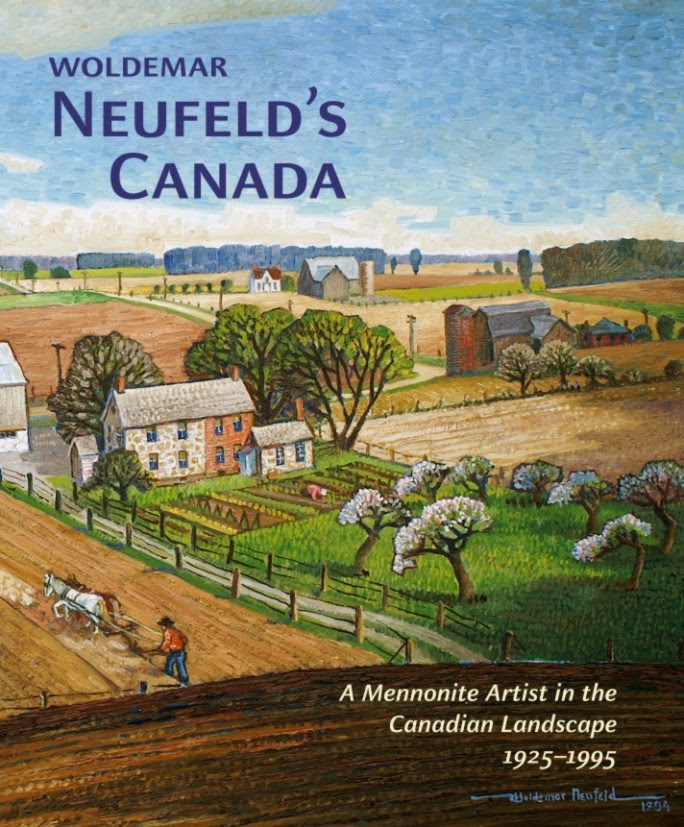
This month’s picture studies:  Woldemar Neufeld

This month’s nature studies:  TBA

This month’s hymns and folk songs:
Review:  Christian Dost Thou See Them; All My Hope on God is Founded
New:  Tell me the story of Jesus; At Calvary (need links to music)

This month’s art and craft activities:
Homemade cornstarch clay/bread dough clay/Sculpey
Crocheting (doll vest, hat)
Ponytails: Sewing group during March Break

Sugar study / maple syrup
Edith Schaeffer on writing and on reading together

Other planned activities:

Preparing for Easter
Possible field trip:  syrup museum
Games:  Quiddler, ?
St. Patrick’s Day
Homeschool drama performance


WEEK ONE

It Couldn't Just Happen, by Richards (week’s chapter):  Family Tree
Week’s poetry:
Week’s Latin:  Finish lesson 7 (review & quiz), start lesson 8
Week’s French:  Zoo study
These Happy Golden Years:  13-18
Marva Collins' Way:  5, 6
Week’s Age of Fable, by Bulfinch:  18, 19, 20

Ponytails:
Continue Christian studies and lit  
Continue math and science
Week’s history:  Story of the World Volume 4 by Susan Wise Bauer, chapter 26; Canadian history
Continue composition and grammar

Crayons:
Week’s math:  p 60-64, geometry
Week’s English:  Alpha Omega 149-155, copywork based on those spelling rules
Week’s science:  Physics Lab in the Home, chapter 1: Plumbing.  Science Alphabet A-E.
Crusoe:  pages 106-121
Week’s history:  George Washington's World by Genevieve Foster, pages 209-211, 212-215, 215-216; timeline book
Bible lessons

Monday, Feb 28

Picture study

Tuesday, March 1

Ponytails:  Whatever Happened to Justice:  Instability chapter

Homemaking: Writing

Wednesday, March 2  (afternoon appt.)

Ponytails: Foster: Golden Eagles Come Home

Thursday, March 3

Jack & Jill 15
Homemaking: Writing

Friday,  March 4

Ponytails: Foster: Out of Persia

Shakespeare:  Macbeth


WEEK TWO (3 days)


Richards (week’s chapter):  Amazing & Wonderful
Week’s poetry:
Week’s Latin:  Finish lesson 8 (quiz)
Week’s French:  Finish lesson 7
Finish chapter from The Fearless Treasure by Noel Streatfeild (London Town)
Happy Golden Years:  19, 20
Marva Collins:  7
Week’s Bulfinch:  21

Ponytails:
Continue Christian studies and literature
Continue math and science
Week’s history:  Bauer 27, Canadian history
Continue composition and grammar
Work on French with Mom

Crayons: 
Week’s math:  p 65-68
Week’s English:  Alpha Omega p 155-157; copywork
Week’s science:  Physics Lab chapter 2: Faucets & Pipes.  Alphabet F, G, H.
Crusoe:  pages 121-126
Week’s history:  GW’s World 217-218
Bible lessons

Monday, March 7
?

Tuesday, March 8  (Shrove Tuesday)

Hidden Art of Homemaking:  “Drama”

Ponytails:  Justice:  Democracy & the Constitution

Wednesday, March 9   (Ash Wednesday)

Ponytails:  Foster:  We Still Call it Sunday

Thursday, March 10:  EXAMS

Friday, March 11:  EXAMS


SPRING BREAK: March 14-18


WEEK THREE

Richards (week’s chapter):  In God’s Image
Week’s poetry:
Week’s Latin:  Do Lesson 9, including quiz
Week’s French:  Start Lesson 8
Happy Golden Years:  21-25
Marva Collins:  8, 9
Week’s Bulfinch:  22, 23

Ponytails:
Continue Christian studies and literature
Continue math and science
Week’s history:  Bauer 28, Canadian history
Continue composition and grammar

Crayons:
Week’s math:  p 69-74, geometry
Week’s English:  Alpha Omega p 157-161; copywork
Week’s science:  Physics Lab chapter 3:  Water Seeks its Own Level.  Alphabet I-L.
Crusoe: pages 126-143
Week’s history:  GW’s World 219-220, 220, 221, 222
Bible lessons

Monday, March 21

?

Tuesday, March 22

Homemaking: “Drama”

Ponytails:  Justice:  The Constitution

Wednesday, March 23

Ponytails:  Foster:  Herod & the Temple

Thursday, March 24

Homemaking: practical skills / Sugar Study

Jack & Jill 16

Friday, March 25

Ponytails:  Foster:  Hillel

Shakespeare:  Macbeth

WEEK FOUR


Richards (week’s chapter):  A Sure Word
Week’s poetry:
Week’s Latin:  Start lesson 10; finish if possible
Week’s French:  Finish lesson 8
Happy Golden Years:  26-end
Marva Collins:  10, 11
Week’s Bulfinch:  24, 25, 26

Ponytails:
Continue Christian studies and literature
Continue math and science
Week’s history:  Bauer 29, Canadian history
Continue composition and grammar

Crayons: 
Week’s math:  p75, 76, chapter test; geometry
Week’s English:  Alpha Omega p 161-168; copywork
Week’s Science:  Phys Lab chapter 4 & 5:  Surface Tension, Hot & Cold.  Alphabet M-P.
Crusoe:  pages 144-161
Week’s history:  GW’s World 223-225, 226-228, 229-230
Bible lessons

Monday, March 28
 ? 
Tuesday, March 29

Homemaking:  practical skills / Sugar Study

Ponytails:  Justice:  Competing for Privilege

Wednesday, March 30  (afternoon volunteering)

Ponytails:  Foster:  Law of Moses

Thursday, March 31

Homemaking: practical skills / Sugar Study

Jack & Jill 17

Friday, April 1

Shakespeare:  Macbeth

Wednesday, February 09, 2011

Thursday Homeschool Plans

9 a.m.: New hymn (see video), Tennyson's poems, and several pages from Marva Collins' Way, which we are reading parts of both for Black History Month and for some character building/academic inspiration.


9:20 a.m.: Crayons do math and Bible Geography with Mom. Ponytails work on independent math and other work.

9:50 a.m.: French: We are supposed to be reading from Les Insectes, but the book has temporarily disappeared so we may have to do something else. Also: French Bible copywork.

10:10 a.m.: Crayons take a break, Ponytails work with Mom.

10:30 a.m.: Ponytails take a break, Crayons do English with Mom. Review the parts of speech, and read two pages about how to make the most of watching educational "T.V. specials." Which shows how old that book is.

10:50 a.m.: "Educational T.V. Special." To be decided...we were going to watch a Christian dinosaur video that Mama Squirrel picked up from a freebie box, but after checking it out online it appears that there were quite a few issues with this movie, so we will choose something else.

Lunchtime: Ponytails work with Dad.

1 p.m.: Crayons do geometry (from Math Mammoth Grade 4) and finish a chapter from George Washington's World. Ponytails finish independent work and do any needed work with Mom.

2 p.m.: Group reading from Bulfinch's Age of Fable. Homemaking lesson: read several pages from the Food chapter in Hidden Art of Homemaking, and do some baking together.

3 p.m.: Teatime.

Wednesday, January 12, 2011

This Term's Work: Picture Study

My choice for this term's art study is Woldemar Neufeld.

We were going to do Tom Thomson, but I have this lovely book that Mr. Fixit bought for me as an early Christmas present this year...and Neufeld, although he spent much of his life in the U.S., also did many paintings of this part of Ontario.  Here's a short bio page. 

We'll probably also visit the Neufield gallery.

Friday, January 07, 2011

Friday School Plans...and Crayons' Epiphany Gala

What's up today for the Squirrelings?

Well, that's after we get enough clothes on to go out and shovel the steps and help Mr. Fixit clear the driveway.

We have been reading Little Town on the Prairie together this week before starting other classes--just something that got started on kind of a whim.  And we usually start with a hymn or O Canada--sometimes with the hymn books, sometimes with You-tube.

Then Crayons has table work with me--she has just started Math Mammoth Light Blue Grade 4 (thanks, Mr. Fixit, for printing it out), so she's doing addition and subtraction review in that book.  And I have to put a few dates together for her to paste into her timeline book--we are doing a Book of the Centuries but in a format that doesn't take as much writing.  Oh, and we have a science experiment involving popcorn.  And four pages of Robinson Crusoe.

Ponytails has ongoing work in math and science; she is doing an outline of a magazine article (from one of the units in Write with the Best) and studying nouns in Easy Grammar Plus.  Today is Canadian History day (we usually read that together) and she also has half a chapter of Story of the World Book 4 to read.  And some assigned pages from The Accidental Voyage (the last Mr. Pipes book of hymns and history).

Group times:  we are continuing our French lessons together, reading Louisa May Alcott's Jack and Jill, reading a couple of pages from It Couldn't Just Happen, and doing a picture study.  Except that it's now Friday morning and I'm not sure what picture we're doing.  I guess that will have to wait until after lunch.

Making stuff:  Ponytails has a couple of current projects; she'll probably post them on her blog when she's done.  Crayons has been extremely busy over the last few days since she arranged a Twelfth Night/Epiphany party for her Only Hearts Club doll (who's Hispanic), the little sister of the Only Hearts Club doll, the same-sized friends of the Only Hearts Club doll, and the rest of us human beings, who felt a bit like we'd been invited to the Miss Happiness and Miss Flower housewarming in Rumer Godden's book.  She made decorations, gave a speech, gave EVERYONE tiny Sculpey presents, gave us paper hats, and read us the Three Kings Day chapter of The Happy Orpheline.   I love it when the Squirrelings get old enough to think of things like that all by themselves.  Thanks, Crayons!

Wednesday, December 15, 2010

Our Roman Roots: So Far So Good (review)

Our Roman Roots: A Catholic Student's Guide to Latin Grammar and Western Civilization, by James R. Leek, Ed.D. Review at HomeschoolChristian.com.

This is not a state-of-the-art Latin program, especially in its 1997 coilbound edition with cassette. It will not give you the ability to translate Virgil or to read the Vulgate Bible. But if you're looking for something more than just a prefixes/suffixes curriculum for students from grades 4 to 8, but aren't sure where to start, you might want to consider this book.

We are only up to lesson 5 of 15, which is just about where we should be in the one-year course; so I can only base our review on the first third of the book. But so far, I'm pleased.

Ease of use?--very, very easy, except that you or your students will have to set up separate notebooks with tabs before beginning the course. Occasionally I photocopy one of the pages for the Squirrelings to use instead of copying everything out, for instance if there is a multiple-choice written activity.

It's set up in 15 5-day lessons; unless you have only older students, I wouldn't think you'd want to take the whole thing in 15 weeks. You can either teach a whole lesson every other week and then use the next week for review; teach a lesson over two weeks; or mix things up as we have done (we started off slow but have done two full lessons in the past three weeks, leaving French aside until January). The books are set up with one activity after another, so it's easy to just pencil a mark or leave a Post-It note at the last activity you completed, and go on from there.

The fifth day of each lesson is a one-page quiz; sometimes these are quite tricky and they bring in concepts from previous lessons, so I would recommend a bit of extra review before doing them. We have done things like make Concentration cards with vocabulary words and Roman numerals.

Recommended age? I wouldn't consider it with children below about grade 4, at least as far as the grammar goes; they need to be able, almost right away, to grasp the concept of the genitive or possessive case, and that's not the easiest thing to explain. An example of that is "agnus Dei" (lamb of God), where the "of" is understood by the ending on "Dei." Also, many of the daily "Word Power" quotes that are to be copied into the notebooks require a fair amount of maturity to grasp, such as "Silent leges enim inter arma" (Laws are silent in war). Ponytails (grade 8) can complete some of the written activities faster than Crayons (grade 4) can, and I expect she will find some of the more advanced grammar easier; but Crayons has been doing just as well as Ponytails on the quizzes and the oral activities.

Most enjoyable activities: The Squirrelings, having some Catholic family history, like being able to astound everyone by saying grace in Latin. The songs (like Twinkle, Twinkle, Little Star) are fun; we have added in two Christmas carols this month that are featured in later lessons. Ponytails has found a couple of opportunities lately to tell people "Errare humanum est"; and Crayons picked out the word "donum" in a Latin song heard at a school concert last night. (You-tube video, not from that concert though.) They also like acting out the imperative forms of verbs (commands) as given on the tape: the voice commands them to Sta! (Stand up!) Sede! (Sit down!) Verte! (Turn around!) and so on.

Most enjoyable aspects for me, after trying out two other Latin programs previously with The Apprentice: no long lists of vocabulary to learn, at least not so far anyway. No chants, at least not so far, unless you count chanting the numbers 1 to 10. The program is not too difficult for me to teach with my one year of high school Latin and that bit of previous experience. I enjoy seeing the Squirrelings make some of their own connections with the vocabulary rather than having to have me point everything out. When the tape commanded them to "Audi!" and "Vide!", Ponytails was quick to point out the connection with "audio" and "video."

I also like the fact that this is not a colouring-page, word-search kind of curriculum. Although it's simple and enjoyable, it avoids busywork.

Downsides? 1. Occasionally--very occasionally--a word or concept will come up that isn't explained right away; one example is that the words "est" and "sunt" (forms of "To be") suddenly pop into use without definition. If you don't have any Latin knowledge at all, you might want to have a friend around to call on occasionally, or at least look things up sometimes online if you get stuck.*** 2. If you don't want any Catholic material at all, you would not like this course. Protestants can use it although there are a few things you might want to omit. 3. Pronunciation is Ecclesiastical, not Classical (Ecclesiastical is pronounced more like Italian); this is fun for singing, but might cause a bit of confusion if you move on later to materials from other publishers. 4. We skip a lot of the "extension activities" (short essay or research topics) unless it seems it would be particularly meaningful to do them.

I think this course could be alternatively titled "Wow! You can speak Latin!" Latin isn't always fun; but this book keeps it from being a chore.

***UPDATE as of Lesson 6:  Starting in again after the Christmas break, I noticed that Lessons 6 and 7 introduce the Ablative and Accusative cases, although you don't really do much with them.  We took one extra session to sort through the idea of conjugations, declensions and cases, comparing what we know of English and French grammar with Latin, and I gave the girls a photocopied chart showing noun endings.  This was one place where I think the program could have used a bit more explanation, although, as I said, all you're actually doing with the Ablative at this point is just saying that someone is "In such-and-such-a-country," and changing the ending for the names of some countries.

Friday, November 26, 2010

The Myrmidons: Written Narrations

Book used: The Age of Fable, by Thomas Bulfinch

Crayons (Grade 4) (uncorrected--Crayons' punctuation has improved greatly this fall!)

Once upon a time there was a king called Cephalus. He was right in the middle of a war. So he went to his friend Æacus. "Can I use some of your people" he asked. "Sure sure" said Æacus "as many as you want". "Thank you" said Cephalus. "But um I noticed that there isant any of your old people." "Ah yes" said Æacus "thats a long story."

Ponytails (Grade 8) (also uncorrected)

The Myrmidons

There was a war going on between Cephalus, the king of Athens and Minos, the king of Crete. Now, Cephalus was friends with the King of Ægina, Æacus. Cephalus went to Ægina to ask Æacus if he could borrow some soldiers. When he got to Ægina, he didn't see anyone he know.

"Where are all my friends?" he asked.

"I'll tell you the story," Æacus replied.

"The godess, Juno got very mad at us. Her husband, Jupiter's girlfriend's name was Ægina, like the city. She got very mad because it reminded her of her husband's other love. She sent a plague here.

"The plague wiped out all the men and women, but my son and I survived. Now I got mad, I had no people! I went to sleep under an oak tree infested with ants. I had a dream about the ants in the tree becoming men. Then I woke up.

"My dream had come true! The ants turned into men!" finished Æacus.

"Wow! That's amazing!" said Cephalus.

"Now, my friend, take as many men as you need! Good luck and good health!" exclaimed Æacus.

Monday, November 22, 2010

School plans for the last week of November

Ponytails (Grade 8)

Monday:
Bible
Reading from Mere Christianity
Math & Science as assigned by Dad
Lesson on Outlining and Notetaking in Write with the Best Volume 2
Story of the World Volume 4, read with Mom today

Tuesday:
Bible
Reading from Mr. Pipes--written narration
Math & Science as assigned by Dad
Lesson on Outlining and Notetaking in Write with the Best Volume 2
Story of the World, read alone
Whatever Happened to Justice?, with Mom
Watership Down

Wednesday:
Bible
Mere Christianity
Math & Science as assigned by Dad
Lesson on Outlining and Notetaking in Write with the Best Volume 2
Story of the World
Extra French lesson with Mom

Thursday:
Bible
Mr. Pipes
Math & Science as assigned by Dad
Lesson on Outlining and Notetaking in Write with the Best Volume 2
Story of the World, half chapter
Canadian History, with Mom
Watership Down

Friday:
Bible
Mere Christianity
Math & Science as assigned by Dad
Lesson on Outlining and Notetaking in Write with the Best Volume 2
Augustus Caesar's World, with Mom
Story of the World, half chapter


Crayons (Grade 4)

Monday:
Bible reading
Hero Tales--Mary Slessor
English--work on sentence structure
Math drills
Math Mammoth--finish division chapter this week, keep working on multiplication
Life of Robert Louis Stevenson, ten pages
Work on history timeline scrapbook


Tuesday:
Bible reading
Bible Geography (review lesson)
Free Reading List
Math Mammoth
Science on a Shoestring

Wednesday:
Bible reading
Math drills
Math Mammoth
English work
Chapter from Kidnapped
History: George Washington's World--"The Seven Years' War Ends"

Thursday:
Bible reading
Hero Tales
Free Reading List
Math drills
Chapter from Kidnapped
Chapter from Story Book of Science--"The Old Pear Tree"

Friday:
Bible reading
Bible Geography--start a new lesson
English work
Math drill (short)
Math unit test
History, George Washington's World--"Goethe"


Group Work

Monday:
The Fearless Treasure--start "The Knight's House"
Latin--finish off lesson 3 this week (we are a bit behind)
It Couldn't Just Happen--pages 56 to 58
Picture Study--Jason and Medea, by Waterhouse
Poems

Tuesday:
Ourselves
French--start a new lesson this week (we are a bit ahead)
Shakespeare: Twelfth Night
Home Studies
Singing

Wednesday:
The Fearless Treasure--written narration
Latin
It Couldn't Just Happen, pages 58-60
Composer Study--songs by Faure
Poems

Thursday:
Ourselves
French
Age of Fable--Cadmus
Home Studies
Singing

Friday:
Age of Fable--The Myrmidons
It Couldn't Just Happen--finish the chapter
Latin
Jack and Jill--written narration (or do one from Age of Fable)

Tuesday, November 09, 2010

Wednesday School Plans

Crayons:

Bible reading--Hebrews 7
Hero Tales--reading about Menno Simons
English--some "messed up writing" to fix from Czechoslovak Fairy Tales
Math drills--times tables
Math Mammoth lesson--division with remainders
History:  work on timeline scrapbook
Poems
If we get time:  a science experiment showing the difference between safety matches and regular ones

Ponytails:

Reading from The Accidental Voyage (current Mr. Pipes book)
Poems
Reading from Bauer's Story of the World 4
Extra French lesson with Mom (most French is done with Crayons)
Grammar page
Math and science as assigned by Dad

Together:

Opening--hymn, folk song, reading from It Couldn't Just Happen about the age of the earth
Latin lesson:  copy the quote for the day "Alma mater" and look for derivatives from "mater"; review some of the roots we have already learned; practice counting to ten; review the genitive (possessive) case
Chapter 8 from Alcott's Jack and Jill, with written narration...this is the chapter where Merry redecorates her room and sets the curtains on fire
Composer study:  Fauré's Dolly Suite
Time for...making things...or maybe playing Zooloretto (Crayons' request)

Wednesday, October 27, 2010

School plans on a blustery day

Since I have schoolwork written out by the month, whenever we get to the last week I have to be a bit creative trying to fit in things that slipped through the cracks.  So this week we're having a daily reading from It Couldn't Just Happen; a daily folk song (You-tube is helpful); and a bit of extra push to finish off math units and sections of the history books.  No special reason that we HAVE to do that--it just feels better when you start a new month fresh.

Crayons' schedule for today:

Singing and science reading with Ponytails

Having a look at a jar of beans we're sprouting (new science challenge)

Bible, spelling and math with me (we are still doing spelling every day; next month's language focus may be a bit different)

Finishing a chapter of Life of Robert Louis Stevenson

History reading from George Washington's World:  "A King but not a Ruler"

Stories from Bulfinch's Age of Fable:  "Dryope," "Venus and Adonis"

Latin lesson from Our Roman Roots

Poems by Charles G.D. Roberts:  "The Solitary Woodsman"

One game from Word Play Cafe

Homemaking/crafts time...if we get time, a drawing lesson with Ponytails

Books from the extra reading shelf

Ponytails' schedule for today:

Keeping up with chapters in Christian studies, history, science, math
Page of grammar
Group reading and singing times with Crayons
Latin with Crayons
Extra reading

Tuesday, October 12, 2010

Schoolwork, the day after Thanksgiving

Holidays are wonderful but they do mess up your school week as well as your mental clock.

So today isn't a very heavy day.

Crayons:

Bible
Hero Tales, read about David Livingstone
Math Mammoth Light Blue Grade 3B, two pages--learning about meters and kilometers
Spelling work
Canadian Children's Treasury--start reading a story about the Arctic by James Houston
Science--start a sprouting-birdseed experiment

Ponytails:

Bible
Mere Christianity
Math and science assignments
Einstein biography
Composition assignments
Page from Easy Grammar Plus
Watership Down
Augustus Caesar's World:  Mark Antony

Group things:

Hidden Art of Homemaking--read about music (put off from last week)
Latin lesson
Singing
Sewing
Teatime, using a recipe for Cranberry Apple Tea (if I can get the Squirrelings to try it)...we might combine that with the Homemaking reading

Tuesday, October 05, 2010

How homeschoolers do things: a drawing lesson

We are using Bruce McIntyre's Drawing Textbook this year, picked up in a free box at a homeschool meeting--today was our first lesson.

What we needed: paper (we used some pink paper just for a change from white), drawing pencils, the textbook, and a few props (a pumpkin, a bagel, and a coffee mug).

What we did: Read through McIntyre's "The Seven Laws of Perspective" at the beginning of the book, and looked at how his drawing of a doughnut illustrates all seven of those laws (overlapping, shading, density, foreshortening etc.). We didn't have any doughnuts to show how a round doughnut becomes a flattened-circle shape in a drawing, so we made do with a bagel.

Then we skipped over to exercises 1, 2 and 3 from the main part of the book: drawing a birthday cake, a television set, and a "simple candle." These involve foreshortened circles and squares. Everybody had a few tries at trying to get all the lines to go in the right direction, and nobody got too frustrated. The girls also got amusement out of showing me how younger kids would draw a birthday cake or a candle, without the understanding of perspective that they have.

Both girls have done drawing classes with groups, and they've heard lots about shading, but sometimes you just have to go back to how you make round things look round without drawing them round. This is good stuff especially for Crayons to learn along with the geometry and measurement she's doing in math.

Art lessons don't have to be expensive or fancy. Sometimes you learn more from a simple idea and a bagel.

Thursday, August 26, 2010

Ambleside Online...isn't that too much British history?

If you want to consider this a commercial for Ambleside Online, that's fine...maybe it is. Come check it out if you like. But it's more just an unfolding of what we are doing for our history studies this year.
"We, believing that the normal child has powers of mind which fit him to deal with all knowledge proper to him, give him a full and generous curriculum, taking care only that all knowledge offered to him is vital, that is, that facts are not presented without their informing ideas."--Charlotte Mason, Towards a Philosophy of Education
A question that comes up a lot about the curriculum we use is that it seems--especially at first glance--to be first of all very British-centered, and second of all American (as in United States of America, white, European). What about world cultures? What about globalism? What about the Incas and the Songhai Empire and the Haida? What about Canadian Confederation? Why is the American history book written by an English author?

I have a couple of things to say in response. First of all, I have to be very honest: none of my Squirrelings (so far) just love history best and can't get enough of it; the family tendency is more towards science. I am saying that only so that I can't be accused of teaching the kids more history than what I consider the minimum; and they don't usually go searching for extra. Even The Apprentice did her one Ontario-required history credit in Grade Ten, and that was it--chemistry and mathematics and graphic design and English and hairstyling didn't leave much extra schedule room or homework time for more courses requiring a lot of reading. (Yes, you heard that right--Ontario secondary school students are only required to take ONE history course, and that's 20th-century Canadian history.)

BUT...even doing the minimum, and mostly using the suggested Ambleside Online books (with some substitutions for Canada and for what we can't find), our Squirrelings are still getting a very broad look at a lot of history. I would venture to say that it's as extensive as some of the other homeschooling programs out there--you just don't notice it right away. Now some of this is just going to be touched on during any school year--there is no way that we can go into everything in depth. But isn't that the same no matter what your method or curriculum? Nobody can teach or learn everything there is about everything.

Some examples...

Ponytails is doing what Ambleside calls Pre-Year-7. It's a combination of Year 6 books plus a few other books from previous years, plus a couple of others from higher years since she is really in Grade 8. One of the main books used in Year 6 and/or Pre-Year-7 is Genevieve Foster's Augustus Caesar's World. Roman history, right? More classical dead white guys?

Well, in addition to the life of Augustus Caesar, a summary of The Aeneid and a chapter on Roman gods, this book covers a fair amount of Old Testament history, Egyptian mythology, famous Greek and Roman philosophers, Mayan civilization, "Children of the Sun" (Incas), Lao-tzu, Confucius, Hindu beliefs, the story of Buddha, Zoroaster, and the life of Jesus. Not all in great detail, as I've said--but how much can you do in 325 pages?

Along with that book, Ponytails will be reading Susan Wise Bauer's Story of the World, Volume 4: The Modern Age, the chapters covering from 1865 to probably just past World War II (depending on time). Just grabbing some topics at random from those chapters, she'll be reading about Japan's Meiji Restoration, the Dutch East Indies, the War of the Pacific (in South America), Ned Kelly (Australia), the colonization of Africa, Brazil's republic, and Abdulhamid the Red (events involving Turkey and Armenia). And we'll be adding in chapters from a book of Canadian history, because our perspective on the late 19th, early 20th century is a bit different from what you get in the U.S. history books, and because that's what Ontario school kids study in grade 8.

To me, that sounds like we're going to have more trouble sticking down all the loose pieces than we are getting out of any Anglo/European history rut. And that doesn't include what might come up through studies in geography (Kon Tiki, Heidi's Alp the Book of Marvels), Christian Studies, and other subjects.

Crayons, in Grade 4, will be basing her history readings on Genevieve Foster's George Washington's World. Oh--a year all about the War of Independence, right? Maybe we can sneak the United Empire Loyalists in there somewhere...

Well, yes. But the book also includes chapters on Catherine the Great, Captain Cook, Quianlong/Ch'ien Lung, the French Revolution, the Kalmucks, Hokusai, Fray Junipero, and ballooning with the Montgolfiers...and the Loyalists are in there on page 174. Not bad for a fourth-grade history book. Besides that, she'll be doing some Bible Geography and Archaeology, learning about Pompeii (in Fabre's Story Book of Science, and supplemented with an illustrated book we have), reading about Christians who made an impact on several different countries (Hero Tales), and hearing about some important periods in British history (Noel Streatfeild's The Fearless Treasure). Oh, and reading stories from classical mythology (Bulfinch's Age of Fable) and from Native Canadian traditions (Canadian Children's Treasury). (Note: only Foster's book and Age of Fable are specifically included in AO's Year 4. The others are our own choices, but they are similar to books used in AO years.)

Again, that's almost too much, too wide--not too little, too narrow. If we can fit even two-thirds of that in and have each girl remember maybe half of that two-thirds--that may still be better than what some public-schooled children will take away from social studies this year. There's a reason we've stuck with AO all these years, even when we've had to adapt it a little...well, there's more than one reason, but the one I'm thinking of is this: we have a big long paper timeline, the Timechart History of the World. When it's sitting on my desk (it's too tall for the bookshelf), it kind of blends into the wall and you don't notice it much. But when you really want to look at it, you have to fold it out--and it goes all the way across the room--and that's just the last six thousand years or so that it covers. And then you start looking at the timelines, seeing the connections, seeing the empires come and go, seeing the little thumbnail drawings of people; and you not only start to get a sense of how big history is, but how interconnected we all are. It's a bit tricky too to get it all folded back up again.

Ambleside Online is a bit like that--you have to unfold it to see what's in there, but once you do, you get kind of immersed and start to make connections. Even if you're not a born history student.
"The days have gone by when the education befitting either a gentleman or an artisan was our aim. Now we must deal with a child of man, who has a natural desire to know the history of his race and of his nation, what men thought in the past and are thinking now; the best thoughts of the best minds taking form as literature, and at its highest as poetry, or, as poetry rendered in the plastic forms of art: as a child of God, whose supreme desire and glory it is to know about and to know his almighty Father: as a person of many parts and passions who must know how to use, care for, and discipline himself, body, mind and soul: as a person of many relationships,––to family, city, church, state, neighbouring states, the world at large: as the inhabitant of a world full of beauty and interest, the features of which he must recognise and know how to name, and a world too, and a universe, whose every function of every part is ordered by laws which he must begin to know.

"It is a wide programme founded on the educational rights of man; wide, but we may not say it is impossible nor may we pick and choose and educate him in this direction but not in that. We may not even make choice between science and the 'humanities.' Our part it seems to me is to give a child a vital hold upon as many as possible of those wide relationships proper to him. Shelley offers us the key to education when he speaks of "understanding that grows bright gazing on many truths.""--Charlotte Mason, Towards a Philosophy of Education
This post is linked from the Charlotte Mason Blog Carnival.

Wednesday, August 25, 2010

Frugal Homeschooling: Is there a homeschool store in your cupboard?

Last spring I made a list, not of every book in the house, but of what we had in the way of homeschool resources. I set it up in the same way as my favourite homeschool catalogue, so that I could "shop" from it. I didn't include library books, but I did include downloaded e-texts and software.

A homeschool catalogue usually starts by listing how-to-homeschool books and parent resources. My list started like this:

General Books

Debra Bell—Ultimate Guide to Homeschooling
Ruth Beechick books—primary, grades 4-8
Books Children Love, other books of books
Homeschool Your Child For Free
Classical Curriculum (Berquist)
Charlotte Mason Companion
CM Home Education series
The Blackboard Book, by Eleanor Watts (e-text)
Free printables and websites, 2010 edition (e-text)

Next section in a typical Christian homeschool catalogue: Bible study resources. Again I just made a list that started like this:

Bible Study

Bibles—several translations
What the Bible is All About for Young Explorers
Old Testament 2-year Survey Class, by Meredith Curtis (e-text)
The Holy Land in the Time of Jesus
Everyday Life in Bible Times (NG book)
Bible for Today, 3 vols.
Barclay’s Gospel commentaries
Desiring God / Future Grace


And so on through Spelling Skills, Handwriting, Grammar, Math, History, Science, Music.

All of this counting and listing had a couple of purposes. One was just a general figuring out of what we had--a chance to count our blessings, if you like, and to realize how much we really didn't need to buy, how much was already right there for us to use. The other reason was to take that information and "shop" with it. From this "homeschool store," what would I buy to use for math this fall with Crayons? What resources could I combine to put together a French program? And was there something really lacking, that I couldn't figure out a way around?

Most of what we plan to use this year came from our own "store." We got planners for about a dollar apiece. We did end up buying new Key to Algebra workbooks for eighth-grader Ponytails, because that made the most sense. Later in the year I'll download the next Math Mammoth level for fourth-grader Crayons. I also bought John Hudson Tiner's Exploring the World of Mathematics from a friend who was done with it, and a set of Calculadder 2, although I'm having second thoughts about using it this year...that's something I need to talk over with the Squirrelings.

I bought a printed-out copy of Write with the Best Volume 2, although I do have my own copy of the file, to save myself the trouble and paper of having to reprint it. (You have to print out the whole book with that one--all or nothing.) And there have been a few other things that popped up along the way, mostly secondhand--like The Canadian Children's Treasury and Science on a Shoestring. Very recently someone on the Canadian used-curriculum exchange list posted a few items for sale, including some historical colouring books that fit with Crayons' history, and a couple of other things, so I have my order in for those. (I try to sell a few books here and there myself to even things out.)

Some printer paper, and I guess we're set.

To sum up: homeschooling is not totally free, even when you shop mostly from the cupboard...but it does help. You could say that I should figure in some amortized cost for books that I had bought previously and used for one or two other people. You could also say that I should include things like printer ink (some people do), staples, any books I haven't bought but might, any lessons or outings that we haven't registered for or attended but might, or even Teacher Appreciation Presents.

Hey, everybody's got a wish list.


This post is linked from the Festival of Frugality.

Tuesday, July 20, 2010

How do you spread out a school year?

Day by day, like Cindy?

Listed by chapter or page but undated, like the Deputy Headmistress?

I have settled on a middle place: I have a year's plan divided up by months. I like to know how many chapters we are supposed to be into a book by the end of October, or roughly when we're going to get to a science or craft project that requires supplies, or when a library book needs to be put on hold. That way if we miss a Monday for Thanksgiving, or someone's sick, it doesn't mess the schedule up too much to have to put the week's work off till next Monday. The idea is just to get to where we're supposed to be by the end of the month.

I take into account things like really only having three workable school weeks in September, two in December, and three in March (we take March Break).

I can always sit down on Sunday night and figure out how big a piece of the month's work we can reasonably chew off in the coming week...but I'm not doing that this far ahead. I just like to have a rough idea at this point.

It helps to go into enough detail to include chapter titles and topics--you sometimes see connections and patterns that you might have missed. Whatever Happened to Justice? mentions Thomas Paine, and one of the Write with the Best lessons uses an excerpt from Paine. I don't usually try to jiggle them closer together--but it's nice to have a note that we'll be returning to a person or a topic later on. Or if there are chapters covering almost identical material in different books--I make notes on what to skip.

It also helps when you can see where a book's probably going to be done before the year's end, or where you're going to have to double up on readings. One of Ponytails' history books will be done in May; luckily, that's just where we're going to have to pick up the pace with the other one.

It also helps if you look at the month's work and feel either motivated or exhausted. Exhausted probably means that you need to stretch something out or cut it out altogether. I cut out a few things after looking at the year's plan...I had hoped to read a book about Alexander the Great with Crayons, but it's just not going to happen with the rest of the history we have to do. Maybe next year.

Here's a sample of the plan for the upcoming year. I don't bother to include things like Bible reading (unless there's a specific place we're trying to get to) or daily grammar pages. I also don't have a lot of details included about Ponytails' science lessons, since she does that with her dad. My plan's in a Word table, but this is a text version.

Ponytails, September:

Christian Studies: Mr. Pipes: Clement; Hail, Gladdening Light; Gregory of Nazianzen; Prudentius. Lewis readings 1-3.

History: Justice: Cause is Law, Higher Authority, Higher Law (refers to Thomas Paine). Foster: Intro (Janus), Under a Lucky Star, Ides of March, Cleopartra, Caesar's Son, Cicero, Conspirators. Bauer: 6, 7, 8. Story of Canada: chapter 7, Confederation Days, to top of page 178.

English: Elements of Style, 8 lessons. Begin writing Unit 1: Free Verse. Weekly Wordplay Cafe.

Literature: Watership Down, 2 chapters/wk so approx. 6 chapters. Read Bulfinch chapters 2-4 (skipping 1 for now). Start reading Shakespeare play. Poetry as assigned.

Science and Geography: Richards: Universe & its Origins, Dead Planets Living World, The Odd Planet. (May not get that far if we're doing map work.) Biography chapter 1-3. Readings from geography list. Nature readings together.

Math: Start work with Dad. Weekly group math time (3 times).

Languages: Latin lessons 1 (Days 1-5), 2 (Days 1-4). Learn Twinkle Twinkle Little Star in Latin. Learn "In Nomine Patris." French 3x/wk (approx. 9 lessons).

Fine Arts and Citizenship: Streatfeild: The Six, Mr. Fosse. Music and picture study. Ourselves chapter XII. Start Plutarch (should get to lesson 2 or 3 of 12).

Gracious Arts: Alcott chapters 1-3. Schaeffer chapter 1 The First Artist, chapter 2 Hidden Art.

Crayons (some of her books are the same so I won't repeat them):

September:

Christian Studies: Bible studies, 3-4 lessons.

Language Arts: Daily work with Mom, still to be planned. Weekly Wordplay Cafe.

Math: Daily work with Mom, weekly group time.

Literature: Poetry, start Stevenson. Kidnapped--start and see how far we get.

Science and Nature: Read How to Think Like a Scientist. Start some Franklin experiments (still to be chosen). Start Story Book of Science if time.

History: Read book about Franklin. Start GW's World, through "The Friendly Printer." Also read Seventh and Walnut (it's short). Writing/narration activities as planned.

More on this fall's homeschooling (Part 3)

MATHEMATICS

I already mentioned briefly what we're doing: Ponytails is finishing off Key to Geometry and Key to Decimals, and then will be starting Key to Algebra, and probably doing practice Gauss competition tests at the grade 8 level. She's planning on doing most of her math with Mr. Fixit again this year.

Crayons will be finishing Math Mammoth Light Blue Grade 3, because we got into it late in the year, and then we'll download Grade 4. I've been very interested to see where/how the Miquon Math she'd always used fit in to this newer curriculum; where we can go fast because we've already covered a topic, and where we have to slow down for math potholes. Not surprisingly (if you know Miquon), she has a very good sense of place value; she has a good understanding of how numbers work, and she's probably a bit ahead in multiplication, since Miquon starts that early. She's great at money math, not so good at telling time, but we'll keep working on that.

We'll be doing a weekly joint math time--I'm still working out the details on that. Some of what we'll be doing will be coming out of Critical Thinking's Math Detective book (the gr 5-6 level), since we have it on hand; but I don't want to do exactly the same format every time...the goal is to get a bigger sense of mathematics, to learn about the really interesting parts of it, not just "what you get in school." (If you've never checked out the Living Math website, there's lots of inspiration there.)

GRACIOUS ARTS

Otherwise known as Home Economics or Family Studies...but it's more than that. We are going to read through The Hidden Art of Homemaking (maybe just parts of some chapters), and supplement that with Marmee's Sugar N Spice Studies (nice around the holidays), a book on teatimes, a book on making basket gifts for people, and other books on crafts and creativity. We'll also read Louisa May Alcott's novel Jack and Jill, since a lot of that book is about "brightening the corner where you are" and finding the beauty around you.

CITIZENSHIP

A catch-all category. Whatever Happened to Justice? could fit in here, but I'm counting that under history this year. We'll be reading Plutarch's Lives (probably just Ponytails the first term), some of Charlotte Mason's book Ourselves, and Noel Streatfeild's book The Fearless Treasure. (We've never used that last one yet, so it will be an experiment.)

FINE ARTS

We'll probably follow the Ambleside rotation for picture studies and composer studies, except that I want to include Tom Thomson in this year's studies...it's a good year to do this since at least one museum within reach will be hosting a Thomson exhibit.

Art instruction: this is pretty much open. Crayons, although she loves to craft, is going through a spell of thinking that she can't draw, so it's not something I'm going to push right now. Ponytails has her own artistic interests she's working on. We will incorporate narration drawings and other activities into the year's work and leave it at that. (I was pretty happy, though, to find tins of watercolour pencils and charcoal pencils at Dollarama this weekend for $1.25 each.)

LATIN

We'll be following the lessons in Our Roman Roots, probably three times a week.

FRENCH

I had planned to have Ponytails start one of the Mission Monde levels, and work something out myself for Crayons. When I got started working on Crayons' curriculum, I realized that we could probably do at least the first half of the year together, and then maybe get MM for Ponytails after Christmas. I looked at the Ontario ministry guidelines for grade 4 and grade 8 French, and they're really not that complicated...no offense to anyone who might be offended by that, I just mean that, for a ministry of education outline, it's pretty simple and clear what's supposed to be taught, and we can cover that with our own books. Our theme is going to be Les Insectes, based on a Canadian activity book (from a used book sale) called Les Insectes (surprise). We'll learn bugs along with verbs.

I think that's it for now...

Saturday, July 17, 2010

What's ahead in the Treehouse homeschool?

Up in the Treehouse, Mama Squirrel has been hunched over a desk with a pen in her furry paw, post-it notes stuck to her tail, and a look in her eyes similar to that of a determined but frustrated suitcase-packer.

However, that's not a very leisurely place to be, for either Mama Squirrel or the Squirrelings. And the answer, of course, is not to cram everything in tighter, but to let go of what most likely won't matter on the trip. Or afterwards.

Leisure is having the freedom (time, space, opportunity) to discover what makes you fully human.

Okay.

But we are still going to fit in a travel-sized package of Latin this year. And work on French, in which we have gotten unavoidably but sadly behind.

Crayons, going into Grade 4, will be doing Ambleside Online's Year 4, more or less, which covers mostly American history of the 1700's. (We won't be reading This Country of Ours or Abigail Adams.) Geography, nature, and some of the science will be different. However, we're at a very interesting point with the two Squirrelings that are left homeschooling, since some of the Year 4 books also appear on Carol's Pre-7 book list, which we like very much and which gave us a base for planning Ponytails' Grade 8. So this year we'll be doing Age of Fable and It Couldn't Just Happen together, along with Shakespeare and some of the usual other together-things.

Ponytails will have two strands of history: Augustus Caesar's World by Genevieve Foster, and world/Canadian history from 1865 to 1965, using The Story of the World Volume 4 and The Story of Canada which covers, in this squirrel's opinion, too much too fast to be a favourite CM resource, but which is good for a middle-school look at Confederation, the World Wars and so on.

Math will be mostly Math Mammoth for Crayons and Key To books for Ponytails, although we'll also be doing some math journalling. Crayons will be reading Jean-Henri Fabre's The Story Book of Science and doing some Benjamin Franklin science experiments (maybe these, maybe these). Ponytails will be continuing to study science with Mr. Fixit (a.k.a. Dad) but will also have a (short) science reading list.

I'll post more details as I pull them from my tail notebook.