
Wednesday, January 16, 2019
Something fun and exciting for CMers


Sunday, January 13, 2019

Thursday, January 10, 2019
The Intentional Thrifter: When clouds are green
I like this painting of clouds in Algonquin Park. It was painted by Tom Thomson over a hundred years ago, but it reminds me of the view from our city balcony (well, not today when it's all foggy and snowing). I guess clouds are clouds!
 Thomson used an unusual variety of colours in his clouds and skies, and the land and water below: purples, pinks, even greens. You can see greens as well in this one:

I recently found a linen shirtjacket in a dusty sage green that reminds me of Thomson's paintings.


Northern Lake, Winter 1912–13. Art Gallery of Ontario, Toronto
I recently found a linen shirtjacket in a dusty sage green that reminds me of Thomson's paintings.

I know you don't wear linen so much in the winter, but I'm thinking spring.


Saturday, January 05, 2019
A year of KonMari tidying here
Marie Kondo seems to be getting more popular than ever--she now has a show on Netflix (which I can't watch because we just unsubscribed). The word most often applied to her personally is "cute," but she also has her firm side. In one You-tube video, the owner of a messy pantry shows her a package of spoon-shaped cookies, drawing appreciative coos from Kondo but followed quickly by a pointing out of their months-old expiry date. Cute cookies aren't worth much if you don't eat them.
In 2017, I read The Life-Changing Magic of Tidying Up, and described some of my early experiments on the blog. Someone commented (kindly) that it would be interesting to know how long I'd stick with it.
Well, it's been a year-plus since I made my first t-shirt stand up straight, so I guess that's long enough now to call a habit. The food in our storage room has remained organized (and the wrapping paper I used on the bins has held up pretty well). The bathroom has stayed uncluttered. We had already gone through a lot of decluttering, during our downsize to the apartment. I had also done quite a lot of putting things into containers, and containers within containers, before I read Tidying Up.
What I think KonMari added to our vision for a newer, cleaner space here was a sense of aesthetic pleasure, an extra bit of harmony. One of the odd bits I picked up from Kondo's books was the idea that containers and boxes with clashing labels and random printing may contribute to a sense of info-overload. They can feel like commercials that never get turned off. Solutions to garish containers include peeling off a label, painting or covering the box (as I did with the very miscellaneous pantry bins), or emptying the contents into a jar or something else neutral. If it's a shoebox or something to be repurposed as a drawer organizer, then the outside printing doesn't matter. But if the storage container is going on a shelf, you might want to pretty it up a bit. That doesn't mean crocheted cozies for the toilet paper, but just keeping in mind how what we look at every day can boost moods (or bring them down). If we have to look at words in our homes, let's make them important and beautiful words.
I appreciate Kondo's encouragement to use whatever you have instead of buying new (often plastic) storage goods. One thing she does like are the sets of large plastic drawers for closets, partly because they keep storage behind closed doors. I don't have any, but I've compromised by treating a couple of under-bed baskets as if they were drawers. (We don't get as many dust-bunnies here as we did at our old house, so under-bed storage is workable.)
Another KonMari idea that I found useful was sorting by categories, especially with seemingly miscellaneous stuff. Not that we hadn't already done a lot of that, but I appreciated her emphasis on its usefulness. It helps us know not only where things are in the apartment, but also when we need to re-stock.
Finally, Kondo's knack for turning even an underwear drawer into a sort of Bento box array should lead not to obsession with one's undies, but to appreciation and gratitude for what we have. This is something we can share with and model for children. Look--we have socks! They're nice colours! They're clean! They're (mostly) hole-free! Let's take care of them! Even small things arranged carefully can make our days brighter, and that echoes Edith Schaeffer's thoughts on tabletop flowers, sandwich plates for hobos, and writing little notes to cheer people up.
I still don't talk to my shoes. But I'm glad for the help KonMari has given us.
In 2017, I read The Life-Changing Magic of Tidying Up, and described some of my early experiments on the blog. Someone commented (kindly) that it would be interesting to know how long I'd stick with it.
Well, it's been a year-plus since I made my first t-shirt stand up straight, so I guess that's long enough now to call a habit. The food in our storage room has remained organized (and the wrapping paper I used on the bins has held up pretty well). The bathroom has stayed uncluttered. We had already gone through a lot of decluttering, during our downsize to the apartment. I had also done quite a lot of putting things into containers, and containers within containers, before I read Tidying Up.
What I think KonMari added to our vision for a newer, cleaner space here was a sense of aesthetic pleasure, an extra bit of harmony. One of the odd bits I picked up from Kondo's books was the idea that containers and boxes with clashing labels and random printing may contribute to a sense of info-overload. They can feel like commercials that never get turned off. Solutions to garish containers include peeling off a label, painting or covering the box (as I did with the very miscellaneous pantry bins), or emptying the contents into a jar or something else neutral. If it's a shoebox or something to be repurposed as a drawer organizer, then the outside printing doesn't matter. But if the storage container is going on a shelf, you might want to pretty it up a bit. That doesn't mean crocheted cozies for the toilet paper, but just keeping in mind how what we look at every day can boost moods (or bring them down). If we have to look at words in our homes, let's make them important and beautiful words.
I appreciate Kondo's encouragement to use whatever you have instead of buying new (often plastic) storage goods. One thing she does like are the sets of large plastic drawers for closets, partly because they keep storage behind closed doors. I don't have any, but I've compromised by treating a couple of under-bed baskets as if they were drawers. (We don't get as many dust-bunnies here as we did at our old house, so under-bed storage is workable.)
Another KonMari idea that I found useful was sorting by categories, especially with seemingly miscellaneous stuff. Not that we hadn't already done a lot of that, but I appreciated her emphasis on its usefulness. It helps us know not only where things are in the apartment, but also when we need to re-stock.
Finally, Kondo's knack for turning even an underwear drawer into a sort of Bento box array should lead not to obsession with one's undies, but to appreciation and gratitude for what we have. This is something we can share with and model for children. Look--we have socks! They're nice colours! They're clean! They're (mostly) hole-free! Let's take care of them! Even small things arranged carefully can make our days brighter, and that echoes Edith Schaeffer's thoughts on tabletop flowers, sandwich plates for hobos, and writing little notes to cheer people up.
I still don't talk to my shoes. But I'm glad for the help KonMari has given us.
"Yet it was chiefly her body that was tired now; her mind, which had been so weary and fretted in London, had been wonderfully rested by this house that was now her home....[Nadine] stretched out a hand and laid it upon the paneled wall beside her; it was warm in the sun, as though it were alive....This house was maison-dieu [a house of God], and the stripping away of all that was unworthy and the building up of new beauty was in the nature of a crusade. And the house had agreed and collaborated." ~~ Elizabeth Goudge, The Herb of Grace (Pilgrim's Inn)
Thursday, January 03, 2019
Project 333, Winter 2019: A Quieter Space
In a recent article for Simplify Magazine, Myquillyn Smith described a New Year's ritual at her house. She chooses a room to "quieten," and removes everything but the basic furniture. (If you've ever read Myquillyn Smith's home books, you know that her decorating style is not bare-minimalist, so this is an undertaking.) For a short period of time, that space is allowed to just "be," giving it a fresh start. Stripped to essentials, does it feel bigger? Lighter? Is it easier to think in a clean space? The accessories and art are re-introduced gradually and carefully, with appreciation but also with deliberateness.
Courtney Carver's Project 333 could be called quieting the wardrobe. When you empty a closet, what goes back in?

Scarves aren't essential (or quiet), but they're nice!
Do two pairs of pants and one skirt make us feel unburdened, or too limited? How many shirts or sweaters do we need until the next load of laundry? Do some of them suddenly feel like excess? Which things are fine in themselves, but don't work well with others, don't fit our current lifestyle, or (we finally admit) don't look wonderful on us? Pared down to the essentials, what shines through?

I thought about all of this. I realize I could get along with fewer clothes, but:
1. It's winter. I need enough clothes to stay warm.
2. I like most of what I'm wearing, and wear most of what I have.
3. So a good general clean-out seemed like enough this time, rather than trying to pick this over that. I do have a bag of no-that-didn't-work things headed for the thrift store.
Monday, December 31, 2018
Joining the "Christian Greats Challenge" (Mama Squirrel's Reading List for 2019)
Carol at the blog Journey and Destination has set up a reading challenge for 2019, and several of my planned books fall into the categories she suggests. So I'm going to begin my new reading list with the challenge books, and then add the rest afterwards.
1) A Book on Early Church History (up to about 500 A.D) or a book written by a key figure who lived during that time, or a biography about that person.
Part III: Christian Testament Since the Bible (re-reading)
2) A Book About a Prominent Christian Who Was Born Between 500 A.D & 1900
(See #1)
3) A Christian Allegory
The Inferno
4) A Book on Apologetics
The Divine Conspiracy: Rediscovering Our Hidden Life in God (in progress)
5) A Philosophical Book by a Christian Author
Medieval Wisdom for Modern Christians: Finding Authentic Faith in a Forgotten Age with C. S. Lewis
6) A Missionary Biography or A Biography of a Prominent Christian who lived [was born?] any time between 1500 A.D to 1950 A.D
Now and Then: A Memoir of Vocation
7) A Seasonal Book
The Faces of Jesus: A Life Story
8) A Novel with a Christian Theme
Housekeeping
Robinson, Marilynne
Notes from Underground
Dostoevsky
9) A Good Old Detective or Mystery Novel
==
10) A Substitute - choose a book in place of one of the above categories:
40 Days to a Joy-Filled Life: Living the 4:8 Principle (in progress)
Praying Twice: The Music and Words of Congregational Song
Wren, Brian
Other Books to Read This Year
A note: My biggest mistake in planning is usually that I list books I don't own, or can't easily borrow. This year I'm sticking mostly to what's already on the shelf.
Tales from Ovid: 24 Passages from the Metamorphoses
On Reading Well: Finding the Good Life through Great
Books
Raelin, Joseph A.
Tools for Teaching
Davis, Barbara Gross
On Education (in progress)
Frye, Northrop
The Well-Crafted Argument: Across the Curriculum
White, Fred D.
Linked from the Challenge post at Journey and Destination.
1) A Book on Early Church History (up to about 500 A.D) or a book written by a key figure who lived during that time, or a biography about that person.
Part III: Christian Testament Since the Bible (re-reading)
2) A Book About a Prominent Christian Who Was Born Between 500 A.D & 1900
(See #1)
3) A Christian Allegory
The Inferno
Alighieri, Dante; a new translation by Ciaran Carson
The Characters in Pilgrim's Progress
Whyte, Alexander
The Characters in Pilgrim's Progress
Whyte, Alexander
4) A Book on Apologetics
The Divine Conspiracy: Rediscovering Our Hidden Life in God (in progress)
Willard, Dallas
5) A Philosophical Book by a Christian Author
Medieval Wisdom for Modern Christians: Finding Authentic Faith in a Forgotten Age with C. S. Lewis
6) A Missionary Biography or A Biography of a Prominent Christian who lived [was born?] any time between 1500 A.D to 1950 A.D
Now and Then: A Memoir of Vocation
7) A Seasonal Book
The Faces of Jesus: A Life Story
8) A Novel with a Christian Theme
Housekeeping
Robinson, Marilynne
Notes from Underground
Dostoevsky
9) A Good Old Detective or Mystery Novel
==
10) A Substitute - choose a book in place of one of the above categories:
40 Days to a Joy-Filled Life: Living the 4:8 Principle (in progress)
Karon, Jan
Friends for the Journey
Shaw, Luci, and Madeleine L'Engle
Breath for the Bones: Art, Imagination, and Spirit: Reflections on Creativity and Faith
Friends for the Journey
Shaw, Luci, and Madeleine L'Engle
Breath for the Bones: Art, Imagination, and Spirit: Reflections on Creativity and Faith
Shaw, Luci
Praying Twice: The Music and Words of Congregational Song
Wren, Brian
Other Books to Read This Year
A note: My biggest mistake in planning is usually that I list books I don't own, or can't easily borrow. This year I'm sticking mostly to what's already on the shelf.
Tales from Ovid: 24 Passages from the Metamorphoses
Ovid, Ted Hughes (translator)
Do Not Say We Have Nothing
Thien, Madeleine
The Book Thief
Do Not Say We Have Nothing
Thien, Madeleine
The Book Thief
Zusak, Markus
The Practice of Poetry: Writing Exercises from Poets who Teach
Behn, Robin
How to Read a Poem
The Practice of Poetry: Writing Exercises from Poets who Teach
Behn, Robin
How to Read a Poem
Phillips, Christopher
Pooh and the Philosophers: In Which It Is Shown That All of Western Philosophy Is Merely a Preamble to Winnie-the-Pooh
Pooh and the Philosophers: In Which It Is Shown That All of Western Philosophy Is Merely a Preamble to Winnie-the-Pooh
Williams, John Tyerman
Keep It Real: Everything You Need to Know About
Researching and Writing Creative Nonfiction (in progress)
Prior, Karen Swallow
Community Conversations: Mobilizing the Ideas, Skills, and Passion of Community Organizations, Governments, Businesses, and People
Born, Paul
Community Conversations: Mobilizing the Ideas, Skills, and Passion of Community Organizations, Governments, Businesses, and People
Tools for Teaching
Davis, Barbara Gross
On Education (in progress)
Frye, Northrop
The Well-Crafted Argument: Across the Curriculum
White, Fred D.
Linked from the Challenge post at Journey and Destination.
Friday, December 28, 2018
Mama Squirrel's 2018 Reading List: What's done, what's not (Updated)
This felt like a good year for reading, although when I see the list written out, it doesn't look like so much. Only eight novels? Well, there were some others, but they were re-reads (listed separately). Three poetry books? I resolve to do better in 2019.
There are quite a few adult education textbooks included, because that's what I spent a lot of time this year reading.
Best Books I Read in 2018
Funniest fiction: To Say Nothing of the Dog (Oxford Time Travel, #2)
Connie Willis
Scariest fiction: The Thanatos Syndrome
Walker Percy
Most needed in today's world: The Lost Art of Reading: Why Books Matter in a Distracted Time
David L. Ulin
Most useful: Two Awesome Hours: Science-Based Strategies to Harness Your Best Time and Get Your Most Important Work Done
Josh Davis
Runner-up for most useful: Scrum: The Art of Doing Twice the Work in Half the Time
Jeff Sutherland
A book Christians should read: A Mind for God
James Emery White
Runner-up for a book Christians should read: Reading for the Common Good: How Books Help Our Churches and Neighborhoods Flourish
C. Christopher Smith
Most interesting devotional book: 40 days to a Joy-Filled Life
Tommy Newberry
Favourite simplicity book (and I read quite a few this year): Decluttering at the Speed of Life: Winning Your Never-Ending Battle with Stuff
Dana K. White
Runner-up for favourite simplicity book: Goodbye, Things: The New Japanese Minimalism
Fumio Sasaki
Books completed in 2018, including re-reads
Novels and plays
The Archivist
Martha Cooley
Go Set a Watchman
Harper Lee
Home
Marilynne Robinson
To Say Nothing of the Dog (Oxford Time Travel, #2)
Connie Willis
The Thanatos Syndrome
Walker Percy
Leota's Garden
Francine Rivers
Clock Dance
Anne Tyler
The Cocktail Party
T.S. Eliot
Farewell, Four Waters: One Aid Worker's Sudden Escape from Afghanistan. A Novel Based on True Events
Kate McCord
Poetry
This Great Unknowing: Last Poems
Denise Levertov

This Day: New and Collected Sabbath Poems 1979 - 2012
Wendell Berry
Sounding the Seasons: Seventy Sonnets for the Christian Year
Malcolm Guite
Art books
Gathie Falk
Robin Laurence
The Tangled Garden: The Art of J. E. H. MacDonald
Paul Duval
Woldemar Neufeld's Canada: A Mennonite Artist in the Canadian Landscape 1925-1995 (re-read)
Laurence Neufeld
Faith and worldview
Reading for the Common Good: How Books Help Our Churches and Neighborhoods Flourish
C. Christopher Smith
When Helping Hurts
Steve Corbett
Unpoverty: Rich Lessons from the Working Poor
Mark Lutz
A Mind for God
James Emery White
The Benedict Option: A Strategy for Christians in a Post-Christian Nation
Rod Dreher
An Other Kingdom
Peter Block et al.
Getting Love Right (short paper)
Dallas Willard
Getting Stuff Done
Two Awesome Hours: Science-Based Strategies to Harness Your Best Time and Get Your Most Important Work Done
Josh Davis
Scrum: The Art of Doing Twice the Work in Half the Time
Jeff Sutherland
Crucial Conversations: Tools for Talking When Stakes Are High
Kerry Patterson
Make Peace With Anyone: Breakthrough Strategies to Quickly End Any Conflict, Feud, or Estrangement
David J. Lieberman
How to be creative: Rediscover your creativity and live the life you truly want
Liz Dean
Homekeeping and simplicity books
Let It Go: Downsizing Your Way to a Richer, Happier Life
Peter Walsh
Decluttering at the Speed of Life: Winning Your Never-Ending Battle with Stuff
Dana K. White
Year of No Clutter
Eve O. Schaub
Mini-missions for Simplicity: small actions for massive change
Courtney Carver
Soulful Simplicity: How Living with Less Can Lead to So Much More
Courtney Carver
A Life of Being, Having, and Doing Enough
Wayne Muller
The Life-Changing Manga of Tidying Up: A Magical Story
Marie Kondo
Love the House You're In: 40 Ways to Improve Your Home and Change Your Life
Paige Rien
The Nesting Place: It Doesn't Have to Be Perfect to Be Beautiful
Myquillyn Smith
Goodbye, Things: The New Japanese Minimalism
Fumio Sasaki
The Year of Less: How I Stopped Shopping, Gave Away My Belongings, and Discovered Life Is Worth More Than Anything You Can Buy in a Store
Cait Flanders
Clothes and style books
Overdressed: The Shockingly High Cost of Cheap Fashion
Elizabeth L. Cline
The Curated Wardrobe: A Stylist’s Secrets to Going Beyond the Basic Capsule Wardrobe to Effortless Personal Style
Rachel Nachmias
The Face of The Business: Develop Your Signature Style, Step Out from Behind the Curtain and Catapult Your Business on Video
Rachel Nachmias
The Color of Style
David Zyla
The Pocket Stylist
Kendall Farr
The Fashion File: Advice, Tips, and Inspiration from the Costume Designer of Mad Men
Janie Bryant
Education, Charlotte Mason and Otherwise
Ourselves Book II (re-read)
Charlotte Mason
A Touch of the Infinite
Megan Elizabeth Hoyt
Know and Tell: The Art of Narration
Karen Glass
Tending the Heart of Virtue: How Classic Stories Awaken a Child's Moral Imagination
Vigen Guroian
The Purposes of Adult Education: An Introduction
Bruce Spencer
Collaborative Learning Techniques: A Handbook for College Faculty
Elizabeth F. Barkley
Planning Instruction for Adult Learners
Patricia Cranton
Educating for a Change
Rick Arnold et al.
Designing Effective Instruction, 7th Edition
Gary R. Morrison et al.
Facilitating with Ease!: Core Skills for Facilitators, Team Leaders and Members, Managers, Consultants, and Trainers
Ingrid Bens
The Skillful Teacher: On Technique, Trust, and Responsiveness in the Classroom
Stephen D. Brookfield
Methods that Matter
Harvey Daniels & Marilyn Bizar
The Art Of Facilitation
Dale Hunter
Learning Group Leadership: An Experiential Approach
Jeffrey A. Kottler
How To Teach Adults
William A. Draves
Reading and writing books
Writing for Story: Craft Secrets of Dramatic Nonfiction
Jon Franklin
The Lost Art of Reading: Why Books Matter in a Distracted Time
David L. Ulin
How to Write a Lot: A Practical Guide to Productive Academic Writing
Paul J. Silvia
Style: Toward Clarity and Grace
Joseph M. Williams
Sin Boldly!: Dr. Dave's Guide To Writing The College Paper
David R. Williams
Deep Writing
Eric Maisel
Miscellaneous books
Gift Wrapping with Textiles: Stylish Ideas from Japan
Chizuko Morita
How to Pack: Travel Smart for Any Trip
Hitha Palepu
Gifts Differing: Understanding Personality Type
Isobel Briggs Myers
The Twelve Teas of Christmas
Emilie Barnes
The Greatest Gift
Ann Voskamp
Hallelujah: A Journey Through Advent with Handel's Messiah
Cindy Rollins
Favourite and nostalgic re-reads
A Light in the Window
Jan Karon
These High, Green Hills
Jan Karon
Out to Canaan
Jan Karon
To Be Where You Are
Jan Karon
The Wisdom of Narnia
C.S. Lewis
The Last Battle
C.S. Lewis
Leaf by Niggle
J.R.R. Tolkien
Not Under the Law
Grace Livingston Hill
Sleeping Murder (Miss Marple #13)
Agatha Christie
Miss Pinkerton
Mary Roberts Rinehart
Jerusalem Inn (Richard Jury, #5)
Martha Grimes
The Man With a Load of Mischief (Richard Jury, #1)
Martha Grimes
Clothe Your Spirit: Dressing for Self-Expression
Jennifer Robin
I Haven't a Thing to Wear!
Judith Keith
Books I'm trying to finish by the end of 2018
The Invention of Clouds
Richard Hamblyn
(Done!)
Power through Prayer
E.M. Bounds
(Done!)
12 Rules for Living
Jordan Peterson
(Done!)
Books I've started that will stretch through the new year
The Divine Conspiracy
Dallas Willard
Keep it Real
Lee Gutkind (ed.)
40 days to a Joy-Filled Life
Tommy Newberry
On Education
Northrop Frye
There are quite a few adult education textbooks included, because that's what I spent a lot of time this year reading.
Best Books I Read in 2018
Funniest fiction: To Say Nothing of the Dog (Oxford Time Travel, #2)
Connie Willis
Scariest fiction: The Thanatos Syndrome
Walker Percy
Most needed in today's world: The Lost Art of Reading: Why Books Matter in a Distracted Time
David L. Ulin
Most useful: Two Awesome Hours: Science-Based Strategies to Harness Your Best Time and Get Your Most Important Work Done
Josh Davis
Runner-up for most useful: Scrum: The Art of Doing Twice the Work in Half the Time
Jeff Sutherland
A book Christians should read: A Mind for God
James Emery White
Runner-up for a book Christians should read: Reading for the Common Good: How Books Help Our Churches and Neighborhoods Flourish
C. Christopher Smith
Most interesting devotional book: 40 days to a Joy-Filled Life
Tommy Newberry
Favourite simplicity book (and I read quite a few this year): Decluttering at the Speed of Life: Winning Your Never-Ending Battle with Stuff
Dana K. White
Runner-up for favourite simplicity book: Goodbye, Things: The New Japanese Minimalism
Fumio Sasaki
Books completed in 2018, including re-reads
Disclaimer: just because I read it doesn't mean I recommend it!
Novels and plays
The Archivist
Martha Cooley
Go Set a Watchman
Harper Lee
Home
Marilynne Robinson
To Say Nothing of the Dog (Oxford Time Travel, #2)
Connie Willis
The Thanatos Syndrome
Walker Percy
Leota's Garden
Francine Rivers
Clock Dance
Anne Tyler
The Cocktail Party
T.S. Eliot
Farewell, Four Waters: One Aid Worker's Sudden Escape from Afghanistan. A Novel Based on True Events
Kate McCord
Poetry
This Great Unknowing: Last Poems
Denise Levertov
This Day: New and Collected Sabbath Poems 1979 - 2012
Wendell Berry
Sounding the Seasons: Seventy Sonnets for the Christian Year
Malcolm Guite
Art books
Gathie Falk
Robin Laurence
The Tangled Garden: The Art of J. E. H. MacDonald
Paul Duval
Woldemar Neufeld's Canada: A Mennonite Artist in the Canadian Landscape 1925-1995 (re-read)
Laurence Neufeld
Faith and worldview
Reading for the Common Good: How Books Help Our Churches and Neighborhoods Flourish
C. Christopher Smith
When Helping Hurts
Steve Corbett
Unpoverty: Rich Lessons from the Working Poor
Mark Lutz
A Mind for God
James Emery White
The Benedict Option: A Strategy for Christians in a Post-Christian Nation
Rod Dreher
An Other Kingdom
Peter Block et al.
Getting Love Right (short paper)
Dallas Willard
Getting Stuff Done
Two Awesome Hours: Science-Based Strategies to Harness Your Best Time and Get Your Most Important Work Done
Josh Davis
Scrum: The Art of Doing Twice the Work in Half the Time
Jeff Sutherland
Crucial Conversations: Tools for Talking When Stakes Are High
Kerry Patterson
Make Peace With Anyone: Breakthrough Strategies to Quickly End Any Conflict, Feud, or Estrangement
David J. Lieberman
How to be creative: Rediscover your creativity and live the life you truly want
Liz Dean
Homekeeping and simplicity books
Let It Go: Downsizing Your Way to a Richer, Happier Life
Peter Walsh
Decluttering at the Speed of Life: Winning Your Never-Ending Battle with Stuff
Dana K. White
Year of No Clutter
Eve O. Schaub
Mini-missions for Simplicity: small actions for massive change
Courtney Carver
Soulful Simplicity: How Living with Less Can Lead to So Much More
Courtney Carver
A Life of Being, Having, and Doing Enough
Wayne Muller
The Life-Changing Manga of Tidying Up: A Magical Story
Marie Kondo
Love the House You're In: 40 Ways to Improve Your Home and Change Your Life
Paige Rien
The Nesting Place: It Doesn't Have to Be Perfect to Be Beautiful
Myquillyn Smith
Goodbye, Things: The New Japanese Minimalism
Fumio Sasaki
The Year of Less: How I Stopped Shopping, Gave Away My Belongings, and Discovered Life Is Worth More Than Anything You Can Buy in a Store
Cait Flanders
Clothes and style books
Overdressed: The Shockingly High Cost of Cheap Fashion
Elizabeth L. Cline
The Curated Wardrobe: A Stylist’s Secrets to Going Beyond the Basic Capsule Wardrobe to Effortless Personal Style
Rachel Nachmias
The Face of The Business: Develop Your Signature Style, Step Out from Behind the Curtain and Catapult Your Business on Video
Rachel Nachmias
The Color of Style
David Zyla
The Pocket Stylist
Kendall Farr
The Fashion File: Advice, Tips, and Inspiration from the Costume Designer of Mad Men
Janie Bryant
Education, Charlotte Mason and Otherwise
Ourselves Book II (re-read)
Charlotte Mason
A Touch of the Infinite
Megan Elizabeth Hoyt
Know and Tell: The Art of Narration
Karen Glass
Tending the Heart of Virtue: How Classic Stories Awaken a Child's Moral Imagination
Vigen Guroian
The Purposes of Adult Education: An Introduction
Bruce Spencer
Collaborative Learning Techniques: A Handbook for College Faculty
Elizabeth F. Barkley
Planning Instruction for Adult Learners
Patricia Cranton
Educating for a Change
Rick Arnold et al.
Designing Effective Instruction, 7th Edition
Gary R. Morrison et al.
Facilitating with Ease!: Core Skills for Facilitators, Team Leaders and Members, Managers, Consultants, and Trainers
Ingrid Bens
The Skillful Teacher: On Technique, Trust, and Responsiveness in the Classroom
Stephen D. Brookfield
Methods that Matter
Harvey Daniels & Marilyn Bizar
The Art Of Facilitation
Dale Hunter
Learning Group Leadership: An Experiential Approach
Jeffrey A. Kottler
How To Teach Adults
William A. Draves
Reading and writing books
Writing for Story: Craft Secrets of Dramatic Nonfiction
Jon Franklin
The Lost Art of Reading: Why Books Matter in a Distracted Time
David L. Ulin
How to Write a Lot: A Practical Guide to Productive Academic Writing
Paul J. Silvia
Style: Toward Clarity and Grace
Joseph M. Williams
Sin Boldly!: Dr. Dave's Guide To Writing The College Paper
David R. Williams
Deep Writing
Eric Maisel
Miscellaneous books
Gift Wrapping with Textiles: Stylish Ideas from Japan
Chizuko Morita
How to Pack: Travel Smart for Any Trip
Hitha Palepu
Gifts Differing: Understanding Personality Type
Isobel Briggs Myers
The Twelve Teas of Christmas
Emilie Barnes
The Greatest Gift
Ann Voskamp
Hallelujah: A Journey Through Advent with Handel's Messiah
Cindy Rollins
Favourite and nostalgic re-reads
A Light in the Window
Jan Karon
These High, Green Hills
Jan Karon
Out to Canaan
Jan Karon
To Be Where You Are
Jan Karon
The Wisdom of Narnia
C.S. Lewis
The Last Battle
C.S. Lewis
Leaf by Niggle
J.R.R. Tolkien
Not Under the Law
Grace Livingston Hill
Sleeping Murder (Miss Marple #13)
Agatha Christie
Miss Pinkerton
Mary Roberts Rinehart
Jerusalem Inn (Richard Jury, #5)
Martha Grimes
The Man With a Load of Mischief (Richard Jury, #1)
Martha Grimes
Clothe Your Spirit: Dressing for Self-Expression
Jennifer Robin
I Haven't a Thing to Wear!
Judith Keith
Books I'm trying to finish by the end of 2018
(Done!)
(Done!)
(Done!)
Books I've started that will stretch through the new year
The Divine Conspiracy
Dallas Willard
Keep it Real
Lee Gutkind (ed.)
40 days to a Joy-Filled Life
Tommy Newberry
On Education
Northrop Frye
Monday, December 24, 2018
Christmas C.M. Countdown, Day 24 (Last One!)
The final three chapters of Ourselves Book II are titled Thanksgiving, Praise, and Faith in God. They carry one overall message: that we may consider ourselves to be smallandunimportantselves, without great talents or special knowledge; but as human beings, Personsouls, we share both the opportunity and the duty to know, love, and serve our heavenly Father.
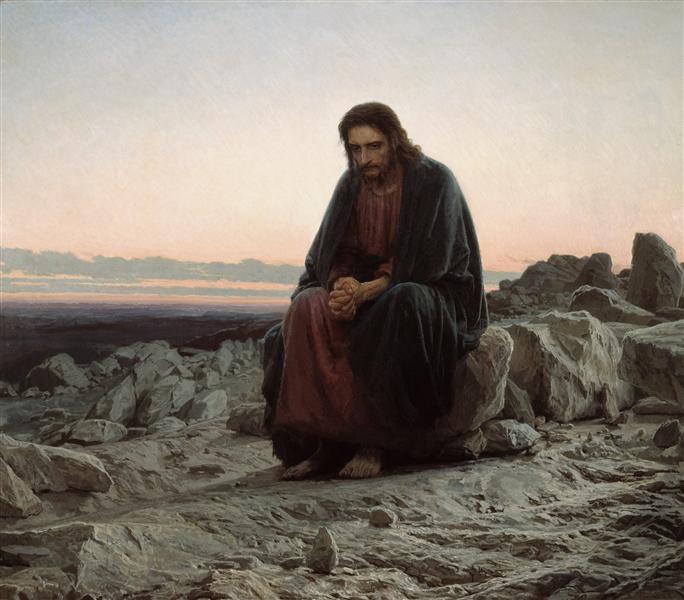
"There are poets to whom it is given to utter some vital word, painters who present us with 'The Light of the World,' or, like the Russian painter, Ivan Kramskoi, with a vision of Christ seated in the wilderness. Such as these praise God, we know, but they are few and far between.
"So, too, do honest, simple souls who bear affliction willingly, or who live their appointed lives with the sense that they are appointed. All of these ways of giving praise we recognise and bow before; but the duty would seem to pass us by as incompetent persons. We are not angels, we carry no harps. But the duty of praise is not for occasional or rare seasons; it waits at our doors every day" (pp. 194-195).
"We know no more about the Creation than we do about the Incarnation, no more about the forgiveness of sins than about the resurrection of the body. All is mystery, being what the heart of man could not conceive of unless it had been revealed...Where we err is in supposing that mystery is confined to our religion, that everything else is obvious and open to our understanding. Whereas the great things of life, birth, death, hope, love, patriotism, why a leaf is green, and why a bird is clothed in feathers––all such things as these are mysteries; and it is only as we can receive that which we cannot understand, and can discern the truth of that which we cannot prove, and can distinguish between a luminous mystery and a bewildering superstition, that we are able to live the full life for which we were made" (pp. 200-201).
* * * * * * * * * * * * * * * * * * * * * * * * * * *
Thank you for sharing this journey! Wishing you all a very happy Christmas.
Thank you for sharing this journey! Wishing you all a very happy Christmas.
Sunday, December 23, 2018
Christmas C.M. Countdown, Day 23
(Book studied: Ourselves Book II, Part III)
Chapters III, "The Knowledge of God," and IV, "Prayer," are full of Christmas gifts for us to unwrap.
Are we longing to know God better, but we think the Bible is too hard to read, or we've been told it's full of errors? "But, as the friend listens to the voice, pores over the written word of his friend, so the lover of God searches the Bible for the fuller knowledge he craves...he believes that in these is to be found, and nowhere but in these, a revealed knowledge of God...a revelation of God which satisfies and directs every aspiration of the Soul of man." (pp. 184-186, italics hers). All for us: the gift of the Word.
Do we need to know that we are heard and understood? God responds to both "felt prayers" and habitual, disciplined meditation and petitioning. All for us: the gift of prayer.

Chapters III, "The Knowledge of God," and IV, "Prayer," are full of Christmas gifts for us to unwrap.
"A little plant of moss, the bareness of a tree in winter, may, as we have seen, awake us to the knowledge; or, dealings of strange intimacy with our own hearts, visitings of repentance and love, sweet answers to poor and selfish prayers, tokens of friendship that we can never tell, but most surely perceive, are all steps in this chief knowledge." (p. 184)
"We cry in fear, and hope is spoken to us; in penitence, and we breathe peace; in sympathy, and we expand in love. These are the answers of our 'Almighty Lover' to the dull, uncertain movements of our poor hearts." (p. 188)
"But the seeking must be of single purpose; we must not be bent upon finding what we take for dross, whether in the Bible, in the ordering of the world, or in that of our own lives. Our search must be for the grains of gold, and, as we amass these, we shall live and walk in the continual intimacy of the divine Love, the constant worship of the divine Beauty, in the liberty of those whom the Truth makes free." (p. 187)Are we lonely because most people are "too far off" for us, and connecting is difficult for whatever reason? We are offered true intimacy with one who will not desert us. "'This is eternal life,' said our Lord, 'to know Thee, the only true God, and Jesus Christ whom Thou hast sent'; and this knowledge, this exalted intimacy, is open to us all, on one condition only––if we choose" (p. 183). All for us: the gift of a restored relationship with God. As one of our little children put it: "God and sinners recon-smiled."
Saturday, December 22, 2018
Christmas C.M. Countdown, Day 22
"How is the Soul of a man to be satisfied? Crowned kings have thrown up dominion because they want that which is greater than kingdoms...There is no satisfaction for the Soul of a man, save one, because the things about him are finite, measurable, incomplete; and his reach is beyond his grasp; he has an urgent, incessant, irrepressible need of the infinite." (Ourselves Book II, p. 175)
Charlotte Mason asks a hard question for "religious" people: when we say that that empty space inside us cannot be satisfied outside of relationship with God, are we referring only to a one-time prayer of salvation? Or do we have more to give, and more to gain? She obviously believes so:
"We have within us an infinite capacity for love, loyalty, and service; but we are deterred, checked on every hand, by limitations in the objects of our love and service. It is only to our God that we can give the whole, and only from Him can we get the love we exact; a love which is like the air, an element to live in, out of which we gasp and perish." (p. 176)
Mason offers a few thoughts on coming to faith, and warnings for complacent Christians. (We might say this is her version of the Parable of the Sower.) She previously told us to be "alert," and now she warns us not to be "inert." Spiritual sluggishness can happen to any soul. She also warns against "such preoccupation of Mind or Heart as leaves no room for the dominating and engrossing thought of God" (pp. 178-179). Do we need God? Do we want God? Is there room for Him in our hearts?

"Let us hold fast our loyalty, knowing that this, of making with our Will deliberate choice of God, is the only offering we can make Him; knowing, too, for our comfort, that involuntary aversion is not sin, and only gives us occasion for choice; but, when we choose to turn away, our sin does not put us without the limits of mercy, but it is immeasurably great" (p. 181).The third danger to the soul is aversion. We are fallen human beings. We struggle with a desire for sin that pushes us away from all that is good (Romans 7:15-17). But celebrate with this thought: God gave us free will.
Friday, December 21, 2018
Christmas C.M. Countdown, Day 21
Chapter XI is the last chapter on the subject of the Will. (The last few posts will focus on the Soul.)
How do you feel about living in a commonplace respectability which never errs? Doesn't that sound like a good thing?
"Deliver us from lazy imitation," says Charlotte Mason.
How about having an aim to do well, to get on and prosper?
"He that saveth his life shall lose it."
Why did Christ pronounce "woes against the respectable classes?" Because they were so tied up with their own well-being that they could not get free to follow Him. Those who had less reason to be pleased with themselves had more open ears.

How do you feel about living in a commonplace respectability which never errs? Doesn't that sound like a good thing?
"Deliver us from lazy imitation," says Charlotte Mason.
How about having an aim to do well, to get on and prosper?
"He that saveth his life shall lose it."
Why did Christ pronounce "woes against the respectable classes?" Because they were so tied up with their own well-being that they could not get free to follow Him. Those who had less reason to be pleased with themselves had more open ears.
"This much we discern––that, in the man of good-will, the Will is absolutely free; that, in fact, there can be no will but a free will."To live under the rule of Will, with the object of serving the One who loves us, is true freedom. "Our Wills are ours to make them Thine," quotes Charlotte Mason, and they are the best gift we can offer Him.
Thursday, December 20, 2018
Christmas C.M. Countdown, Day 20: Watch that back door
"The real act is the thought." ~~ Charlotte Mason
Charlotte Mason begins Chapter X with a summary of The Will, and we badly need one after several very packed chapters.
1. The Will acts upon ideas.
2. Ideas are presented to the mind in many ways--by books, talk, and spiritual influences.
3. "To let ourselves be moved by a mere suggestion is an allowance and not of will."
4. "An act of will is not the act of a single power of Mansoul, but an impulse that gathers force from Reason, Conscience, Affection."
5. "Having come to a head by degrees, its operations also are regular and successive, going through the stages of intention, purpose, resolution."
6. "When we are called upon for acts of will about small matters, such as going here or there, buying this or that, we simply fall back upon the principles or the opinions which Will has slowly accumulated for our guidance."
7. "We know that what we do or say matters less than what we will; for the Will is the man, and it is out of many acts of willing that our character, our personality, comes forth."Remember this thought from Day 11?
"Last weekend we were driving through a nearby town that was built on a flood-prone river. "The houses up on the hill are the ones to own," someone commented. "The ones down by the river...well, you take your chances." So does building our spiritual house on a hill keep us immune from floods and temptations? It probably can't hurt! But nothing (nobody) is immune to attack, and in Chapter XVIII, "Temptation," Charlotte Mason acknowledges that there are forces outside of ourselves that search out our weak spots, and try to prevent us from keeping what she calls a trusty spirit."Anybody who's made resolutions that last less than a week knows how that works. If there are cookies tied up with string in a box on the shelf, Frog and Toad are going to climb up and eat them. We say that we know ourselves too well, that we've tried to get ourselves into shape, and that we're just being honest when we say that our bad character traits are just who we are. It would be nice to live on the hill, out of the reach of floods, but we know how close our own house is to the river.
Now follow closely here, because a Charlotte Mason "Wow, I Never Thought of That" idea is about to unfold.
Situation: you have a bad temper. Usual way of dealing with it: you work on your temper, but you keep losing your temper, and worrying about how you lost your temper, and think about how you're not going to lose it next time. You wear a string around your finger or write little reminders to yourself. But then somebody pushes your buttons, and you blow up, and you're very sorry, and you're sure that next time you'll be able to handle things better, but then off you go again. Is there a better way?
"The place to keep watch at, is, not the way of our particular sin, but that very narrow way, that little portal, where ideas present themselves for examination. Our falls are invariably due to the sudden presentation of ideas opposed to those which judgment and conscience, the porters at the gate, have already accepted. These foreign ideas get in with a rush. We know how that just man, Othello, was instantly submerged by the idea of jealousy which Iago cunningly presented. We know of a thousand times in our own lives when some lawless idea has forced an entrance, secured Reason as its advocate, thrown a sop to Conscience, and carried us headlong into some vain or violent course." (pp. 166-167)(Side note: did you notice how Mason snuck in that bit of Shakespeare? Remember how the first few chapters were packed so full of literary allusions, reminding us that Story is a prime way to educate the Conscience? This is just another example.)
The problem is that, once a idea, moral or intellectual, has gotten inside, "neither Reason nor Conscience can be depended upon." The job of Reason and Conscience is to keep unworthy ideas out. Reason and Conscience are both the interrogators and the muscle at the door. Charlotte Mason calls them "the two janitors" (p. 167). But once those "bad boys" are inside, all bets are off.
Take a pro-active lesson from real-life high-security measures. Think airports. Think top security at the White House. Use your bank of cameras to zoom in on anyone driving up. Scrutinize them. Ask questions. Do they have their Principle Passports with them, or are those fake I.D. cards? It's not that we want to keep every idea out, just that we want to examine each one closely.
"We are all aware, more or less, that our moral Armageddon is to be fought against an army of insurgent ideas; but, perhaps, we are not all aware of the simple and effectual weapon put into our hands." (p. 168)And do we fight them in the doorway through sheer willpower, after they're already halfway in? That's the hard way, and (as we know) it can be spectacularly unsuccessful. Here is the most radical piece of advice: if we see them coming in the distance, and our alarms are squawking "Intruder! Intruder!," we stop looking out the window at them. They lose our attention. We move on to more interesting arrivals. This is a win-win Way of the Will decision, for us, and for everybody around us (except for those offering the sorry-not-interested ideas).
When Christmas is a trigger
"Whenever life becomes so strenuous that we are off guard, then is our hour of danger. Ideas that make for vanity, petulance, or what not, assault us, and our safety lies in an ejaculation of prayer,––'O God, make speed to save us! O Lord, make haste to help us!' and then, quick as thought, we must turn our eyes away from the aggravating circumstance and think of something diverting or interesting.––the weather, and the fitting garments for it, are always at hand!" (p. 168)A friend of AmblesideOnline recently wrote that people who are prone to depression during the holidays, and whose bad feelings can be quite justified by their particular set of circumstances, must nevertheless try to abstain from "scratching that sore place," if only for the sake of their loved ones. It's not that we don't face our emotions, or that we're being dishonest about grief. It's more that we see the flood coming, we acknowledge its presence out there, but we choose to act, for this moment, on a different idea. And determine to keep a trusty spirit.
(Think about it, anyway!)

Wednesday, December 19, 2018
Christmas C.M. Countdown, Day 19
A recent T.V. commercial shows a girl growing up and repeatedly hearing a song her father likes, "Ooh La La" by the band Faces. Finally she moves into a college dorm, and, feeling lonely, calls on her techie-device to "Play Dad's playlist."
In Ourselves Book II, Chapter IX on The Will, Charlotte Mason tells some stories of how certain people formed their characters and did the things that they did. What did they value, and what ideas did they pass on to others, even unconsciously? What were their lifetime playlists?
We come across a hero, a picture, an insect, a news story that makes us curious to know more, something we can make our own, something that extends our interest into related areas. We have been captured by an idea, but the capturing happens with intent on our side. And what does that have to do with the Will?
In Ourselves Book II, Chapter IX on The Will, Charlotte Mason tells some stories of how certain people formed their characters and did the things that they did. What did they value, and what ideas did they pass on to others, even unconsciously? What were their lifetime playlists?
We come across a hero, a picture, an insect, a news story that makes us curious to know more, something we can make our own, something that extends our interest into related areas. We have been captured by an idea, but the capturing happens with intent on our side. And what does that have to do with the Will?
"The Will is, in fact, the instrument by which we appropriate the good, uplifting thought that comes our way; and it is as we seize upon such thought with intention, act upon it with purpose, struggle, with resolution, against obstacles, that we attain to character and usefulness in the world." (p. 164)Mason's further challenge is the equivalent of this: do we want to be remembered mainly for devotion to a 1970's song? For a love of drugstore romance novels? A collection of ceramic teddy bears? A trophy from the church golf tournament? In the words of another song, "That don't impress me much." We recognize an idea that was worthwhile to begin with because it leads us into a place of magnanimity, help us see things in a bigger way, beyond ourselves.
"Wherefore, in books and men, let us look out for the best society, that which yields a bracing and wholesome influence. We all know the person for whose company we are the better, though the talk is only about fishing or embroidery." (p. 163)But we aren't all going to earn a Pulitzer or a Nobel or a Caldecott. We can't all invent vaccines, write symphonies, or advise presidents. What if we are very ordinary, plain people, who go about our everyday work and maybe do listen to '70's rock or collect ceramic teddy bears? Listen, Charlotte Mason says: it's all about how you do it.
"But no one need feel left out in the cold because his work seems to be for no greater a purpose than that of earning his living. That, too, is a great end, if he wills to do it with a single aim. He need not mourn that he has no influence; everyone has influence, not in the ratio of his opportunities, nor even of his exertions, but in that of his own personality. Mansoul is in truth a kingdom whose riches and opportunities are for whosoever will." (pp. 163-164, italics hers)
Shepherds. Wise men. Mary and Joseph. Simeon and Anna. All willing. All remembered.

Subscribe to:
Posts (Atom)