Minimalist blogger Joshua Becker recently linked to a Wall Street Journal article about Baby Boomers downsizing. The story seemed to be aimed at upscale readers whose biggest downsizing headache is selling off their art collections.
On the other end of the scale is this blog post at This Simple Balance: 8 Tips for Decluttering on a Low Income (from a mom who's been there). This writer points out the difficulty of asking "Does this bring joy?" when the bigger concerns are "Is this still functional?" and "What if we can't afford another one?"
Our family lived on one income for a long time, and then on even less as we moved to self-employment. We did go through tight-budget, don't-say-no-to-anything times, especially when the kids were young and seemed to need different-sized shoes and clothes every time we turned around.
And even that, compared to serious poverty in this country and overseas, was really nothing. We still had lots of clutter and overload, partly because we got too good at scrounging, and partly because we figured we would eventually find uses for stored stuff. (Often we did.) We were also holding on to many childhood and family items.
So are minimalism and decluttering only options for those who don't have to get anxious about living with less, or about giving away possibly useful things?
I agree with This Simple Balance that some minimalist maxims and strategies work better for those who have more choices. But everybody needs a little of what Amy Dacyczyn calls "margin": clear spaces around things and events, so that we appreciate them properly. And we may actually benefit when we use our imaginations to repurpose things, or our generosity to share them.
Many of us have stories of our children, or ourselves as children, cherishing one toy, or improvising playthings. When our oldest was a toddler, she used a kitchen chair as her toy stove, with a few yard-saled toy pots. A few years later, we found a large plastic "play kitchen" on Kijiji for her younger sister. Yes, they played with it, but it was an eyesore in the room, and it was always a mess. Then there was even more stress when they outgrew the thing and we suggested passing it on. That would never have happened with a kitchen chair, right?
We also need to claim the right to say "enough," no matter what our income. Someday, sooner or later, the whole economy could change so that we can no longer easily access consumer goods. We might be trading chicken eggs for plumbing work, and making over old clothes because we can't get new ones. But even then, we have the right to live with, use, and enjoy just enough, and to say no to whatever multiplicity we're stepping on and tripping over. We should feel free to be That Family or That Person, the ones who always sing the same songs, play the same card game after meals, or stop at the same deli on weekends. Maybe your grandchildren will remember your one and only cookie recipe, or your beat-up hat. Call those things quirks, call them traditions, call them your signature item; but don't call them bad things. The author of Affluenza says that if we were a truly materialist (vs. consumerist) culture, we would resist buying new old couches and coats, because we're so fond of the ones we have.
For a few of us, choosing to live with less may start with trimming down the artwork. For others, it's cleaning out the basement once and for all. But the key seems to be, not idolizing, but learning to cherish.
Showing posts with label clutter. Show all posts
Showing posts with label clutter. Show all posts
Thursday, July 12, 2018


Tuesday, December 13, 2016
Clutter Free (Book Review)
Clutter Free: Quick and Easy Steps to Simplifying Your Space
by Kathi Lipp
Harvest House Publishers, 2015
Probably the worst time to read a decluttering book is the middle of December, and the worst place to do it is in your living room or wherever you put the majority of your Christmas decorations. Christmas, even if we don't buy lots of Stuff, is still, often, about Stuff. For our family, Stuff is the vintage collectibles that are part of our daily life, and the extra helping of them that we bring out at the holidays. Stuff is the extra Crockpot that we picked up at a yard sale in the summer, that is the same vintage and type as ours but looks nicer. We don't buy backups of every appliance (no extra toaster ovens sitting around), but we do pick up Crockpots. Stuff is the gifts that we will give each other, new or used. It's the four-pack of sticky tape I grabbed at Walmart (although I didn't buy any new giftwrap, and our stickers and cards came mostly from yard sales and charitable freebies). It's the several packages of variously-flavoured baking chips and two cans of Eagle Brand milk in the pantry; they're there, and we're going to use them. It's pretty hard to have Christmas without any extra Stuff. (I'll stop with the George Carlin intonation now.)
That said, I don't exactly identify with the shop-o-manic reader Kathi Lipp often seems to be addressing in this book. If you don't regularly go crazy at warehouse stores, or if you don't understand why she buys duplicates of things she already has at home, you may wonder what she has to say that you don't already know.
Like the Bob Newhart "Stop It" skit she describes near the beginning, the real answer to clutter is "Don't do that." If something's going to cause financial or space problems, or otherwise make a mess of things, the sanest response is just not to do it. However, human beings don't always act sanely, and you may find yourself coping with your own or somebody else's past or present clutter problems. Lipp, being a Christian writer, would also point out that bad stewardship is a form of disobedience (and can include covetousness, dishonesty, and stealing), and that the hoarding of Stuff, which we might justify by calling it prudence, is not God's best for us. I appreciated her thought that simplicity is not all about "one size fits all." For instance, she has no problem with keeping a certain number of physical books around (whereas some clutter guides will happily assume that everything one wants to read can be gotten from the library). Lipp sees value in cultivating her interest and skill in cooking, and therefore spends time and space on that; on the other hand, as a poor seamstress, she has little use for a sewing machine. The takeaway I get from her book, rather than Newhart's stern "Stop It," is a gentler "It's Okay." It's okay to let go. It's okay not to let sharp advertising pull your dollars in the wrong direction. It's okay to say you're already okay (and don't need more).
If you need an "It's Okay" to help get things back on track, Clutter Free may speak to your heart.
Sunday, November 20, 2016
Toning down the trimming up (Do-Vember #20)
Do-Vember
Popping up on Pinterest: The Holiday Decluttering Guide to Make More Room For Comfort and Joy. This is a post by minimalism advocate Courtney Carver, founder of Project 333. A few interesting links and thoughts for those feeling too busy, too bothered, or just "too." (Please note that doesn't mean I endorse every suggestion. Take what you can use and let the rest go.)
Tuesday, October 25, 2016
Doesn't everyone want books?

Helene Hanff, 1916-1997 (photo from GoodReads)
And maybe the question should be, does anyone?
I recently commented on a book-related blog post, and out of approximately 27 comments, I think mine was the only one that did not say "love my e-reader, love the library, do not want books around the house unless they're cookbooks or something with an obvious purpose."
I understand the freedom of decluttering, the value of empty or near-empty spaces, especially in this often-overwhelming culture of much and more. In the novel In This House of Brede, the Benedictine nuns lived under a rule of simplicity, and the number of books each one could have in her own room depended on her needs
“I love inscriptions on flyleaves and notes in margins, I like the comradely sense of turning pages someone else turned, and reading passages someone long gone has called my attention to.” ― Helene Hanff, 84, Charing Cross RoadI do love my e-reader, Kindle app, and Overdrive. (Archive.org is what's giving me access to the vintage book that Afterthoughts is blogging through right now.) And the actual, physical library. I love books that have an obvious purpose. I also love books that do not have an obvious purpose.
“I do love secondhand books that open to the page some previous owner read oftenest. The day Hazlitt came he opened to "I hate to read new books," and I hollered "Comrade!" to whoever owned it before me.” ― Helene Hanff, 84, Charing Cross RoadOne of the first times I ever got in real trouble as a preschooler was by disobeying a parental command not to take a certain book outside. But I wanted it with me...
I haven't come up with a one-line answer to this yet, but I do think the answer is a personal one (like the nuns), and it depends largely on what books do in your life, and what you do with them. I'll go so far as to agree that, for 26 out of 27 people (or maybe more like 20 out of 27), physical books are clutter. For whatever reason, they are just more weight to move, more things to dust, more stuff that people don't know how they acquired and why they're holding on to them. If that's the case, I agree wholeheartedly that it's time to move to library books and e-books. And if it comes down, as at least one commenter said, to having to move overseas or something where you do not have a choice, I agree also that books do weigh you down and that they should not hold you back from adventures. There will always be more books.
But for the other seven or so of the group...we are the spiritual grandchildren of Helene Hanff.
“I'll have mine [The Book-Lovers' Anthology] till the day I die - and die happy in the knowledge that I'm leaving it behind for someone else to love. I shall sprinkle pale pencil marks through it pointing out the best passages to some book-lover yet unborn.” ― Helene Hanff, 84, Charing Cross Road
Thursday, April 28, 2016
Declutter with Barbie
Even Barbie needs to clean out her closet sometimes. After all, she's been shopping for years.
List of "33 Things To Eliminate From Your Closet" from BeMoreWithLess/Project 333.


List of "33 Things To Eliminate From Your Closet" from BeMoreWithLess/Project 333.
Anything with shoulder pads, even if they are making a comeback.

Your high school jeans that haven’t buttoned since high school.
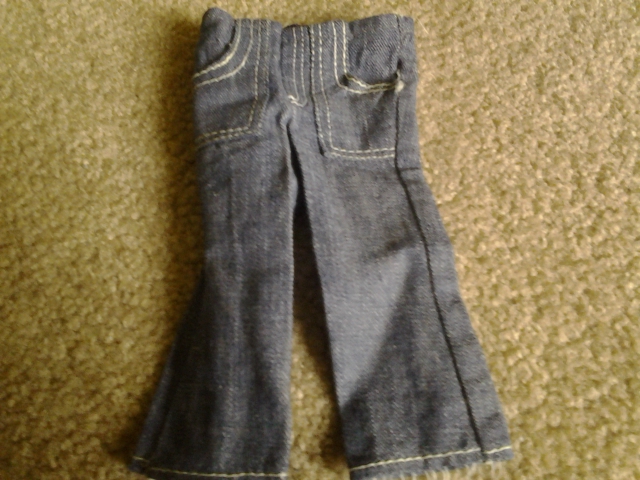
That formal outfit you bought for one occasion.

Your ex-anyone’s anything.

Christmas sweaters

Things that are ripped or have holes that aren’t supposed to be there.

Pieces you can see through unintentionally. (see above)
Those super cute shoes that you can’t walk in.

Sentimental items that make you sad.

The warm coat you don't wear. Someone needs it more than you.

Sentimental items that don’t fit. Take a picture.

Clothes you are saving for your children.


Pieces that need to go to the tailor that never get to the tailor.

A bridesmaid’s dress they said you could wear again, and you know you won’t.

Hats you don’t wear even though everyone says you look good in hats.

Ill-fitting bras. Feature your features.

Purses. You only need one.

Clothes that don’t belong to you. Give them back.

Anything with a weird smell that won’t wash out.

Clothing or shoes that leave a mark or blister.

Scarves that don’t go with anything you currently own.

Clothes that don’t allow your underwear to be under.

Anything you have to squeeze into.

Clothes you bought on vacation that you won’t wear where you live.

Pants that are shorter than they are supposed to be.

Shirts that are longer than they are supposed to be.

Sequins and sparkles if you prefer simple and subtle.

Anything with a stain that won’t come out.

Guilt items. If you spent too much for it, dump the guilt. You’ll keep paying for it in time and attention if you don’t let it go now.

Multiples. Just because the blazer looked good in cream doesn’t mean you need it in every color. One is enough. (unless it's shoes?)


The top or bottom of a suit. They aren’t sold separately for a reason.

Clothes you can pet.
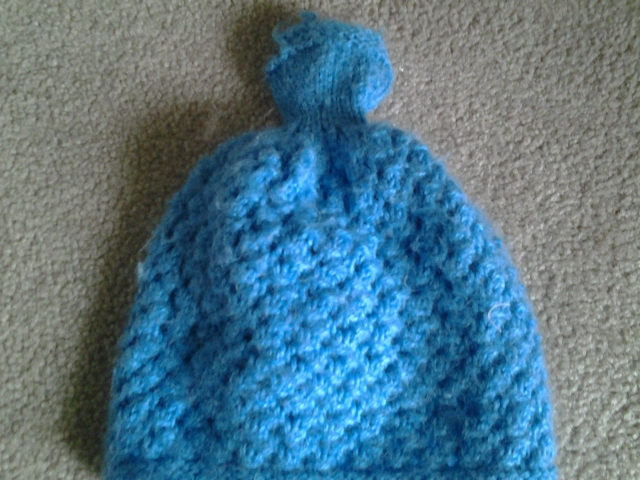
Yoga pants that don’t go to yoga.

Bye-bye.

Sunday, April 17, 2016
That's a bit oversimplified
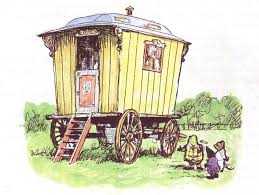
Their idea of helpful advice hasn't changed much since then, at least in this revolutionary new report about decluttering and simplifying.
"Our research shows that happiness spikes when people take deliberate steps to make life more manageable and embrace a philosophy of voluntary simplicity.”Seriously? I don't know exactly what the study studied, but those results seem to be kind of a no-brainer; isn't that what the whole first chapter of The Wind in the Willows is about?

“The most popular step is decluttering the house and getting rid of extra stuff...Other easy steps include managing emails, using a calendar system and even just ordering-in dinners occasionally.”
I hope that was helpful.

Monday, June 15, 2015
Something to think about: The Art of Clutter

"In accumulating, we honor the art of the potter, sitting at a wheel; we appreciate the art of the writer, sitting at a desk; we cherish the art of the painter, standing in front of an easel. (By this litany ye shall know that I have many books, many paintings, many pots — and many more things I love.)"It reminded me of this post from two years ago, about humans (and Squirrels) being "treasuring people."
Thursday, May 15, 2014
A thought for the day: on clutter and stuff
I just read a list on Yahoo of things that people should really throw out.
Well, I'm not too guilty of keeping mateless (?) shoes or unworn clothes. My dried herbs still have their smell and taste, most of them. I can think of only a couple of questionable jars in the fridge, and they'll probably be cleaned out quite soon. On the other hand, I don't see the point of decanting every dry food item into glass jars because you don't like the look of cardboard boxes. Then what would you read at the breakfast table?
Well, I'm not too guilty of keeping mateless (?) shoes or unworn clothes. My dried herbs still have their smell and taste, most of them. I can think of only a couple of questionable jars in the fridge, and they'll probably be cleaned out quite soon. On the other hand, I don't see the point of decanting every dry food item into glass jars because you don't like the look of cardboard boxes. Then what would you read at the breakfast table?
Monday, May 13, 2013
The Hidden Art of Homemaking, chapter 5: Interior Decorating and The Friendly Giant

I learned several things from watching this show.
1) Many of our houses contain several-times-over-enough stuff already to be beautiful, functional, and express our dreams, values, and individuality. At church we are watching a DVD series with Dallas Willard, and in yesterday's session he stated that humans are "treasuring creatures." Our "things" are important to us; they give us identity; they give us comfort. As Edith Schaeffer says, they also give us continuity when housing has to change or life gets difficult. It's not unnatural to want to have treasured possessions, cherished things. Sometimes they remind us of people we love, or places we've been, or special times.
What Edith Schaeffer didn't deal with so much, around 1970, was the problem of Too Much. She didn't talk much about shopping addiction, hoarding, or just getting stuck with a load of somebody else's possessions. The issue of creative homemaking for us now is often cutting down, cleaning out, detaching ourselves from enough of the "stuff" so that we can cherish the most meaningful, most memorable, most beautiful. Charlotte Mason talks about using our will to make choices, rather than just accepting whatever default options present themselves; in making our homes more homelike, that would include making conscious choices about the things you want in a room, and what you don't want.
2) If you're letting it get dirty, piled over with junk, even mouse-inhabited (like one Clean Sweep family's "heirloom clock"), then maybe you don't really care about it.
2b) Honesty time: abandoned projects and hobbies, clothes that don't fit, mousey clocks, big buying mistakes--let them go.
3) If you do care about something, then use your newly-cleared-out space to use or display it. On one episode, the Clean Sweep decorator framed some fabric and glued on treasured but hidden-in-a-box dried rosebuds. As I recall, the decorators also found ways to display Scout memorabilia (after deciding that it WAS really important to the owner), and odd pieces of inherited furniture (ditto). That doesn't mean that you have to turn EVERY dried flower into art, or that EVERY ex-Scout should have his/her badges on display (or should even keep them). That's where individuality happens.
3b) I don't know if this came up on Clean Sweep, but sometimes, especially with children, "treasures" that were once loved can be outgrown. A good clue is if the dust on the model horses is now an inch thick.
4) At least on Clean Sweep, a good carpenter seems to solve a thousand problems. Once the clutter is out of the house, the re-do usually follows two different streams: the decorator works with colour and the look of the whole thing, and the organizer usually gets the show's carpenter to build some kind of a wall unit in a family room or dining room, or a work island in a workshop, or a neat loft bed with storage. Sometimes it's just shelves in a closet, or extending a too-small desk. This is not to say that all storage problems need to be tackled with a router; only that sometimes the piles get piled because there is no good place to put things, even important things. Backpacks get dumped if there are no pegs to hang them on.
Again, even good shelving doesn't solve the problem if (as they say on the show) you're trying to cram twenty-four feet of books into twelve feet of space. But it does look better than stuff every which way.
5) The last thing I learned on the show, and on other similar programs: that little bits of comfort are important. Not having grown up in houses with huge bedrooms (and not living in one now either), the idea of having a "sitting area" in a master bedroom, or in the corner of some other room such as an office, is one idea that's not intuitive for me. When I was growing up, we just sat on the couch. But the de-cluttering and re-do shows do this all the time, and it's not that complicated: usually a chair, a light, a little table, a pillow or throw, maybe a bookshelf nearby or a basket of things to read or write in. If space allows, maybe a coffee table and another chair for a friend. Just like The Friendly Giant. (photos here)
Related posts:
What Can We Do? Crafting a Home (Chapter 5)
Treasured Possessions (Chapter 5)
Homemaking thoughts, Home-making blogs (Chapter 5)
Linked from Hidden Art of Homemaking linky for Chapter 5 at Ordo Amoris. (Link Fixed!)
Wednesday, September 26, 2012
Thrift store Wednesdays: stack of books
Only in a thrift store, maybe: you sort a pile of books that includes four Trinny and Susannah (What Not to Wear) books and one on Lyric Philosophy.
Sometimes the same person buys both.
So on that eclectic note, here's what we brought home: three Nancy Drews and a couple of small things for Dollygirl, one yellow t-shirt to make a top for Jo Doll, and these for school and/or Mama Squirrel:
The Birth of Britain, by Winston Churchill
Northrop Frye: a Visionary Life, by Joseph Adamson
Falling for Snow: A Naturalist's Journey into the World of Winter, by Jamie Bastedo
Landscape and Memory, by Simon Schama
Clean Sweep Conquer the Clutter: Reclaim Your Space, Reclaim Your Life. Mostly photos, but sometimes that's just what you need.
Thursday, August 02, 2012
Book Review: Toss, Keep, Sell!
Toss, Keep, Sell!: The Suddenly Frugal Guide to Cleaning Out the Clutter and Cashing In, by Leah Ingram. About $US10 on Amazon.com, in either paperback or Kindle format. (I borrowed a copy from the library.)
Over the last two or three decades, I have read a lotta, lotta, lotta clutter and organizing books. Some inspired me to get busy and do something; some were interesting, some were boring. Some had good ideas, and a lot were the same old stuff. Recently I've downloaded several free Kindle books about organizing, home management, and clutter, and most of them are the same old stuff. One of them might grab you at the right moment and become your friend, but really there isn't much new to say about "toss what you don't need, organize the rest."
So I know I've found a keeper when a) I enjoy reading it and b) I actually get a couple of new ideas that c) work. Someone named Books and Chocolate already reviewed Toss, Keep, Sell! on Amazon.com, and that's pretty much what they said, too. There are a few ideas I couldn't exactly relate to, like making money reselling Tiffany and Prada stuff that you might have gathering dust (??), but overall I liked her ideas, particularly about re-purposing unused items in other rooms. Of course we've done that lots of times, but reading the book sparked a couple of new ideas I hadn't thought of before. Yesterday I did some cleaning out in our dining room--not where we eat all our meals, this is more of a space where we have holiday dinners and sew and do homework in between, so it gets messy. I cleaned out the buffet, got rid of a couple of old tablecloths and a bunch of polyester napkins that we never use, and realized that I could use the built-in cutlery tray in the top drawer for our good cutlery.
 Why I never thought of that, after living here for almost fifteen years, I don't know, but I had always kept the "good" set of cutlery (wedding gift) in a wooden box (wedding gift) on top of the china cabinet. But the knife holder had broken loose inside the box, and half of the good cutlery had migrated into the everyday drawer in the kitchen anyway because we were short on spoons. So...short end of the story...the good cutlery, what we don't need for every day, now lives in the buffet. Which gave me a nice empty wooden box...which was twice the size of the small jewelery box I'd been stuffing my beads and earrings into for years. So now I have a bigger jewelery box, and Dollygirl has my old box since she didn't have one at all. Everybody wins, and the top of the china cabinet is suddenly clear too.
The format of the book is room-by-room, which is pretty typical. But I think what it sets it above the norm are the personal examples and the sum-it-up charts, as well as the up-to-date suggestions such as using Craigslist and E-bay.
So...this is a new addition to my short list of favourite clutter/organization books. (Others are It's Here...Somewhere, by Alice Fulton, and Don Aslett's For Packrats Only.)
Over the last two or three decades, I have read a lotta, lotta, lotta clutter and organizing books. Some inspired me to get busy and do something; some were interesting, some were boring. Some had good ideas, and a lot were the same old stuff. Recently I've downloaded several free Kindle books about organizing, home management, and clutter, and most of them are the same old stuff. One of them might grab you at the right moment and become your friend, but really there isn't much new to say about "toss what you don't need, organize the rest."
So I know I've found a keeper when a) I enjoy reading it and b) I actually get a couple of new ideas that c) work. Someone named Books and Chocolate already reviewed Toss, Keep, Sell! on Amazon.com, and that's pretty much what they said, too. There are a few ideas I couldn't exactly relate to, like making money reselling Tiffany and Prada stuff that you might have gathering dust (??), but overall I liked her ideas, particularly about re-purposing unused items in other rooms. Of course we've done that lots of times, but reading the book sparked a couple of new ideas I hadn't thought of before. Yesterday I did some cleaning out in our dining room--not where we eat all our meals, this is more of a space where we have holiday dinners and sew and do homework in between, so it gets messy. I cleaned out the buffet, got rid of a couple of old tablecloths and a bunch of polyester napkins that we never use, and realized that I could use the built-in cutlery tray in the top drawer for our good cutlery.
The format of the book is room-by-room, which is pretty typical. But I think what it sets it above the norm are the personal examples and the sum-it-up charts, as well as the up-to-date suggestions such as using Craigslist and E-bay.
So...this is a new addition to my short list of favourite clutter/organization books. (Others are It's Here...Somewhere, by Alice Fulton, and Don Aslett's For Packrats Only.)
Sunday, November 15, 2009
Thankful Alphabet: Another O
O is for out, out, out at Domestic Fashionista. I can't think of a better reason to declutter.
Subscribe to:
Posts (Atom)