"Those who are members of one another become as diverse as the hand and the ear. That is why the worldlings are so monotonously alike compared with the almost fantastic variety of the saints." (C.S. Lewis, "Membership")
Showing posts with label C.S. Lewis. Show all posts
Showing posts with label C.S. Lewis. Show all posts
Thursday, November 26, 2020
Quote for the day: The Hand and the Ear


Wednesday, June 03, 2020
Return of the Intentional Thrifter
Part One: The Stuff


Some doors have re-opened for us.
We have found a few treasures. Mr. Fixit's were mostly the kind that go into the workshop. These are mine:
A newer book about William Morris-style decorating

The Space Trilogy in hardcover

Vintage copy of Our Island Story (We have a newer one, but this was hard to pass up.)

Book of inspiration for Mr. Fixit

The box on the left is a set of tiny porcelain candleholders, plus red candles, slightly larger than birthday-candle size. You can see what they look like in the table photo.


Earrings

Jersey top

T-shirt dress (the scarf is just so you get an idea of the colour).

Fringed scarf in bright pinks and greys

Part Two: The blue t-shirt dress that goes with everything

(The new scarf is okay here, but it's better with a grey dress)


Monday, November 26, 2018
Quote for the day: Each immediate evil
"I think the art of life consists in tackling each immediate evil as well as we can....the dentist who can stop one toothache has deserved better of humanity than all the men who think they have some scheme for producing a perfectly healthy race." ~~ C.S. Lewis, from "Why I Am Not a Pacifist," The Weight of Glory
Friday, September 28, 2018
The Intentional Thrifter: Neglected skirt to new scarf, and two books
I noticed the floral-textured skirt earlier this month. A pretty colour, I thought, but no way I'm wearing a size 24.
Nobody else bought it either, and today was its last 75% off call, putting the price down to a dollar. I looked at it one last time and thought "circle scarf."
I brought the skirt home and cut off the top third (including the zipper). That's it. It's not a fabric that's apt to fray, but I might hem the cut edge just to keep things nice. The photo makes it look very purple, but it's really more burgundy-toned.

I also found a couple of books. Everyone should have a copy of On Writing Well around, really! This is a replacement: our previous one was water-warped and didn't come with us when we moved.

Thursday, October 19, 2017
Books finished July to October 2017
Favourite book read since July:
Renaissance: The Power of the Gospel However Dark the Times
Guinness, Os
Runners-up:
Books, Children and Men
Hazard, Paul
The Abolition of Man
Lewis, C.S.
A Touch of the Infinite: Studies in Music Appreciation with Charlotte Mason
Hoyt, Megan Elizabeth
Pretty interesting:
Christian's Children: The Influence of John Bunyan's the Pilgrim's Progress on American Children's Literature
MacDonald, Ruth K.
Could have left at the library:
What to Wear for the Rest of Your Life: Ageless Secrets of Style
Gross, Kim Johnson
And the rest:
A World Lost (a short novel about his character Andy Catlett)
Berry, Wendell
Slave to Fashion (about the movement to create justice in the fashion industry)
Minney, Safia
Precious Lord, Take My Hand: Meditations for Caregivers
Beach, Shelly
Revolution in World Missions
Yohannan, K.P.
Little Women (Little Women, #1) (re-read)
Alcott, Louisa May
The Man in the Queue
Tey, Josephine
Organize Tomorrow Today: 8 Ways to Retrain Your Mind to Optimize Performance at Work and in Life
Selk, Jason
Renaissance: The Power of the Gospel However Dark the Times
Guinness, Os
Runners-up:
Books, Children and Men
Hazard, Paul
The Abolition of Man
Lewis, C.S.
A Touch of the Infinite: Studies in Music Appreciation with Charlotte Mason
Hoyt, Megan Elizabeth
Pretty interesting:
Christian's Children: The Influence of John Bunyan's the Pilgrim's Progress on American Children's Literature
MacDonald, Ruth K.
Could have left at the library:
What to Wear for the Rest of Your Life: Ageless Secrets of Style
Gross, Kim Johnson
And the rest:
A World Lost (a short novel about his character Andy Catlett)
Berry, Wendell
Slave to Fashion (about the movement to create justice in the fashion industry)
Minney, Safia
Precious Lord, Take My Hand: Meditations for Caregivers
Beach, Shelly
Revolution in World Missions
Yohannan, K.P.
Little Women (Little Women, #1) (re-read)
Alcott, Louisa May
The Man in the Queue
Tey, Josephine
Organize Tomorrow Today: 8 Ways to Retrain Your Mind to Optimize Performance at Work and in Life
Selk, Jason
Sunday, October 01, 2017
Quote for the day: here is a tough one
"No emotion is, in itself, a judgement: in that sense all emotions and sentiments are alogical. But they can be reasonable or unreasonable as they conform to Reason or fail to conform...When a Roman father told his son that it was a sweet and seemly thing to die for his country, he believed what he said. He was communicating to the son an emotion which he himself shared and which he believed to be in accord with the value which his judgement discerned in noble death...[this was] men transmitting manhood to men." ~~ C.S. Lewis, The Abolition of Man
Tuesday, January 24, 2017
From the archives: Notes from a Book Talk
First posted October 2007. Links edited/updated.
(Adapted from a talk I wrote for a support group meeting. Are you sitting comfortably?)
Books fall open, you fall in
Delighted where you’ve never been
Hear voices not once heard before
Reach world on world through door on door
Find unexpected keys to things
Locked up beyond imaginings
What might you be, perhaps become
Because one book is somewhere?...
(from "Books Fall Open," by David McCord)
When Mr. Fixit and I were at the beginning of our journey together, one of us once gave the other one a gift bag with a Winnie-the-Pooh illustration on it and the words, "As soon as I saw you, I knew an adventure was going to happen." That's almost identical to a chapter title in Gladys Hunt's Honey for a Child’s Heart (at least the 1978 edition, which is what I have): "The Pleasure of a Shared Adventure."
Reading is an adventure, and even better, it can be a shared adventure.
What do you need for an adventure? You need some place to go—often some place unknown. Adventures require at least a bit of the unexpected, the unknown, a bit of uncertainty; “things locked up beyond imaginings.” Most adventures don’t happen right in your own backyard. To have a real adventure you need to step outside, push beyond your comfort zone.
Real adventures can include buried treasure, answering riddles, fighting dragons, outwitting giants. They include big problems and big decisions.
Adventures go better with food. Apples, popcorn, hot chocolate…
Here’s a quote, see if you know what book it’s from. "Her own small bedroom now became her reading-room and there she would sit and read most afternoons, often with a mug of hot chocolate beside her….It was pleasant to take a hot drink up to her room and have it beside her as she sat in her silent room reading in the empty house in the afternoons. The books transported her into new world and introduced her to amazing people who lived exciting lives. She went on olden-day sailing ships with Joseph Conrad. She went to Africa with Ernest Hemingway and to India with Rudyard Kipling. She traveled all over the world while sitting in her little room in an English village."
And it’s nice to have a place to come home to afterwards. Our adventures are enjoyed more when they’re framed in the familiarity and security of home.
What should you expect from an adventure?
Expect it to take time. You can’t have a real adventure in five minutes, and some of the best book adventures are very long. We are often too impatient and we settle for abridged versions or just skip things altogether because they’re so long. But if you take, say, the long unabridged version of David Copperfield, there’s just a huge amount of wonderful stuff in there that hasn’t made it into shortened versions or movie versions. In other words, you don’t really know David Copperfield until you’ve explored the whole thing, and when you’re done you’re tired but you know it was worthwhile.
Expect some degree of danger, risk, opposition and difficulty. Being a reader these days can be a subversive activity, both inside and outside of the Christian community; it can make people angry; it can make a lot more people yawn with boredom. It’s not the books that get banned by school libraries that you will have to struggle to read or even to find; it’s the books that nobody’s actually supposed to be able or be interested in reading any more; that includes some of the treasures of our Christian literary heritage. How many people do you know--Christians or not-- who have actually read and enjoyed Paradise Lost or Pilgrim’s Progress, just for a start? How many homeschoolers will include those books in their children’s education? For some people, concentrating our children’s reading on the dead white guys (particularly dead Christian white guys) is seen as some kind of an act against contemporary culture. And those who don't get outright angry may try to discourage you in other ways. Just like in Pilgrim’s Progress, you are going to meet people with names like That’s-So-Dull and Much-Abridged who are going to try to get you to turn back; but press on, the rewards are there in the end.
And expect to be rewarded when you climb to the top. Who goes on a quest without hoping to bring back treasure? Without even specially looking for them, we can expect to make discoveries that lead to wisdom, teach discernment and critical thinking, inspire us with courage, and build character; or "moral imagination."
Charlotte Mason said that “stories make the child’s life intelligible to himself; Gladys Hunt wrote in Honey for a Child’s Heart that “books help children know what to look for in life.” It helps to know what you’re looking for when you’re hunting for treasure. And besides that there are a lot of little side benefits of reading, like improved vocabulary and listening skills, creativity, and having bits of useful information stored up in the mind.
Again from "that book":
But reading is an escape as well, in a good sense. We rebel against ignorance and smallness and look for something more; we try to remember what we are or should be as human beings. We can escape from the pride of thinking we know it all, and from limitations like not really being able to sail or fly or ride horses, or find a secret garden or a buried treasure. We may not have people in our everyday lives who are as loyal as Charlotte, as resourceful as Laura’s Ma, as wise as Clara’s grandmother in Heidi, as encouraging as Ratty, or as valiant as Reepicheep; but in books, we can do all these things and know all these people.
Expect to have fun. The roads through books aren’t all serious; there is a great deal of humor, delight and pleasure, even nonsense. About a hundred years ago, a parent in England wrote this:
“I cannot count the times I have read aloud the stories in the "Just So" book. During a dreary month of grey skies and perpetual snow, spent in the hotel of a grim Yorkshire village, those stories were our daily bread, especially those that took us to the sunshine of South Africa. And the greatest favourite of all was The Beginning of the Armadilloes. Only Rudyard Kipling or Lewis Carroll would dare to write anything so absurd. Day after day, for thirty days or thereabouts, those two rascals, Stickly-Prickly, and Slow-and-Solid, played their pranks, and day after day we laughed at the same places, and when Slow-and-Solid said to the Painted Jaguar--"Because if she said what you said she said, it's just the same as if I said what she said she said"--day after day we bounded out of our chairs with joy….Let us arm our children for the slings and arrows of later life by cultivating the spirit of innocent laughter.”
Terry Glaspey says that “being in the presence of greatness cannot but change us.” So expect to be changed, strengthened, stretched, widened, given a different perspective as you go on a particular adventure. As characters in books grow throughout a story, we share their experiences and also find ourselves growing and changing. One of my favourite short books is Rumer Godden’s The Mousewife, about an unhappy mother mouse who develops a friendship with a dove living in a cage. The dove tells her stories about the world outside and gives her a lot of new ideas about things she has never seen. Eventually the mousewife finds a way to help the dove escape, but suddenly realizes that she no longer has her friend there to talk to her and teach her things. Then she looks out the window. “She looked out again and saw the stars….When she saw them shining she thought at first they must be new brass buttons. Then she saw that they were very far off, farther than the garden or the wood, beyond the farthest trees….’I have seen them for myself,’ said the mousewife, ‘without the dove. I can see for myself,’ said the mousewife, and slowly, proudly, she walked back to bed.”
How can we get to be more adventurous, and get more out of our reading adventures?
Use the services of an experienced guide—in this case, booklists and books about books, including homeschool book catalogues and online reviews—but use them cautiously. In your book adventures, as in real life, some guides are more to be trusted than others; and some may simply suit your purposes or personality more than others do. What one hiking guide calls a nice little stroll may leave you exhausted; and what one booklist calls suitable for a ten-year-old may be your idea of something better saved for high school, or the other way around.
To have the greatest adventures, seek out the greatest treasures. Our culture tends to cheapen and trivialize reading (formula series, TV-tie-ins, other kinds of books that barely qualify as books); the media tells us we should read mostly because it’s fun. But even fun gets boring after awhile.
To have the greatest adventures, don’t stick only to the roads marked “fiction.” Read some of the history of medicine, mathematics, chemistry, astronomy. Find out what was beautiful, revolutionary and even dangerous about scientific discoveries. Read history, and go beyond “how the peasants lived.” Read biographies, poetry, nature descriptions. Read the Bible together.
There is also the idea these days that there are no specific important books—wrong. Some book adventures are just more rewarding than others, especially the places you know you’ll want to go back to again and take your friends along to enjoy. There are certain real-life places that everyone should try to see once; and there are book adventures that are too good to miss. You may not be ready for them all at the beginning, but you can work up to the challenge.
Which is another good point: to have the greatest adventures, take along some good companions; make it a shared adventure, and everyone who goes along will be in on the shared vocabulary, experiences and “book friends” that you meet along the way. How do you work around different ages? Not everyone who comes along will get the most from a particular book journey, but sometimes what they do bring back will surprise you. There are times in life when you just can’t read with everyone, but even if it’s just you and one other person, you’re sharing that adventure together, and maybe somebody else will decide to come along if the two of you look like you’re having fun.
How do you deal with general reluctance, the attitude that books are hard or boring? I once went to a health-food demonstration where the presenter was asked, "How can I encourage my children to eat some of these foods instead of hot dogs?" She answered, very unhelpfully, that really they should have just been better trained from the start. In the same way, it would be easy for me to say that if your kids are brought up reading with you from babyhood, you probably won’t have a problem with this, and that if you do you should just force it down them; but that sort of answer just makes you want to give up, doesn't it? So a better suggestion might be that you’re going to have to woo them—maybe with the hot chocolate and popcorn, maybe with a particularly wonderful or funny book that you know gets right into the story very quickly. These suggestions might also apply if you really want to involve a spouse or another adult family member; nobody wants to be made to read, especially if they think they’re going to be bored by kids books; so make sure that it’s something that everybody’s going to enjoy. One recommendation is Ian Fleming’s Chitty Chitty Bang Bang. It’s nothing at all like the movie and it’s a lot of fun and has lots of things blowing up in it.
How do you cope with busy schedules, and the competing attractions of other media? You can use audio books, maybe during mealtimes or travel; you can use more homeschool time just to read; you can leave books lying around; you can give books as gifts. Even the cost of new books shouldn’t be a deterrent to reading, not with libraries and used books and online books readily available; Emily Dickinson was right when she said that reading is a pretty frugal chariot compared with a lot of the other ways we can find to spend money.
HE ate and drank the precious words,
His spirit grew robust;
He knew no more that he was poor,
Nor that his frame was dust.
He danced along the dingy days,
And this bequest of wings
Was but a book.
What liberty
A loosened spirit brings! --Emily Dickinson
To have the greatest adventures, let the adventures find you. "Books fall open, you fall in." We can’t always regulate reading by squeezing it into a READING period; by labeling books according to grade or age; or excluding every word or idea that we don’t think our kids will understand. Again, you have to risk a little. Lines like “bequest of wings,” “loosened spirit” and “take us worlds away” speak to us of flight and freedom; the idea of moving outside our own place and time, being able to see beyond our own lives; that’s what the word education means, a drawing out. As our “spirits grow robust,” we are able not only to handle more difficult book adventures but to use our experiences in the everyday world as well, to survive the “dingy days” and also to change them into something better. “Robust spirits” implies strength and health; this kind of reading is not a weak, wussy thing or just an escape from reality. In Voyage of the Dawn Treader, Cousin Eustace was the cowardly, mean character; C.S. Lewis says it was because he hadn’t read the right books.
What are the right books to adventure with? A great storyteller named Ruth Sawyer gave this list (quoted in Honey for a Child's Heart):
(Adapted from a talk I wrote for a support group meeting. Are you sitting comfortably?)
Books fall open, you fall in
Delighted where you’ve never been
Hear voices not once heard before
Reach world on world through door on door
Find unexpected keys to things
Locked up beyond imaginings
What might you be, perhaps become
Because one book is somewhere?...
(from "Books Fall Open," by David McCord)
When Mr. Fixit and I were at the beginning of our journey together, one of us once gave the other one a gift bag with a Winnie-the-Pooh illustration on it and the words, "As soon as I saw you, I knew an adventure was going to happen." That's almost identical to a chapter title in Gladys Hunt's Honey for a Child’s Heart (at least the 1978 edition, which is what I have): "The Pleasure of a Shared Adventure."
Reading is an adventure, and even better, it can be a shared adventure.
What do you need for an adventure? You need some place to go—often some place unknown. Adventures require at least a bit of the unexpected, the unknown, a bit of uncertainty; “things locked up beyond imaginings.” Most adventures don’t happen right in your own backyard. To have a real adventure you need to step outside, push beyond your comfort zone.
Real adventures can include buried treasure, answering riddles, fighting dragons, outwitting giants. They include big problems and big decisions.
Adventures go better with food. Apples, popcorn, hot chocolate…
Here’s a quote, see if you know what book it’s from. "Her own small bedroom now became her reading-room and there she would sit and read most afternoons, often with a mug of hot chocolate beside her….It was pleasant to take a hot drink up to her room and have it beside her as she sat in her silent room reading in the empty house in the afternoons. The books transported her into new world and introduced her to amazing people who lived exciting lives. She went on olden-day sailing ships with Joseph Conrad. She went to Africa with Ernest Hemingway and to India with Rudyard Kipling. She traveled all over the world while sitting in her little room in an English village."
And it’s nice to have a place to come home to afterwards. Our adventures are enjoyed more when they’re framed in the familiarity and security of home.
What should you expect from an adventure?
Expect it to take time. You can’t have a real adventure in five minutes, and some of the best book adventures are very long. We are often too impatient and we settle for abridged versions or just skip things altogether because they’re so long. But if you take, say, the long unabridged version of David Copperfield, there’s just a huge amount of wonderful stuff in there that hasn’t made it into shortened versions or movie versions. In other words, you don’t really know David Copperfield until you’ve explored the whole thing, and when you’re done you’re tired but you know it was worthwhile.
Expect some degree of danger, risk, opposition and difficulty. Being a reader these days can be a subversive activity, both inside and outside of the Christian community; it can make people angry; it can make a lot more people yawn with boredom. It’s not the books that get banned by school libraries that you will have to struggle to read or even to find; it’s the books that nobody’s actually supposed to be able or be interested in reading any more; that includes some of the treasures of our Christian literary heritage. How many people do you know--Christians or not-- who have actually read and enjoyed Paradise Lost or Pilgrim’s Progress, just for a start? How many homeschoolers will include those books in their children’s education? For some people, concentrating our children’s reading on the dead white guys (particularly dead Christian white guys) is seen as some kind of an act against contemporary culture. And those who don't get outright angry may try to discourage you in other ways. Just like in Pilgrim’s Progress, you are going to meet people with names like That’s-So-Dull and Much-Abridged who are going to try to get you to turn back; but press on, the rewards are there in the end.
And expect to be rewarded when you climb to the top. Who goes on a quest without hoping to bring back treasure? Without even specially looking for them, we can expect to make discoveries that lead to wisdom, teach discernment and critical thinking, inspire us with courage, and build character; or "moral imagination."
Charlotte Mason said that “stories make the child’s life intelligible to himself; Gladys Hunt wrote in Honey for a Child’s Heart that “books help children know what to look for in life.” It helps to know what you’re looking for when you’re hunting for treasure. And besides that there are a lot of little side benefits of reading, like improved vocabulary and listening skills, creativity, and having bits of useful information stored up in the mind.
Again from "that book":
“All the reading she had done had given her a view of life that they had never seen. If only they would read a little Dickens or Kipling they would soon discover there was more to life than cheating people and watching television.”Northrop Frye said that literature is true, more true in some ways than our everyday existence; because when our everyday life is disappointing and superficial or truly horrible, it is in literature that we find examples of true love, true honour, true courage. Reading is more than just escapism. It’s not escapism to find strength by remembering Christian’s defeat of Giant Despair; by thinking of wise words that Corrie Ten Boom’s father and sister told her; by making yourself smile at a lovely line of poetry or laugh at the Pooh stories.
But reading is an escape as well, in a good sense. We rebel against ignorance and smallness and look for something more; we try to remember what we are or should be as human beings. We can escape from the pride of thinking we know it all, and from limitations like not really being able to sail or fly or ride horses, or find a secret garden or a buried treasure. We may not have people in our everyday lives who are as loyal as Charlotte, as resourceful as Laura’s Ma, as wise as Clara’s grandmother in Heidi, as encouraging as Ratty, or as valiant as Reepicheep; but in books, we can do all these things and know all these people.
Expect to have fun. The roads through books aren’t all serious; there is a great deal of humor, delight and pleasure, even nonsense. About a hundred years ago, a parent in England wrote this:
“I cannot count the times I have read aloud the stories in the "Just So" book. During a dreary month of grey skies and perpetual snow, spent in the hotel of a grim Yorkshire village, those stories were our daily bread, especially those that took us to the sunshine of South Africa. And the greatest favourite of all was The Beginning of the Armadilloes. Only Rudyard Kipling or Lewis Carroll would dare to write anything so absurd. Day after day, for thirty days or thereabouts, those two rascals, Stickly-Prickly, and Slow-and-Solid, played their pranks, and day after day we laughed at the same places, and when Slow-and-Solid said to the Painted Jaguar--"Because if she said what you said she said, it's just the same as if I said what she said she said"--day after day we bounded out of our chairs with joy….Let us arm our children for the slings and arrows of later life by cultivating the spirit of innocent laughter.”
Terry Glaspey says that “being in the presence of greatness cannot but change us.” So expect to be changed, strengthened, stretched, widened, given a different perspective as you go on a particular adventure. As characters in books grow throughout a story, we share their experiences and also find ourselves growing and changing. One of my favourite short books is Rumer Godden’s The Mousewife, about an unhappy mother mouse who develops a friendship with a dove living in a cage. The dove tells her stories about the world outside and gives her a lot of new ideas about things she has never seen. Eventually the mousewife finds a way to help the dove escape, but suddenly realizes that she no longer has her friend there to talk to her and teach her things. Then she looks out the window. “She looked out again and saw the stars….When she saw them shining she thought at first they must be new brass buttons. Then she saw that they were very far off, farther than the garden or the wood, beyond the farthest trees….’I have seen them for myself,’ said the mousewife, ‘without the dove. I can see for myself,’ said the mousewife, and slowly, proudly, she walked back to bed.”
How can we get to be more adventurous, and get more out of our reading adventures?
Use the services of an experienced guide—in this case, booklists and books about books, including homeschool book catalogues and online reviews—but use them cautiously. In your book adventures, as in real life, some guides are more to be trusted than others; and some may simply suit your purposes or personality more than others do. What one hiking guide calls a nice little stroll may leave you exhausted; and what one booklist calls suitable for a ten-year-old may be your idea of something better saved for high school, or the other way around.
To have the greatest adventures, seek out the greatest treasures. Our culture tends to cheapen and trivialize reading (formula series, TV-tie-ins, other kinds of books that barely qualify as books); the media tells us we should read mostly because it’s fun. But even fun gets boring after awhile.
To have the greatest adventures, don’t stick only to the roads marked “fiction.” Read some of the history of medicine, mathematics, chemistry, astronomy. Find out what was beautiful, revolutionary and even dangerous about scientific discoveries. Read history, and go beyond “how the peasants lived.” Read biographies, poetry, nature descriptions. Read the Bible together.
There is also the idea these days that there are no specific important books—wrong. Some book adventures are just more rewarding than others, especially the places you know you’ll want to go back to again and take your friends along to enjoy. There are certain real-life places that everyone should try to see once; and there are book adventures that are too good to miss. You may not be ready for them all at the beginning, but you can work up to the challenge.
Which is another good point: to have the greatest adventures, take along some good companions; make it a shared adventure, and everyone who goes along will be in on the shared vocabulary, experiences and “book friends” that you meet along the way. How do you work around different ages? Not everyone who comes along will get the most from a particular book journey, but sometimes what they do bring back will surprise you. There are times in life when you just can’t read with everyone, but even if it’s just you and one other person, you’re sharing that adventure together, and maybe somebody else will decide to come along if the two of you look like you’re having fun.
How do you deal with general reluctance, the attitude that books are hard or boring? I once went to a health-food demonstration where the presenter was asked, "How can I encourage my children to eat some of these foods instead of hot dogs?" She answered, very unhelpfully, that really they should have just been better trained from the start. In the same way, it would be easy for me to say that if your kids are brought up reading with you from babyhood, you probably won’t have a problem with this, and that if you do you should just force it down them; but that sort of answer just makes you want to give up, doesn't it? So a better suggestion might be that you’re going to have to woo them—maybe with the hot chocolate and popcorn, maybe with a particularly wonderful or funny book that you know gets right into the story very quickly. These suggestions might also apply if you really want to involve a spouse or another adult family member; nobody wants to be made to read, especially if they think they’re going to be bored by kids books; so make sure that it’s something that everybody’s going to enjoy. One recommendation is Ian Fleming’s Chitty Chitty Bang Bang. It’s nothing at all like the movie and it’s a lot of fun and has lots of things blowing up in it.
How do you cope with busy schedules, and the competing attractions of other media? You can use audio books, maybe during mealtimes or travel; you can use more homeschool time just to read; you can leave books lying around; you can give books as gifts. Even the cost of new books shouldn’t be a deterrent to reading, not with libraries and used books and online books readily available; Emily Dickinson was right when she said that reading is a pretty frugal chariot compared with a lot of the other ways we can find to spend money.
HE ate and drank the precious words,
His spirit grew robust;
He knew no more that he was poor,
Nor that his frame was dust.
He danced along the dingy days,
And this bequest of wings
Was but a book.
What liberty
A loosened spirit brings! --Emily Dickinson
To have the greatest adventures, let the adventures find you. "Books fall open, you fall in." We can’t always regulate reading by squeezing it into a READING period; by labeling books according to grade or age; or excluding every word or idea that we don’t think our kids will understand. Again, you have to risk a little. Lines like “bequest of wings,” “loosened spirit” and “take us worlds away” speak to us of flight and freedom; the idea of moving outside our own place and time, being able to see beyond our own lives; that’s what the word education means, a drawing out. As our “spirits grow robust,” we are able not only to handle more difficult book adventures but to use our experiences in the everyday world as well, to survive the “dingy days” and also to change them into something better. “Robust spirits” implies strength and health; this kind of reading is not a weak, wussy thing or just an escape from reality. In Voyage of the Dawn Treader, Cousin Eustace was the cowardly, mean character; C.S. Lewis says it was because he hadn’t read the right books.
What are the right books to adventure with? A great storyteller named Ruth Sawyer gave this list (quoted in Honey for a Child's Heart):
“Stories that make for wonder. Stories that make for laughter. Stories that stir one within with an understanding of the true nature of courage, of love, of beauty. Stories that make one tingle with high adventure, with daring, with grim determination, with the capacity of seeing danger through to the end. Stories that bring our minds to kneel in reverence. Stories that show the tenderness of true mercy, the strength of loyalty, the unmawkish respect for what is good.”Let’s have the courage to adventure with books…and…Let’s go there together.
Monday, January 16, 2017
Books of beauty (2017 Reading List)

Recently arrived in the Treehouse: Breath for the Bones: Art, Imagination, and Spirit, by Luci Shaw; and Restoring Beauty: The Good, the True, and the Beautiful in the Writings of C.S. Lewis, by Louis Markos.
It's a beautiful year for reading.
Sunday, November 13, 2016
Quote for a Sunday: where Isaac Watts echoes C.S. Lewis
"If folly or vice be represented in its open colours, or its secret disguises, let us search our hearts, and review our lives, and inquire how far we are criminal; nor should we ever think we have done with the treatise while we feel ourselves in sorrow for our past misconduct, and aspiring after a victory over those vices, or till we find a cure of those follies begun to be wrought upon our souls." ~~ Isaac Watts (thank you to The Common Room for posting the longer version)
Thursday, November 10, 2016
From the archives: C.S. Lewis on Peacemaking and Pain
First posted November, 2009
"To ask that God's love should be content with us as we are is to ask that God should cease to be God: because He is what He is, His love must, in the nature of things, be impeded and repelled, by certain stains in our present character, and because He already loves us He must labour to make us lovable....We are not merely imperfect creatures who must be improved: we are, as Newman said, rebels who must lay down our arms."--C.S. Lewis, The Problem of Pain
"Lest we should think this a hardship, this kind of good begins on a level far above the creatures, for God Himself, as Son, from all eternity renders back to God as Father by filial obedience the being which the Father by paternal love eternally generates in the Son."--The Problem of Pain
"Indignation at others' sufferings, though a generous passion, needs to be well managed lest it steal away patience and humanity from those who suffer and plant anger and cynicism in their stead."--The Problem of Pain
"I think the best results are obtained by people who work quietly away at limited objectives, such as the abolition of the slave trade, or prison reform, or factory acts, or tuberculosis, not by those who think they can achieve universal justice, or health, or peace. I think the art of life consists in tackling each immediate evil as well as we can....the dentist who can stop one toothache has deserved better of humanity than all the men who think they have some scheme for producing a perfectly healthy race."--from "Why I Am Not a Pacifist" (C.S. Lewis, The Weight of Glory)
Thursday, April 07, 2016
From the archives: Knowledge and nonsense
First posted April 2006
My friend the DHM at The Common Room quoted Charlotte Mason today:
"There is absolutely no avenue to knowledge but knowledge itself, and the schools must begin, not by qualifying the mind to deal with knowledge, but by affording all the best books."--Towards a Philosophy of Education (Vol. 6), pg. 347
Did she mean the most serious books? The hardest books? The longest books?
Just before Miss Mason gets to that point in the chapter, she has been describing the sad case of two young men who had a half-baked education (in her view), who "laboured indefatigably" at making sense of the books they picked up as young adults, but who admitted themselves that "You and I go at a subject all wrong!"
What was one of the books they couldn't make sense of? Alice in Wonderland.
I found this posted on the Catholic Culture blog:
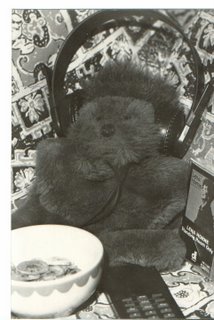
My friend the DHM at The Common Room quoted Charlotte Mason today:
"There is absolutely no avenue to knowledge but knowledge itself, and the schools must begin, not by qualifying the mind to deal with knowledge, but by affording all the best books."--Towards a Philosophy of Education (Vol. 6), pg. 347
Did she mean the most serious books? The hardest books? The longest books?
Just before Miss Mason gets to that point in the chapter, she has been describing the sad case of two young men who had a half-baked education (in her view), who "laboured indefatigably" at making sense of the books they picked up as young adults, but who admitted themselves that "You and I go at a subject all wrong!"
What was one of the books they couldn't make sense of? Alice in Wonderland.
Deeply impressed he bought the book as soon as he returned to London and read it earnestly. To his horror he saw no sense in it. Then it struck him that it might be meant as nonsense and he had another try, then he concluded that it was rather funny but he remained disappointed.So we have to give our children more than facts, more than vocabulary drills. Knowledge, yes...the DHM's post points that out well, along with the sad fact of our culture's anti-knowledge bent. But also another kind of knowing...an understanding of laughter and nonsense that goes beyond the usual nose-picking humor found in childrens' books. They need to meet characters like my aged Uncle Arly, sitting on a heap of barley...and the Humbug...and the White Knight, one of my favourite characters in any book. They need some silliness, some furry squirrel puppets (I promise we'll do a post about Dewey soon), some knock-knock jokes, some James Thurber, and eventually some Wodehouse and Chesterton. They need to let their brains learn to play and dance and jump around with all the wonderful connections that a sense of nonsense allows. They need some nonsense so they can understand inventiveness...and a mandatory credit in inventiveness and creativity will not substitute.
Here, again, is another evidence of the limitations attending an utter absence of education. A cultivated sense of humour is a great factor in a joyous life, but these young men are without it. Perhaps the youth addicted to sports usually fails to appreciate delicate nonsense; sports are too strenuous to admit of a subtler, more airy kind of play....
I found this posted on the Catholic Culture blog:
A friend said all this reminded him of the scene in The Chronicles of Narnia where Aslan (God) creates Narnia, including an odd little bird which, like all the animals, can talk. The bird says something ridiculous and all the other creatures laugh. Turning to Aslan, the bird says, “Oh, Aslan, have I made the first joke?” “No,” Aslan replies, “you are the first joke.” My friend says there is a moral here.I think he's right.

Friday, April 03, 2015
For Good Friday, from Perelandra

Giorgio Vasari, The Garden of Gethsemane
In Perelandra, the second book of the Space Trilogy by C.S. Lewis, linguistics professor Elwin Ransom has been transported to "Venus," a planet that somewhat resembles the Garden of Eden and that contains not only a humanoid "Eve," but an evil force determined to subvert the planet for its own ends. Until this point in the story, Ransom has hoped that he can simply out-argue or out-logic the evil one, which has taken over the body of another man from Earth (Ransom thinks of it as the Un-man). Now he realizes that more may be required, and he is not sure if he has it in him to give. During a long, silent night, he confronts his fears.
"He sat straight upright again, his heart beating wildly against his side. His thoughts had stumbled on an idea from which they started back as a man starts back when he has touched a hot poker. But this time the idea was really too childish to entertain. This time it must be a deception, risen from his own mind. It stood to reason that a struggle with the Devil meant a spiritual struggle...the notion of a physical combat was only fit for a savage. If only it were as simple as that...but here the voluble self had made a fatal mistake. The habit of imaginative honesty was too deeply engrained in Ransom to let him toy for more than a second with the pretence that he feared bodily strife with the Un-man less than he feared anything else. Vivid pictures crowded upon him...the deadly cold of those hands (he had touched the creature accidentally some hours before)...the long metallic nails...ripping off narrow strips of flesh, pulling out tendons. One would die slowly. Up to the very end that cruel idiocy would smile into one's face. One would give way long before one died--beg for mercy, promise it help, worship, anything....
"The voluble self was almost thrown out of its argumentative stride--became for some seconds as the voice of a mere whimpering child begging to be let off, to be allowed to go home. Then it rallied. It explained precisely where the absurdity of a physical battle with the Un-man lay. It would be quite irrelevant to the spiritual issue. If the Lady were to be kept in obedience only by the forcible removal of the Tempter, what was the use of that? What would it prove? And if the temptation were not a proving or testing, why was it allowed to happen at all? Did Maleldil suggest that our own world might have been saved if the elephant had accidentally trodden on the serpent a moment before Eve was about to yield? Was it as easy and as un-moral as that? The thing was patently absurd!
"The terrible silence went on. It became more and more like a face, a face not without sadness, that looks upon you while you are telling lies, and never interrupts, but gradually you know that it knows, and falter, and contradict yourself, and lapse into silence. The voluble self petered out in the end. Almost the Darkness said to Ransom, 'You know you are only wasting time.'....
"He had exhausted all his efforts. The answer was plain beyond all subterfuge....This he must do: this he could not do....'It is not for nothing that you are named Ransom,' said the Voice."
Sunday, March 01, 2015
Quote for Sunday: C.S. Lewis and faith
"We can understand the relation in Lewis between his literary, cultured work and his religious faith more clearly if we look at some details of his conversion to Christianity. We will ask, what was his conversion, and in particular, what was it not? First of all, it would not be appropriate to say, in a phrase one often hears, that Lewis 'accepted Christ into his life....' For him it is essential that the Christian not think of belief as a way of bringing something into his or her life, but, rather, as a way of being brought out into a larger world or sense of the world....The direction of conversion for Lewis is very much the opposite, of moving outward into something larger and more important than the self." ~~ Wesley A. Kort, C.S. Lewis Then and Now (page 22)
Tuesday, February 24, 2015
Quote for the day: C.S. Lewis on Rhetoric and Poetry
"I do not think that Rhetoric and Poetry are distinguished by manipulation of an audience in the one and, in the other, a pure self-expression, regarded as its own end, and indifferent to any audience. Both these acts, in my opinion, definitely aim at doing something to an audience and both do it by using language to control what already exists in our minds." ~~ C.S. Lewis, Preface to Paradise Lost; quoted in C.S. Lewis Then and Now, by Wesley A. Kort (2001)
Thursday, January 22, 2015
School plans for Friday (Lydia's Grade Eight), updated with art links

Stitch by Stitch, by Jane Bull
Lydia is in the middle of another knitting project, so this is a good day to do some readalouds.
Today's plans:
1. Opening hymn and maybe a couple of poems
2. With Mom: finish the last bit of How to Read a Book for this week.
3. Chapter 2 of Perelandra
4. Do some math (Key to Algebra: graphing equations)
5. Read some history

Whooping Crane
6. With Mom: start the next chapter in Ecology (Exploring the World Around You), including the section on territorial population control (read that part to yourself and then paraphrase it either verbally or on paper). In the December 2013 issue of Canadian Geographic Magazine, read "On the Rebound," about six Canadian species that have "rallied from the very edge of extinction."7. With Mom: look at Dürer's self-portraits. Khan Academy has some excellent (short) videos on them too.
Tuesday, November 11, 2014
Lydia's Grade Eight: On Remembrance Day
Some things to do for school today:
Read chapter 11, How to Be Your Own Selfiish Pig. Susan Schaeffer Macaulay includes a quote from C.S. Lewis's Mere Christianity: "Your real, new self (which is Christ's and also yours, and yours just because it is His) will not come as long as you are looking for it. It will come when you are looking for Him."
Poem: Shakespeare, Sonnet LXIV
Picture Talk: Titian, The Three Ages of Man
French lesson, including our song for the week, Que sont devenues les fleurs (Where have all the flowers gone)
Nature notebooks
Read from Out of the Silent Planet.
Read chapter 11, How to Be Your Own Selfiish Pig. Susan Schaeffer Macaulay includes a quote from C.S. Lewis's Mere Christianity: "Your real, new self (which is Christ's and also yours, and yours just because it is His) will not come as long as you are looking for it. It will come when you are looking for Him."
Poem: Shakespeare, Sonnet LXIV
| WHEN I have seen by Time’s fell hand defac’d | |
| The rich-proud cost of outworn buried age; | |
| When sometime lofty towers I see down-raz’d, | |
| And brass eternal slave to mortal rage; | |
| When I have seen the hungry ocean gain | 5 |
| Advantage on the kingdom of the shore, | |
| And the firm soil win of the watery main, | |
| Increasing store with loss, and loss with store; | |
| When I have seen such interchange of state, | |
| Or state itself confounded to decay; | 10 |
| Ruin hath taught me thus to ruminate— | |
| That Time will come and take my love away. | |
| This thought is as a death, which cannot choose | |
| But weep to have that which it fears to lose. |
Picture Talk: Titian, The Three Ages of Man
French lesson, including our song for the week, Que sont devenues les fleurs (Where have all the flowers gone)
Nature notebooks
Read from Out of the Silent Planet.
"'And now,' said Oyarsa, when silence was restored, 'let us honour my dead hnau.'
At his words ten of the hrossa grouped themselves about the biers. Lifting their heads, and with no signal given as far as Ransom could see, they began to sing.... its rhythms were based on a different blood from ours, on a heart that beat more quickly, and a fiercer internal heat."
"Through his knowledge of the creatures and his love for them he began, ever so little, to hear it with their ears. A sense of great masses moving at visionary speeds, of giants dancing, of eternal sorrows eternally consoled, of he knew not what and yet what he had always known, awoke in him with the very first bars of the deep-mouthed dirge, and bowed down his spirit as if the gate of heaven had opened before him." ~~ Out of the Silent PlanetWatch the national Remembrance Day ceremony from Ottawa, as we usually do.
Monday, November 10, 2014
Lydia's Grade Eight: Some things to do on a Monday
A change of pace for hymns: Come People of the Risen King, by Keith and Kristyn Getty and Stuart Townend.
Read Theodore Roethke's poem "The Waking"
Plutarch's Life of Crassus, Lesson 10 (see previous post about that), and read the Scripture about King David in similar circumstances
French lesson.
Read some of Out of the Silent Planet.
"These things are not strange, Small One, though they are beyond our senses. But it is strange that the eldila never visit Thulcandra."
"Of that I am not certain," said Ransom. It had dawned on him that the recurrent human tradition of bright, elusive people sometimes appearing on the Earth - albs, devas and the like -might after all have another explanation than the anthropologists had yet given. True, it would turn the universe rather oddly inside out; but his experiences in the space-ship had prepared him for some such operation.
"Why does Oyarsa send for me?" he asked.
"Oyarsa has not told me," said the sorn. "But doubtless he would want to see any stranger from another handra."
"We have no Oyarsa in my world," said Ransom.
"That is another proof," said the sorn, "that you come from Thulcandra, the silent planet." ~~ C.S. Lewis
Wednesday, October 01, 2014
School plans for the first of October: Befuddled? (Updated with monkeys.)
Some ideas for today's school with Lydia:
 I'm trying to think of a way to work in the first audio installment of The Screwtape Letters, recorded by John Cleese in 1989, via a link at The Common Room today. Maybe it will be our school opener today--the first letter is about Screwtape's technique for basic distraction. There's also a very important line in Letter #1, that might go by if you don't notice where Lewis snuck it in: Screwtape jeers that "It sounds as if you supposed that argument was the way to keep him out of the Enemy's [God's] clutches. That might have been so if he had lived a few centuries earlier. At that time the humans still knew pretty well when a thing was proved and when it was not; and if it was proved they really believed it. They still connected thinking with doing and were prepared to alter their way of life as the result of a chain of reasoning."
Screwtape insists that it's a demon's job not to teach but to "fuddle" us. And that leads in...sort of...to part of a chapter of Daughter of Time. Lots of fuddling there.
Lydia has the rest of the morning to figure out her own work: math, AO readings, and so on.
Later we will read chapter 6 of Whatever Happened to Justice?, "Enforcement of Early Common Law." Mostly it's about restitution. In the really early days (under common law), it was less common for someone to be imprisoned as punishment for a crime, because who wanted to pay taxes to support prisoners? It was more common to pay fines and such to the victim, making restitution.

(What happened with that? Well, I found this story about monkeys in a cage getting sprayed with ice water, in a book I am reading myself, and I thought it was a great introduction to chapter 7 of the book, about how custom is different from common law. Why we do the things we do, and which of those things should be important enough to be laws. So I just highlighted a couple of the main points from chapter 6 and said we'll get back to that when we talk more about force and policing. I read the monkey story, and we focused on chapter 7 and then also read chapter 8 which is very short. What's homeschooling for if not to be flexible?) (Monkey slide found here.)
And we'll work on French (Internet nouns and verbs, quite fun actually), and see if we can get into our review of Latin a bit (Mica, mica, parva stella).
Screwtape insists that it's a demon's job not to teach but to "fuddle" us. And that leads in...sort of...to part of a chapter of Daughter of Time. Lots of fuddling there.
Lydia has the rest of the morning to figure out her own work: math, AO readings, and so on.
Later we will read chapter 6 of Whatever Happened to Justice?, "Enforcement of Early Common Law." Mostly it's about restitution. In the really early days (under common law), it was less common for someone to be imprisoned as punishment for a crime, because who wanted to pay taxes to support prisoners? It was more common to pay fines and such to the victim, making restitution.
(What happened with that? Well, I found this story about monkeys in a cage getting sprayed with ice water, in a book I am reading myself, and I thought it was a great introduction to chapter 7 of the book, about how custom is different from common law. Why we do the things we do, and which of those things should be important enough to be laws. So I just highlighted a couple of the main points from chapter 6 and said we'll get back to that when we talk more about force and policing. I read the monkey story, and we focused on chapter 7 and then also read chapter 8 which is very short. What's homeschooling for if not to be flexible?) (Monkey slide found here.)
And we'll work on French (Internet nouns and verbs, quite fun actually), and see if we can get into our review of Latin a bit (Mica, mica, parva stella).
Monday, September 22, 2014
You're right, some don't. (The push to common standards)
"After withdrawing their son from Westfield Public Schools, a homeschool family was surprised when the assistant superintendent sent them a copy of the school’s homeschool policy and asked them to call him. "Their surprise turned to shock when they saw that the policy required them to submit a letter of intent and an outline of their curriculum which (per the policy) must follow New Jersey Common Core content standards, and then wait for the superintendent to approve their curriculum and give them permission to homeschool...." ~~ HSLDA news

"Many people are opposed to a standards-based education. Even though a standards-based education can protect academic efficiency when students relocate to a different school, some do not like the idea of having others dictate what their children should learn. Some do not like the pressure that tests put on their children. Some do not think the performance of a single test day should carry so much weight. Some do not like the potential for more narrowed learning." ~~ Homeschool Common Core homepage

"'Hush!' said Doctor Cornelius, laying his head very close to Caspian's. 'Not a word more. Don't you know your nurse was sent away for telling you about Old Narnia? The King doesn't like it. If he found me telling you secrets, you'd be whipped and I should have my head cut off.' 'But why?' asked Caspian. 'It is high time we turned to Grammar now,' said Doctor Cornelius in a loud voice. 'Will your Royal Highness be pleased to open Pulverulentus Siccus at the fourth page of his Grammatical Garden or the Arbour of Accidence pleasantlie open'd to Tender Wits?'" ~~ C.S. Lewis, Prince Caspian

Sunday, December 15, 2013
It's Advent Not Christmas, Day 15: Advent as a Fast?
C.S. Lewis said that just because another philosophy or religion does not know Christ, it does not follow that every single thing it teaches is wrong. That is in the same sense that all truth is God's truth, and it can be found in unlikely places. I used to find that much more difficult to accept; if something was not a hundred per cent right as I understood it, I found it hard to believe that it could still be worth steering past the mistakes in search of a possible truth about life or about God.
Actually I find that easier to understand when I think about fiction, or art, or even something I've seen in a movie or T.V. show. I've seen parallels to Christian thought in T.V. sitcoms and dramas, even foolish ones. As Charlotte Mason pointed out repeatedly, our hearts are affected much more readily, and often much more lastingly, by a story.
So all that is to say that I've been thinking about the early history of Advent, when it began as a time of preparation and fasting, and took place over an even longer period of time than today; it used to be a forty-day fast from meat and poultry as well as from other fancy foods and frivolities. In Rumer Godden's novel In This House of Brede, set in the 1950's and '60's in a Benedictine convent, the nuns go to Midnight Mass on Christmas and then have a special meal of chicken soup, the first chicken they have had in weeks.
One's first reaction might be to remark on the seeming needlessness of it all. In terms of economy it might be advantageous to have a period of extremely frugal eating and abstention from other pleasures, but how does it benefit anyone spiritually? Even most of us now who like to think that it's "Advent not Christmas" don't necessarily pull back on physical comforts during this time. It's a cold, dark season, and it seems like the last thing we want is to feel hungry as well. Does that mean no Christmas cookies before the 24th? Not in our house. Not at this point. In most of the Christian church, the fasting aspect of Advent was dropped long ago, although we still think of it as a time of preparation and contemplation.
But maybe that is what we need. In one way or another. We do need to hunger, to want to be filled, to understand joy that is more than just a bowl of chicken soup.
And that's why I mentioned finding truth in strange places. Because all that made me think of the Muslims around us here who observe Ramadan. The truth I'm seeing is not in the teaching, but in the practice. In the acknowledgement of our emptiness.
In recent years, some churches have begun observing the "Longest Night" on December 21st, offering a quiet, sober service especially for those who are lonely, grieving or suffering. It's a reminder that not everything is jolly-holiday for everyone. It seems innovative, but it's actually, I think, one of the oldest things we can do to make sense of Advent.
Actually I find that easier to understand when I think about fiction, or art, or even something I've seen in a movie or T.V. show. I've seen parallels to Christian thought in T.V. sitcoms and dramas, even foolish ones. As Charlotte Mason pointed out repeatedly, our hearts are affected much more readily, and often much more lastingly, by a story.
So all that is to say that I've been thinking about the early history of Advent, when it began as a time of preparation and fasting, and took place over an even longer period of time than today; it used to be a forty-day fast from meat and poultry as well as from other fancy foods and frivolities. In Rumer Godden's novel In This House of Brede, set in the 1950's and '60's in a Benedictine convent, the nuns go to Midnight Mass on Christmas and then have a special meal of chicken soup, the first chicken they have had in weeks.
One's first reaction might be to remark on the seeming needlessness of it all. In terms of economy it might be advantageous to have a period of extremely frugal eating and abstention from other pleasures, but how does it benefit anyone spiritually? Even most of us now who like to think that it's "Advent not Christmas" don't necessarily pull back on physical comforts during this time. It's a cold, dark season, and it seems like the last thing we want is to feel hungry as well. Does that mean no Christmas cookies before the 24th? Not in our house. Not at this point. In most of the Christian church, the fasting aspect of Advent was dropped long ago, although we still think of it as a time of preparation and contemplation.
But maybe that is what we need. In one way or another. We do need to hunger, to want to be filled, to understand joy that is more than just a bowl of chicken soup.
And that's why I mentioned finding truth in strange places. Because all that made me think of the Muslims around us here who observe Ramadan. The truth I'm seeing is not in the teaching, but in the practice. In the acknowledgement of our emptiness.
In recent years, some churches have begun observing the "Longest Night" on December 21st, offering a quiet, sober service especially for those who are lonely, grieving or suffering. It's a reminder that not everything is jolly-holiday for everyone. It seems innovative, but it's actually, I think, one of the oldest things we can do to make sense of Advent.
Subscribe to:
Posts (Atom)