Showing posts with label tightwads. Show all posts

Tuesday, September 02, 2014

Frugal Finds and Fixes: Catching Up

Welcome to the when-we-feel-like-it Treehouse feature "Frugal Finds and Fixes."

If you've noticed more photos on the blog lately, it's because my first-generation tablet wore out, and the newer version we replaced it with has a built-in camera.  The only frugal side to updating something electronic is that we got a great clearance deal on last year's model. But it does mean that I now have my own source of quick pictures, for the first time in years.

So here are today's Craisin-oatmeal muffins.

And here is my newly-reorganized seasoning drawer, filled with a set of jars that I bought new in the box at a yard sale.  We had a Ziploc method going for a few years, but the plastic bags were getting worn and messy, and it's much quicker finding what we want this way.  These are main-dish seasonings only; baking spices like cinnnamon are in another cupboard.

Here is a free poster that arrived this week from the Office of the Commissioner of Official Languages.

And here is a board game that got left at the bottom of the pile for several years, recently rediscovered.

A neighbour offered us three large bags of clothes, mostly women's tops, most never worn.  After we picked out what we could use, we drove the rest to the thrift store along with a few discards of our own.  So of course we also had to go in the store, but that was all right because Mr. Fixit found some great speakers, Dollygirl found shoes and a gorgeous green purse, and Mama Squirrel found a $2 black skirt to go with the tops.  Dollygirl also got good deals on two dresses (not at the thrift store).

We've been eating tomatoes from our garden.  The plum tomatoes all had blossom end rot, but the beefsteak ones are fine.

In entertainment, we are still depending on library DVDs, mostly because they don't cost us bandwidth.  Lately those have included Matlock and the old Mission: Impossible series.

Finally, in the you-won't-believe-this department, Mr. Fixit just finished off a box of razor blades that he bought on E-bay ten years ago.  That's getting your money's worth.

Monday, November 19, 2012

Cheap and Classic Cardboard Tutorial: 18-inch Doll Table and Chairs


Dollygirl's dolls have been needing a table, and chairs to go with it. Doll furniture is not something we see a lot of in local stores, and the online options (new and used) are generally expensive; nice, but expensive.  So Mama Squirrel came up with some almost-free alternatives.  We used what we had; you can adapt our plans for whatever dolls (or boxes) you have.

The table
The table base was made from the insert to a two-piece cardboard file box; that is, a corrugated cardboard box 12 inches long by 9 1/2 inches high, and 4 inches deep. 

You'll notice a small cutout on each side, which I used for the legs; that's optional.  I cut the 9 1/2 inches down slightly, to about 8 3/4 inches; otherwise it would have been just a bit too high for the dolls to sit at.  I realize that not everybody is going to have the insert to a file box; but I think you could find a cereal box or other cardboard food box that would be about the right size; go for the sturdiest you can find, and reinforce it with extra cardboard or a second box shoved inside, if you think it needs it (especially if your box is not corrugated cardboard).  Whatever box you use has to be both deep enough to be able to sit firmly on its edge, and strong enough to support the tabletop and whatever you want to put on the table.
I stuffed the box with crumpled newspaper, and glued a piece of scrap cardboard into the open space to hold the newspaper in (not shown in the photos).

I glued some decorative file-folder cardboard (we found several packages of fancy folders at a yard sale) to the top and sides. 

You could use scrapbooking paper, wrapping paper, or whatever else you have, and possibly add a coating of something like decoupage medium if it seems to need extra protection.  For our purposes, the folders were enough.

That's it for the base!

The tabletop is purposely not glued on, both for storage reasons and because I wanted to make it reversible.  I glued two of the decorative file folders (cutting off the tabs) to a piece of cereal-box cardboard, and then added clear sticky plastic on each side for protection (leaving a bit of overhang).  For the size of table base we had, a tabletop the size of a file folder was just right.  If your base is narrower, a smaller tabletop might work better.

Again, you could use any kind of decorative paper or even coloured sticky vinyl; something in woodgrain might be nice.  If I were doing it again, I think I might use stronger cardboard in the middle; because what we ended up with was not much heavier than a laminated placemat.  It does work all right (the dolls have been using it now for a few days), but a more solid core wouldn't hurt.

The chairs

Each chair was made from two pieces of a Dr. Oetker baking-mix carton; we picked up two for free at the supermarket.  They're made like thrones, both for sturdiness and to accommodate the sitting difficulties of dolls who don't have joints in all the normal human places. 

I cut a main piece from each carton, 10 1/2 inches high, 7 1/2 inches wide (although it spreads out to more like 8 inches at the open end), 5 inches deep, in the shape of a flat back with three sides; and a seat piece, same shape, 7 inches high, 7 1/2 inches wide, 5 inches deep. There were some flaps at the top of the carton, which I folded down inside the back and sides.  I slid the two parts together (didn't glue them), with the closed part of the bigger piece at the bottom, and the open part at the top.  The seat piece juts out a bit from the main piece, but I wanted it that way to give the dolls a good deep seat.  It's fine if the two pieces come from different boxes or otherwise don't match; you're going to slipcover them anyway.

I used part of a vintage white cotton bedsheet to make fitted slipcovers.  (Any medium-weight fabric would work fine.) This is MUCH easier than it sounds.  Once you have the cardboard pieces made, you use those to make the patterns, either on a large piece of paper or right on the backside of the fabric.  Trace around the back of the large piece; then flip it up and trace around it again for the matching front piece--leaving just a bit of space between the two to allow for the thickness of the cardboard.  Turn the cardboard on its side and trace each side twice, again allowing a small gap between pieces.  An optional bit I added on:  add a small amount to the very front, to make a flap that will go under the seat piece.  Add a quarter inch to the pattern edges and bottom for seam allowances.  Your pattern piece will look about like this:

The pattern piece I made for the smaller seat section was very similar:  I traced the top, then the front, then the sides.  I really should have traced the back as well, or at least a flap going partway down the back, because if you don't, you will end up with a bit of a loose edge at the back of the seat, when you put it together.  Add seam allowances and hem allowances (unless you're using a finished edge of the sheet, which is what I did here).  The pattern piece for the seat will look like this, without the back:

Here's what the fabric pieces look like, cut out, with the flap added to the large piece and the fourth side added to the seat piece.  You can tell the sheet was a bit wrinkled--I did iron it afterwards.


The sewing is what Adrian Mole would call dead easy.  Don't forget to turn the fabric inside out first.  On the seat piece, just sew up the side seams, then turn up the hem and zigzag that if you need to.  On the main piece, you will have two small seams that will end up on the very front edges of the chair.  If you're not sure where they go, try the slipcover on the chair, inside out, and pin the two seams closed before you sew.  Plus a hem--turn up a quarter inch and zigzag.  Don't hem the extra flap, if you made one; just start hemming at one side of it, work around, and stop when you get to the other side of the flap.

Slip the slipcovers on...

...put the two parts together...

...and that's it.  Oh--you might want to add some padding on the seat, between the slipcover and the cardboard.  You could glue some foam or batting onto the cardboard seat, but I just slipped a folded washcloth between the two.  One note: I did add a bit of tape to the back edges of the seat slipcover to help it stay put.  If you add the fourth side when you cut out the fabric, you won't need to do that.

The dolls are enjoying their new dining room!  (Dollygirl is going to take a photo of the whole thing plus dolls.)

All photos by Mr. Fixit.  Copyright 2012, Dewey's Treehouse.

Linked from Mad in Crafts Link Party #131.  Also linked from Festival of Frugality #366.

Thursday, March 24, 2011

Things we've been doing

1. Shovelling snow. A lot of snow. The most snow that fell in 24 hours in the past four years, and that includes a blizzard three years ago. Having this much snow on the ground, but still having daylight at 7 p.m. to shovel it by, is something my head can't quite put together.

2. Making crackers (a recipe from the first Tightwad Gazette book). The Squirrelings are starting a Homemaking unit about making things from scratch.

3. Getting ready for the local homeschool conference.

4. Getting to "Cornwallis surrenders" in Crayons' history book. (Seemed like the War of Independence would never end.)

5. Ponytails realized that she never did what she wanted to do with some of her yard-saled fabric, so she's been making plans for that. Plus, The Apprentice gave her a box of clothing pass-ons to refashion for spring!

Friday, February 18, 2011

What's for supper? Really cleaning out the fridge

(Groceries tomorrow)

4 bone-in chicken breasts, cooked in the slow cooker with sauerkraut, Thousand Island dressing, and leftover carrots--it tasted like roast chicken
Mashed potatoes
Leftover bean-pepper salad
Tightwad Gazette Cuban bread (a homemaking lesson from this morning)
Applesauce

Dessert: choice of pears cooked in apple juice (with yogurt or milk), canned pineapple, bran muffins, pumpkin cake  (I had a can to use up)

Wednesday, February 16, 2011

Tightwad Gazette Revisited: On Used Things and Hacks

In Tightwad Gazette III, Amy Dacyczyn wrote:
"Even frugal parents who bring home yard-sale toys for their kids still give them only new toys for Christmas.  The new merchandise is given with more honor and enthusiasm, even when the quality is the same.  Kids learn that new is better...."
In the same article ("A New Way to Look at Used Things"),  she wrote:
"Conversely, it's also wrong to assume that used is always a better value.  Each has benefits."
And on one of our Abundance posts a few years ago (linked below), Alison commented:
"This is one of my pet peeves as well. I'd love to be like my grandparents, using household items 40 and 60 years after purchase but as you all have pointed out, that's not easy to do these days even if you are well-intentioned and determined."
Has anything changed since Amy's mid-90's musings on the mystique of new stuff?

As far as we Squirrels are concerned, no.  In fact, I'd say we're even more likely to be spending our money on certain types of used things than we were back then, thanks to Ebay, online used booksellers, and so on. "Vintage" has become a funkier cousin of "used."  And in some ways it is easier now to hang on to older things we still have, because it's now easier to find parts to fix them. 

I think our family has even moved to a level of used-stuff-appreciation beyond what we might have considered normal fifteen years ago...particularly in the area of gift-giving to each other, or in acquiring what you might call more frivolous, optional, or hobby items.  That comes partly out of the fact that what's out there in new stuff (for instance, toys) in our price range is pretty junky.  If you have a lot of money to spend, there are things out there of higher quality; but if you have to choose, say, between one new $10 item from the discount department store, and $10 worth of nice thrift-shopped stuff,  the used stuff usually wins out, and not just because you can get more of it.  When we're buying gifts for people outside our own family, though, we almost always buy something new, unless we know them really well.

And that's the catch.  I don't think our way of looking at stuff is very well accepted outside of the circle of people like Frugal Hacks fans and Treehouse readers.  If you're reading this, the odds are that you're probably a bit out of the mainstream too.  If you go, for instance, onto a forum discussing the Tightwad Gazette books, you'll read a lot of "ughs" and "that's borderline child abuse" and so on, especially from parents who I think are a bit younger than I am.  When we talk to people starting families, they take it for granted that they'll be buying all-new baby gear. Ecology is big and all that, but at the same time, kids growing up in this century are more conditioned than ever to be entitled to all the new toys that they want.  And that includes toys for grownups--electronics, huge amounts of clothing and shoes, new furniture whenever the old stuff gets a bit tired, fancy sports and exercise equipment whenever we make a new fitness resolution, and so on.

Amy pointed out some of the benefits of used stuff, when you can find it:  that, as I said, you can simply get more of what you want (a big bucket of used Lego vs. a small new package), or that you can find an older, better-made item from a used source.  I've heard people complain about newer slow cookers, that they often cook too hot and burn food, and that older ones are actually better.  As the commenter to our post said, you might find something older and still working, and find that it keeps on going practically forever.  (In the case of our older cars, though, current legislation forced them off the road even though they were still running fine.)  Or you might find that you can solve a problem or have more fun without buying anything at all...or just choose to keep using something even if it's no longer shiny or perfect.  I've posted about some of Crayons' "toy hacks," such as the time she took her own toys and set up something similar to a widely-advertised dolls' winter cabin.  At Christmas time, she set up one of her dolls in a shoebox sleigh, tied to (yard-saled) plastic horses...Mama Squirrel contributed a dollar store "snow blanket" for the snow.

And as Amy says, there are times when we buy new because that makes sense.  We bought some homeschooling books new this year because they were what we needed, and because we chose to support a family-run homeschool store with our purchases.   We bought Crayons' new boots at the discount department store, because we didn't have any bigger ones that fit her and we didn't feel like fooling with used boots.  We bought brand-new heavy-duty plastic shelving for storage (on sale), because we were tired of restacking cardboard boxes and we had no source of comparable used shelving.  We bought a couple of new snow shovels (for obvious reasons).  

But we'll keep on buying as much as we can used...both for our own needs, and just to prove that, often, you can get more for less.

Related posts:
Second-Hand Pants Song (link to You-tube video)
Abundance Post: Make It Do
Abundance Post: Wear it Out
Postscript to Wearing it Out

Monday, January 31, 2011

What's for supper? (and why not to buy cheap baking powder and cocoa)

Tonight's supper:

Subversive Tuna Wrapup with white sauce
Combination of broccoli, red peppers, and a bit of frozen broccoli-red pepper-other mixture veggies
Small panful of frozen french fries

Choice of pie (left over from the weekend) or homemade chocolate pudding

And now a comment on cocoa.  The kind you bake with, not the kind you drink.

Some of us do not normally buy gourmet-type ingredients, nor do we particularly care or notice the difference, say, in whether the cheese mixed with the macaroni is on-sale store-brand or something grander (and necessarily more expensive).  And in many cases, unless you're feeding gourmets who make it their mission to care about such things, or have other reasons such as dietary concerns for wanting a particular level of organic or something-or-other-free, the cheap brand of most ingredients will do nicely for everyday cooking.  Well, okay, so we're a bit fussy about canned tuna--we prefer the next level up from the dog-food-type cheapest kind.  And we do look for a few low-sodium options such as a particular brand of sauerkraut.  But in general, generic is okay with us.  Even in baking, I often go for cheaper alternatives such as imitation vanilla.  I am not trying to win a baking contest, I'm just making oatmeal cookies.

However, there are at least two baking ingredients that it pays to fuss over.  One is the lumpy cheap generic baking powder that leaves little bits of bitter near the top of the muffins.  Blech.  It also comes in a nasty container like a Parmesan cheese can (if you ever buy that kind of Parmesan cheese--I don't) with a swivelling top that's almost impossible to get a tablespoon into, therefore requiring me to decant it into another container, and this shaking-up-and-down-and-out process is time out of my life that I could really spend doing much more interesting things.

So no more of that; I'll either buy it in bulk or spring for the name-brand, which comes with a regular old screw-on lid.  Or substitute cream of tartar plus baking soda (see the Tightwad Gazette or search online for simple instructions).

The other thing I've decided it's worth paying more for is cocoa.  If your cocoa-using recipes come out kind of so-so, it might be the recipe, but on the other hand--it might be the cocoa. The Bulk Barn stores here sell Ruddy Red Cocoa, a Dutch-process alkalized cocoa.  According to their site, "the alkalizing process neutralizes the acidity, leaving a mild but rich tasting cocoa powder that lends a deep chocolate colour to your favourite recipes. If a recipe calls for "Dutch process" cocoa, this is the one to use!"  In the past year or so I've tried it in most of our favourite cakes, brownies, puddings and holiday recipes, and I am a convert.  I much prefer it to the lighter brown supermarket stuff, even if it's messier to scoop.   It's like the difference between fresh-ground pepper and powdered gray stuff.  Or Parmesan cheese in a can vs. freshly grated.  Or fresh nutmeg and pre-ground; not that I always use fresh nutmeg either, but you get the idea?

I finished off the end of the bag in the chocolate pudding, and I guess we will now have to use up some of the regular stuff I have in the pantry.  But I am planning to buy more of it before too long; good cocoa does make a difference.

Here's the chocolate pudding recipe; it's enlarged and adapted from the vanilla/butterscotch/chocolate pudding recipe in Betty Crocker's Cookbook.

Chocolate Pudding

3/4 cup white sugar
3 tbsp. cornstarch
1/4 tsp. salt
1/2 cup cocoa, see notes above (I might have put in slightly more, since I was dumping out the plastic bag)
3 cups of milk (I used a can of evaporated milk, thinned with water to make 3 cups)
1/2 tbsp. vanilla
chocolate chips for topping, optional

In a medium saucepan, combine the sugar, cornstarch, salt, and cocoa with a whisk.  Over medium heat, gradually stir in milk.  Cook over medium heat, stirring constantly, until mixture thickens and boils.  Be patient, this will take a few minutes and you don't want it to burn; turn on a good radio station or contemplate something worthwhile, but don't forget to pay attention to what's in the pot.  Keep whisking and remove from heat when it comes to a boil; stir in the vanilla.  Pour into a container of some kind--I prefer a square Pyrex cake pan so that it thickens and chills evenly.  Chill in the refrigerator with plastic wrap spread over the top to reduce skin buildup; you can sprinkle the top with chocolate chips first if you want.  Serves 4 to 6.

Monday, January 24, 2011

Tightwad Gazette Revisited: Notebook of Frugal Triumphs...and blessings

In the Tightwad Gazette Volume 3, or the Complete Tightwad Gazette, there is a note from a newsletter subscriber, who said that she had begun keeping a "journal of frugal triumphs." She found that documenting and then reviewing small successes and "scores" was an encouragement on the days that didn't go so well.

I remember reading this at the time (around 1996) and keeping a similar list...I don't have it now, but I remember such things as finding not one but two dressy dresses in my size at a yard sale, right before a cousin's wedding; a neighbour passing on some extra milk to us (she didn't know we had just finished up the last of it); and Mr. Fixit bringing home free milk and juice that he got at the gas station for filling up his work van (it was okay to do that--the company he worked for didn't want the milk and juice).

I never counted those things as triumphs, though; I thought of them more as blessings than boastings. I read a quote--I think it was in the Os Guinness book I just finished--about atheists being in a pickle when they're feeling thankful and have nobody to thank.

And though I don't always keep a list on paper, I do remember many of the small and large blessings, of the frugal and financial sort, that we have seen over the years. Things like finding something useful at the back of the cupboard; finding a recipe that just matches what's on hand; having something offered to us that we needed; finding a good sale at the supermarket or a treasure at the thrift store. Here are a few of the most recent:

A black skirt for Mama Squirrel from the thrift shop, part wool, suitable for church. Price: $1. (Back in December, MS also found a couple of holiday outfits there for a total of less than $10.)

An extra week's wages for Mr. Fixit; he didn't take enough sick days over the past while, so it was made up in pay. That is a blessing in more ways than one.

Three thrift shop books on Saturday: two by Philip Yancey, and Becoming a Woman of Excellence by Cynthia Heald, something I had wanted to read. Also a copy--a bit battered--of Teddy Jam's Night Cars.

Marked-down chicken and other meat at the supermarket--it wasn't even about to expire. Mr. Fixit cooked the chicken last night for Sunday dinner and it was very good.

Marked-down chocolate-chip oatmeal cookies. Marked-down Italian bread at the more-expensive-supermarket on a day that was too stormy to go to our usual discount store.

Ponytails got 25 Mabel's Labels free with a coupon on the laundry detergent. And a free pair of cupcake earrings on a blog giveaway.

The Apprentice won a free t-shirt and a price card good for store discounts.

Sheets on sale.

Ponytails found a good sewing section in a recently-opened Walmart (somewhere we don't usually shop, so just her being there was kind of unusual); and they had the webbing she needed for her sewing project.

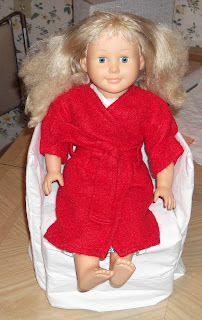
Finally: do you remember the story of Crayons' Crissy doll, how when we bought her she smelled so badly of cigarettes and how her original green plaid dress didn't survive the cleaning? Crayons found the same dress on E-bay last week (Mama Squirrel was helping her look at Crissy clothes) and she got it for less than a dollar--nobody else bid on it. When Mr. Fixit mentioned to the seller that the dress was for his little girl's doll, she cancelled the shipping charge. There are some very, very nice people out there.

Thursday, January 13, 2011

Revisiting The Tightwad Gazette, 2011

When I thought about doing some blog posts on The Tightwad Gazette, I was hoping to start a little closer to the actual 20-year anniversary of the newsletter's starting date.  I had a vague impression of "1991" in my head--turned out that, oops, this is indeed OUR 20-year anniversary, but Amy Dacyczyn started the newsletter in May 1990.

When I first knew Mr. Fixit, I was sort of a tightwad wanna-be; or perhaps a frequently-misbehaving tightwad.  By the time we got married, necessity made us both more than ready to tighten things up more than they had been; late-night courting pizzas had been fun, but a new house (even a small one) and a Squirreling soon on the way meant a different reality.  Plus the whole economy was in a bad spot during those years.  As I've said before, wedding rings were cheap; broccoli was expensive.

So all that is to say that, from our earliest Treehouse days, we tried to be careful with money; we had other books about frugality and quite a few broke-and-or-frugal friends to learn from; but I don't remember exactly when or how I first heard about The Tightwad Gazette.  The first book was published in 1992, but I bought it used sometime later, maybe in 1993 or '94.  The second book came out in 1995, and I got it with "four free books for joining" from a book club (I still had some things to learn).  At that point we started subscribing to the newsletter, and almost right away heard that it would be winding up in 1996.

Bummer.

But we did get several months' worth of newsletters, and then bought the third book when it came out at the end of the year.  Brand new, $17.95.  I knew it would be worth it.

So knowing all that, I guess our most intense apprenticeship with Amy would have been through the early to mid '90's.  I took the handles off a small pot, trying to make it fit inside our pressure cooker to make rice and beans (I gave up on that--pot and cooker were just the wrong shape). I tried a whole lot of things, especially food-related, from the books:  gelatin, popsicles, coffee mixes, chili, breadcrumb cookies, practicing "how to avoid feeling deprived," home haircutting (Mr. Fixit was the first to try that here); buying grains and beans from a co-op; juice-lid toys; the "snowball principle"; the "combining frugal strategies" principle; frugal-baby ideas; newspaper Easter bonnets; and egg-carton crowns.  (I passed on the dryer-lint Halloween mask.)  We didn't try everything (have never been dumpster diving either), but we learned one main principle:  nothing is too weird to try if it means you stay afloat.  And another one:   that a lot of "radical tightwad" ideas are just the "normal" of a couple of generations ago--less stuff, more time and so on.

If fixing, scrounging and occasionally doing without things meant that we could pay off our house, have me stay home with the kids (and eventually homeschool them), and stay out of credit-card debt--then, as Amy says in the intro to her first book, we weren't too frugal. 

It wasn't until years later that I realized, via Google, how many people out there had issues with certain frugal practices and Dacyczyn parenting points.  Given the number of critics who are STILL trashing Amy on message boards for powdered milk and making her kids clean their plates, it's no wonder that their family went into a more private lifestyle after the newsletter ended.   I still admire her, though, and am still learning through her books (I keep them with our cookbooks); Amy stuck her neck out, did the math instead of just saying "this should save you money," and took the risk of being called extremist. 

Maybe it's fifteen years since we connected, maybe it's more; it doesn't matter exactly.  The Dacyczyns' risk gave us more confidence to live the way we wanted, and to keep working on that over the years.  And for that, we thank them, and the Gazette.

Wednesday, August 11, 2010

A Christmas post? Already?

Well, I was re-reading a book we have called The Perfect Basket. (We have an earlier edition.) It's actually a combination of two earlier books, according to an Amazon review: food mixes for gift giving, and general suggestions for things to put in gift baskets. I like the mix ideas better than the basket ideas, because when you start putting things in a basket (or a bucket or a mixing bowl) the cost can add up very fast. Even a Christmas stocking full of dollar-store things will quickly run well over a few dollars, unless it's a very small stocking.

But that made me think of one of the Deputy Headmistress's Frugal Hacks posts from last Christmas, about thrift shopping/grocery shopping for presents that sort of go together--for instance, a shark book and a shark toy, or a nutmeg grater with some nutmegs. (If you remember, we actually did find a real nutmeg jar and thought of that suggestion.)

And that gave me a couple of ideas to expand on...because it's the middle of summer, prime yard-saling season here, and because I've passed over a few things lately that could, if I had been feeling really creative, have been turned into gifts. I'm still a bit iffy on how much anybody would have wanted the ceramic squirrel-on-a-walnut, even if I had filled the walnut with, say, walnuts...but you never know.

Idea Number One: Focus on basket themes that, besides being appropriate for at least one someone in your life, lend themselves to frugality. For instance, a basket based on someone's favourite decade. Where else are you going to find REAL 1980's stuff except at a yard sale? (Or maybe in your own closet or basement, and then it's free.) Think movies, fad items, magazines, music, toys, gadgets, cookbooks, kitchen items--whatever suits the person. There are stores and online places where you can find favourite candies from each decade, but that might run your costs up. Our nearby bulk store carries some retro candies that don't cost much. Hampstead House (book overstocks in Toronto) is offering a reproduction 1956 guide to entertaining that would be a fun gift along with retro things, but you could probably find an original book like that at a grandma's garage sale.

Idea Number Two: Since it sometimes takes awhile to find enough thrift-shopped/yard-saled basket-worthy things, decide on one or two themes and start collecting up anything that fits. Not that many people are probably into sharks, so choose themes like apples, strawberries, teddy bears, cats, horses and so on. Once you've narrowed your focus, you'll probably start noticing things at sales (or on sale, or in your cupboard) that fit right in and that you would have ignored before. You don't need to get carried away, just a few co-ordinating things can make a basket-type gift special.

Idea Number Three: Go for either the severely practical or the dangerously silly. On the practical side: give a basket of emergency supplies, like candles, matches, flashlight, batteries, vitamins, first aid kit. Or things that are needed in quantity, like postage stamps and bus tickets. Or make a tightwad gift pack for a frugal friend or wanna-be: sandwich bags or foil (for washing and rewashing), calculator, DIY tools, piggy bank, used copy of The Tightwad Gazette, coupon organizer, rubber spatula.

Dangerously silly? Also mostly for those who don't think there's anything wrong with giving or receiving used items: give a nice selection of weird,wonderful and inexpensive. Dancing hamsters come to mind.

Idea Number Four: Use some of the typical basket/filling ideas, but concentrate on items that you have on hand or that you come across at thrift shops, or maybe on sale at the grocery store. How many of these would you skip over at the thrift store?: small rolling pin, cookie cutters, any kind of containers that might hold cookies or other baking, doilies, cutting board, cloth napkins, butter knives (to give with a teacup, scone mix etc.), trays, jars, clear canisters, Bundt pan (to hold homemade cake mix), funny or pretty mugs (to hold candy canes and cocoa mix), knitting needles (I don't see crochet hooks as often, not sure why), a cassette of fiddle music (maybe to go in a Little House basket?), seed sprouter (for a health food basket)...endless possiblities.

Idea Number Five: Get inspired by a book. The last Hampstead House catalogue had a lot of possibilities that could go well with gift items, and you can often find similar titles at thrift shops. Examples: Heart-Friendly Cooking. Chocolate Recipes. Green Clean. Guide to Walking in Canada. Shameless Shortcuts (a book of household hints). Porridge. Taking Tea. And so on.

Idea Number Six: Go totally original, but (repeat this carefully) do not go overboard if your aim is to keep the gift under a certain dollar amount. The following ideas could be made either inexpensively or VERY expensively, so keep it in mind: A new-homeschooler basket with a timer, pens, paper, Nerf ball, anti-stress vitamins, how-to-homeschool book, math manipulatives, magnifying glass, favourite readaloud, Sharpies, etc. A Little House in the Big Woods/Little House on the Prairie basket with a sunbonnet, small rag doll, candy sticks, jar of plum jam, string of beads, homemade pancake mix, Little House craft or cookbook or paperdolls, maybe some Lincoln Logs. An "I love my 18-inch doll" pajama party set with handmade matching pajamas or nighties and/or slippers for girl and doll, matching pillowcases (handmade, they're easy), popcorn, cocoa mix, marshmallows.

And of course you can go with more usual basket themes, like sewing or crocheting supplies, but again, be careful--these days even spools of thread cost more than you'd think. Maybe pick out one more expensive and wanted item, and fill in with scavenged and inexpensive things, like (thrift-shopped) pattern magazines.

Good hunting.

Tuesday, July 06, 2010

Cooking without recipes: Summer Edition

What's for supper?

Pizza Pasta. I had thought of making Pizza Roll-ups, but it was too hot to turn on the oven. So this is what I did: browned a pound of ground chicken in a non-stick skillet, added some cut-up pepperoni, a few mushrooms, a chopped green pepper and a bit of canned pasta sauce, and let all that cook while I cooked a potful of fusilli. Just before the end I melted some mozzarella and cheddar over the top of the skillet.

BTW, one of the best frugal and energy-saving tips I've tried recently from the Tightwad Gazette books is the pasta method from the late Mary Leggewie of HomeschoolChristian.com. Bring the water to a boil, add pasta, bring it back to a boil, turn off the heat, cover the pot, and cook for about twenty minutes, stirring a couple of times to keep the pasta from sticking. It really works!

Raw vegetable plate: cucumbers, zucchini sticks, a few carrot sticks.

Chocolate Microwave Cake with Raspberry Sauce. (our post about microwave cake) The raspberry sauce was made like this: I partly thawed some frozen raspberries (a couple of cupfuls?). In a saucepan I combined two cups of water, two tablespoons of cornstarch, and a couple of good spoonfuls of raspberry fruit spread; I cooked that until bubbly and then added it to the berries, and we drizzled the sauce over slices of chocolate cake.

Monday, May 17, 2010

On birthdays and frugality (links and thoughts)

Getting Freedom From Debt (or Cents to Get Debt-Free) has a guest post about DIY Birthday Cakes.

Nothing New Nothing Wasted has some thoughts on the wastefulness of birthday decorations and disposables.

Here's our own post about Birthdays, Frugal and Otherwise, from a few years ago, with a link to this frugal-birthdays post at The Common Room. And here are the posts from Crayons' Horse Party (last year), Flower Fairy Party Menu (two years ago, with extra comments about the cupcakes), and Butterfly Birthday (five years ago). Other ideas we've used are meeting friends at a park (booking a (free) gazebo in case of drizzle) or having a party that's mostly outside--does save on decorations. Or a tea party for little girls--if you already have the teacups and things, your decorating problems are solved. I read, I think in the Tightwad Gazette, about a parent who took birthday guests to either a flea market or a thrift shop, giving them each a couple of dollars to spend. As far as the issue of the guests bringing presents goes...we've struggled with that one, and solved it at one party by asking them to bring supplies for MCC school kits instead. (That inspired one of the guests, who asked the kids at her own next birthday to bring needed supplies for an animal shelter. We've also been to a wintertime party where it was requested that we bring mittens, hats etc. for a mission for homeless people.) Our kids have been to some very creative parties too where the main activity was sewing or some other craft...one of them brought home a rice-filled hot bag one time. For the Apprentice's ninth birthday, we hot-glued things on painters' caps (cheap from the paint store) and had backyard games like charades.

One idea that was less successful for us was the time we took little Apprentice and her friends to a McDonald's playland--I posted about that a long time ago. That was a year when we opted for "simple" (as in "make it simple for us") instead of "frugal"--but some of our "frugal" parties have gotten better reactions from the guests. This weekend's bowling party was more on the "simple" than "frugal" end, and we did use some disposables (because it's hard to manage china plates at the bowling alley), but there's nothing to say that you should never have parties like that either. We like to support that family-run business, they charge a reasonable price for an hour's bowling plus free chips and drinks, and it was something that Crayons was really looking forward to. We thought about doing a home-based superheroes party, but this time around, she really wanted to do something like bowling...and after a busy rest-of-the-weekend, I was just as glad not to have to figure out party games. So I don't apologize for that. (Besides, we lucked out--the people who had the party room just before us left all their pink balloons up on the wall!)

Thursday, March 04, 2010

Living underground

No, I'm not blogging about basement apartments.

Brenda at Coffee, Tea, Books and Me has started a series of posts on The Underground Economy. Among other things, she says
"I've thought about this book often in the twenty-plus years since reading it (over and over). It came to mind a couple days ago as I walked through Goodwill and noticed all the beautiful clothing, shoes, household items, etc. one could purchase for pennies on the dollar from their original cost. I think of it when I am at the grocery store and see how much money is being charged for baked goods, processed items, and all pre-made foods (of course, not all being unreasonably priced)."
I've had kind of the same thought on my mind since our last successful rummage sale trip, last weekend--rummage sales either haven't been as plentiful this year or they're just getting harder to find, and the thrift shops haven't had much for us lately either. Of course that might just be because we've been more in a getting-rid-of-stuff mood...but anyway, we haven't brought home a lot lately. But at last weekend's fill-a-bag sale we found a good pair of jeans for Crayons, a pair of denim shorts for her as well, five pottery mugs still with tags (we didn't have ANY pottery mugs, all our mugs are just..."mug stuff" and a lot of them have Christmas trees on them...), a Josephine Tey mystery, a Baby Snooks old radio cassette for Crayons, and a few other little things. The point of this is--for the price of a fill-a-bag, we ended up with things that we hadn't been able to find (who sells Josephine Tey books?) or hadn't thought we could afford. The pottery mugs lined up at the front of the shelf have made me very happy all week every time I open the cupboard door, and Crayons is also very happy with her fancy embroidered jeans.

I've thought of the same thing, with a bit of envy, when I think of people I know who are way more successful at tightwadding at we are, or at least manage it in different ways. I've thought of it when cool little things happen, like the guy who walked up to us in the store, handing out free cream coupons. I've thought of it when we managed one of the little leftover successes, like banana-mango cake.

We aren't necessarily living in the "underground economy"--we're just making do with what we have (and trying to adjust as financial changes come along). But sometimes making do turns out to be a pretty good thing too.

Saturday, November 21, 2009

What has Mama Squirrel read this year?

Besides purely school books?

Mama Squirrel made up a reading list last December of 20 Library Books to read in 2009. In some cases I never did locate the book and ended up reading something else by the same author or another book on the same topic. Here they are, with the ones I finished in bold and the ones I at least started in italics:

1. Our Culture, What's Left of it: The Mandarins and the Masses
2. Story of French
3. Freakonomics
4. Half in the Sun: an anthology of Mennonite Writing
5. Bumblebee Economics
6. Of This Earth (Rudy Wiebe) (it's usually out)
7. King of Infinite Space: Donald Coxeter, the man who saved geometry
8. The Bone Sharps: a novel
9. Rough Crossings: Britain, the slaves, and the American Revolution
10. De Niro's Game
11. The Skystone (some heavy-duty adult content)
12. Black Swan Green
13. Confessions of an Economic Hit Man
14. Three-Day Road
15. A Most Damnable Invention: dynamite, nitrates, and the making of the modern world
16. On Chesil Beach
17. Divisadero (I got halfway through and couldn't handle any more)
18. The Library at Night
19. The Man Who Forgot How to Read (Engel) (I keep looking for it and it's always out)
20. The Writing Life (Annie Dillard)


I did finish several of them--and started a few others but didn't get all the way through due either to lack of interest or, in a couple of cases, getting very grossed out at what currently passes for acceptable content in mainstream books. I'm not sure whether to start a new library list for this year or just keep working on this one--I think I might keep working on this one, since I haven't yet got to that tantalizing book about dynamite.

So along with those library books that I did locate and read, and some favourite re-reads (noted), here is my Yes I Read It list for 2009, so far. At the minute I've dropped everything else so that I can work on Dawn to Decadence (and read Steph's slow cooker book).

A good chunk of the Bible
Plutarch: Life of Theseus, Life of Romulus
Marva Collins' Way

Books on writing:

How to Grow a Novel
Reading like a Writer (Prose)
Turning Life into Fiction (Hemley)

Books on Real Life:

Fast Food Nation
Discover Your Inner Economist


Books on homing:

Tightwad Gazette books (re-read)
Two "Lasagna Gardening" books
Introducing Whole Foods Cooking (Gregg)

Welcome Home, by Emilie Barnes

Books on books:

84, Charing Cross Road / The Duchess of Bloomsbury
Inside Prince Caspian (Brown)

Books about people:

The Small Woman
King of Infinite Space

Fiction:

Most of the Mitford books (re-read)
Daughter of Time (re-read)
Kingfishers Catch Fire (Godden) (re-read)
Oh What a Paradise It Seems (Cheever)
The Moonstone
The Scarlet Pimpernel
Goldengrove (Prose) (did not like this one at all)
Burglar on the Prowl (Block) (sometimes Mama Squirrel likes a good scary mystery)
The Heart of Midlothian (Scott)
The Silence (Endo)
Deep River (Endo)
Rebels of the Heavenly Kingdom (Paterson)
The Storm (Buechner)
Jeanne, fille du roy (Martel)
Some of Tolstoy's stories
Some of Chekhov's stories
Peace Shall Destroy Many (Wiebe)
The Living (Dillard)
The Stone Diaries (Shields)
Jayber Crow
Four of John Buchan's Richard Hannay spy novels (very racist but fun)

Books partly read:

Future Grace, by John Piper
Begin Here (Barzun)
Soul Survivor (re-read) (Yancey)
The Brothers K, by David James Duncan (I'm still working on this)
Make It Fast, Cook It Slow, by Stephanie O'Dea (ditto)
From Dawn to Decadence, by Jacques Barzun (ditto)

Wednesday, October 14, 2009

Thrift and thanksgiving

This is a response to The Common Room post Thrift, Parsimony and Freegan Living, which the DHM wrote after reading the NY Times review of Lauren Weber's book In Cheap We Trust. As the DHM mentioned, you can read an excerpt from the book here.

While making a day-after-Thanksgiving leftover casserole, I thought of a definition for sensible frugality: frugality (vs. miserliness) means cutting the meat off the bones, but not so close that you cut yourself with the knife. (Don't go spoiling my metaphor by telling me I should have been boiling it instead. It really was a very little turkey to start with, and I doubt I would have gotten much broth from what was left.)

Re-dipping your teabag so many times that you poison yourself is miserly. (Some will argue about that but I'm sticking by what my auntie told me.) Depriving people of what would make their lives pleasanter, healthier or safer, if whatever it is really does take money and if you can afford it, is miserly. Spending half an hour looking for a free parking spot (as an acquaintance of Weber's does) is just silly, especially if you have other people in the car who will never get that time back that you wasted. There are definitely ways to be too much of a tightwad.

On the other hand, those who slam Amy Dacyczyn, for example, seldom bother to bring up some of the most sensible and thoughtful articles from her Tightwad Gazette. She once described a frugal meal that her family served to guests: it included chicken, potatoes, and fresh vegetables from their garden. There was nothing miserly-sounding about it at all; in fact, some people would think that all that fresh, homecooked food was a treat. A Family Fun article about the Dacyczyn family focused on the cool and creative toys and other amusements that their children--those poor, deprived children of tightwads--spent their time with. And the point she was trying to make by using things like metal strips from waxed paper boxes (see Weber's excerpt) was that if you have it, then use it, instead of wasting your time and gas and money going out to buy something else while the metal strip goes into the landfill. She wasn't suggesting that you spend your life stockpiling metal strips in case you might someday need one to hang a picture. (I might also point out that some of the ideas such as jump ropes were actually sent in by TG readers.) It's not crazy to re-use things, and to keep using them until they wear out or smell bad. Sometimes it's not worth the fuss over what something costs; other times it just makes more sense to look for a tightwad solution. As Amy pointed out more than once, frugal living, including used stuff, can be better than its equivalent in new things, and it can help you achieve other goals that are important to you (like staying home with young children, or buying a house).

Lauren Weber is right about the fact that when we think we can afford to "live better," we usually do--although we sometimes confuse "living better" with "living more expensively." In the Treehouse we have a 1929 floor radio that originally sold for $275. Quite a chunk of change in those days, but someone must have thought it worth the money. (Mr. Fixit bought it at an estate sale before we were married.)


I knew an elderly woman whose husband refused to update the worn linoleum in their kitchen. For forty years she waxed that linoleum and hated it. One of the first things she did after he died--and she told me this with a chortle--was put in a no-wax floor. (Was she justified in wanting this? Did she deserve it after fighting the linoleum all those years? Is that just small potatoes compared with people who want bigger cars and fancier furniture?)

Some of Mr. Fixit's relatives survived very lean times during the Depression, when opportunities for immigrants on the Prairies were scarce. But they worked hard, saved all they could, and eventually built themselves a house with an oil furnace and--an amazing luxury--a thermostat to control it. They had no desire to return to methods of home heating that involved chopping or shovelling. It reminds me of another article I once read about a woman who grew up through tough times, and never could get over her amazement over simply "standing in the warm."

I'm not sure I relate to Ms. Weber's interest in fancy shoes marked down to ninety-nine dollars, or to her enthusiasm for the latest in televisions. We ourselves have made do just fine with our '70's and '80's TVs, and there's always the most radical idea of all--doing without one. To each her own, but I'm not sure how much I trust that kind of "frugal" advice. It's not wrong to enjoy good times, to look forward to a special meal, even to splurge on a bit of candy corn; but I do question large amounts of money spent on something that doesn't pay you back. (A chest freezer is an investment. A pair of high heels are probably not, unless they're sending you home from Oz.) I guess I just slice my turkey a little closer to the bone than she does.

Can you be "too frugal?" Opinions?

Thanksgiving photos by Mr. Fixit. The centerpiece was made from a vintage Native basket (free from Grandpa Squirrel's basement); dollar-store fake leaves that we bought for a craft class; a glass thingy from a cousin's wedding; a few horse chestnuts; and a spray from our lilac bush, which looks quite different in autumn. The turkey salt and pepper shakers belonged to Mr. Fixit's grandma. Most of the furniture in the photo also came from the Squirrel grandparents.

Wednesday, February 11, 2009

Eat your lentils

Cents to Get Free has her own twist on the Brown Rice-Lentil Casserole. (She credits Recipezaar for the basic recipe, but I think it was originally printed in one of the Tightwad Gazette books.)

Saturday, November 29, 2008

"The weight of too much liberty"

I've been working on the same post for days and can't seem to finish it properly. Maybe this is one of those interactive things that needs your comments to be "done."
"During a furlough in North America, one of [the] children said at a family reunion potluck, 'I sure will be glad to get back to Africa where we just have to eat manioc.'"--The More With Less Cookbook
"One year the only material I had to make costumes was from a pile of old black Navy uniforms. I told the children they could be anything they wanted to be as long as it was something black."--Amy Dacyczyn, The Tightwad Gazette
Jennifer Duenes (Life from the Roof) wrote a guest-blog post last week on Money-Saving Mom. (Her blog is about "her insights from life in Uzbekistan and tips on making the most of your resources in high-cost urban areas.")

This is the part that struck me:

"....when I returned for the first time to the US after my initial 2 years in Uzbekistan. I went into Wal-Mart to buy shampoo, and ended up just standing there for a few minutes staring at an entire aisle of shampoo.

"I was so overwhelmed, I ended up just turning around and walking out without buying anything. While it was hard at times to be deprived of access to certain products in Uzbekistan, I now understood what Wordsworth commented on in his poem Nuns Fret Not at their Convent’s Narrow Room. Instead of being limited by what we cannot buy, perhaps sometimes we should look at having too many liberties as a weight, and at our limitations as true freedom."

What homeschooler hasn't had a similar reaction in a conference vendor hall, or when confronted with one of those telephone-book-sized American curriculum catalogues? (The Big Book of Home Learning was called that for a reason.) I feel the same way in those 100-variety coffee shops: I just ask for their "regular coffee." (Side note: don't ask for that in the donut shop, though, unless you want coffee with cream and sugar. I once really messed with a Tim's cashier's head by asking for a "regular coffee without anything in it.") (For a 2008 look at a Yikes shopping trip, read Black Friday on Beck's Bounty. Photos, too.)

Recently I finished reading Rumer Godden's In This House of Brede, a novel about Benedictine nuns set during the 1960's, when their lifestyle became less cloistered and their veils were updated with front hair showing. ("Who knew that Sister X had red hair??") The older nuns who refused to go along with the modern "dishtowel" veils had their reasons: the completely-covered habit kept them from having to spend any time at all worrying about what their hair looked like. Another point made in the book is that 19th-century English nuns had to fight in the first place to be allowed to be cloistered; it was seen as a privilege.

And what more can I add? The theme for our first week of Advent will be Simplicity--an attempt to keep from buckling under the weight of too many choices...too much liberty.

Your turn...

Tuesday, July 22, 2008

Making yogurt--again

I've been pretty happy with the yogurt I've been making this year. I like the way it usually turns out, I think the heating-pad method works well, and I like not having to depend on store yogurt.

However, there have been a couple of things that bug me about the way I've been doing it--one is cleaning the pint canning jars afterwards. When you use this method of heating, cooling and incubating right in the jars, they do get a bit hard to clean. Besides, most of our jars now are full of jam. Mr. Fixit has remembered all the tricks his grandma taught him and so far we have two different kinds of jam in the cold room, with the promise of peach as well when they come into season.

I had loaned out my Tightwad Gazette Volume 3--the one with the yogurt instructions in it--and when it came back recently I thought I'd look back at that article and see if there was any way I could improve on my two-little-jars method.

So today I did it the TG way--heated up a quart of milk plus milk powder in the pot, and tried one idea of my own: I incubated it in a covered serving bowl that came with our dinnerware (with the cover on, in case that wasn't clear). I checked it just before posting this and it's already done--looks like it worked great. And the pot wasn't hard to clean either. I think I've solved both my messy-jar and lack-of-jars problems at the same time. (And it's a bit less dangerous than lifting those jars of hot milk.)

One interesting note, if you find this much technical stuff interesting: you have to let the milk heat to 180 or 185 degrees, then cool it to 115 degrees before stirring in yogurt and incubating it. Usually I lift the jars of hot milk out of the pot of water and let them cool for awhile on a towel--and usually it does take awhile. This time I poured all the milk into the bowl instead. (I had poured boiling water over the bowl first, just to make sure it was really clean.) I don't know if it was the bowl, or the fact that I left the whisk sitting in the milk as well (some kind of heat exchange?), but that had to be the fastest-cooling milk I've ever seen. Usually we're talking half an hour anyway; this batch was down to 115 degrees within 15 minutes.

Just give me a white coat, I feel like a lab scientist.

Thursday, June 26, 2008

Eating with a smaller mouthprint--Part 1

This is the first set of notes from a church class I led on current food issues and trying to live a somewhat simpler lifestyle. 

 There is a children’s novel by Lois Lowry that is set during World War II, in Denmark. In one of the opening scenes, the mother is out so her daughter starts the potatoes for dinner. That’s not the main event of the opening chapter, it’s just what she’s doing; but in the midst of getting into the rest of the story, you suddenly realize: she’s cooking potatoes for dinner, and that’s all they’re going to have, potatoes, because that’s what people had to eat for dinner during World War II in Denmark. (Note: I don't have a copy of Number the Stars here and I may have misremembered the scene or where it was in the book. If so, I apologize to Lois Lowry.) 

 And I’m sure many of you would be able to contribute similar scenes from your own lives, from growing up with many brothers and sisters during hard times, or from living overseas, or from raising large families yourselves and surviving job losses, bad years on the farm, and other difficulties. Some of you have seen food supply issues from a farmer’s point of view. Some of you have studied business, economics, and world hunger issues in depth; some of you have seen third-world poverty up close. 

Many of you have also been members of the Mennonite faith community for all or most of your lives, and you’ve heard about and practiced simple living in one way or another for years. So I have very little to tell you about the why or how of eating potatoes, or lentils, or rice. Most of you should assume that you know more about that than I do. Many of you also understand better than I do why world food prices are going up, why people in the poorest countries are becoming violent over their lack of food, and why celery here suddenly costs $2.69 a bunch. But I will try to give you a bit of background on my own interest in food and a simpler lifestyle, and our current concerns around the world food situation; and also some possible suggestions for action that I’ve drawn from various places; then I’ll open things up for discussion. 

 I grew up in a family where eating was always of interest, but where the cooking was as likely to be frozen meat pies as roast chicken. My mother loved to bake, but she was busy and found putting dinner on the table tedious. She cooked liver, mainly because my father liked it, and made Weight Watchers desserts in the blender, and cooked turnips and beet tops because they were frugal and nutritious; and we ate it because we were expected, if not always to clean our plates, to at least eat some of whatever we didn’t like so much. At least it worked for me; my sister rebelled and for years wouldn’t eat any vegetables besides frozen peas and corn. My grandmother was a good cook in the Food That Really Schmecks tradition, until too much fried food got both her and Grandpa into trouble and they made a radical switch to eating salads. She still liked to talk about food, though, and her interest in the old recipes also helped me develop an interest in use-what-you-have cooking. 

I spent a lot of my teens and early adult years cooking at home, working in camp kitchens, and experimenting with vegetarian food while I lived on my own. I always liked to read cookbooks, especially ones that focused on more-with-less food; some of the books that I used the most then included the Goldbeck’s Short Order Cookbook, Tassajara Cooking, and the More with Less Cookbook. I also had a copy of Louise Newton’s Good Recipes for Hard Times, and I wish I still had that because it’s gotten very hard to find and it had some great simple meal ideas in it. 

When Mr. Fixit and I were first engaged and he was living in an apartment, I got him a copy of The Urban Peasant, and we still use that. When we were first married, the economy was doing a bit of a turnaround after the boom of the late ‘80’s; wedding rings were cheap but broccoli got to be expensive. My new favourite books became the three Tightwad Gazette guides to frugality, and they helped pull us through some tight years. We realized that we did have quite a few good frugal-living skills already and that we had absorbed a lot from our parents and grandparents. Mr. Fixit was good at car mechanics, home fixups, electronics, and had a good sense of where our money was going. My particular talents included improvising in the kitchen, creative yard saling, and being able to overlook some things that others would fuss over—I’m not a very visual person so whether or not our house was big or small or totally redecorated or not didn’t bother me. After our first child was born, I became very involved with our neighbourhood association and the community centre where we ran our programs. They sent me for training as a community nutrition worker, which is a program that is still going on. CNWS are what they call peer support workers, people that are trained to promote nutrition, run food programs, start collective kitchens and so on. It didn’t end up being a job that I continued for pay, but I did continue to read and write about frugal food and nutrition, especially when I started blogging a few years ago. 

Because I’m in touch so frequently with other parents who also think and talk a lot about these issues and who live on a single income as we do, it sometimes surprises me to realize that our family is a bit out of the mainstream when it comes to things like eating regular meals at home, shopping and cooking together, and in some of the other ways we get by, like yardsaling and not having cable T.V. It just feels kind of normal to us. Besides, I know we’re not the most frugal people around, either; we do eat meat regularly, although we used to cook mostly vegetarian; we buy chips and pop sometimes, and frozen pizzas. Compared to some people I know who drop every chicken carcass in the stockpot almost before the plates have been cleared, I feel like I haven’t really earned my simple living merit badge yet. But we’ll get into comparing and legalism later on. So, to go back a bit—we survived the high food prices of the early ‘90’s, but since then, even though our family has grown to five, we’ve managed to keep our food budget pretty steady up until this year. For over 15 years we kept track of every grocery receipt, and we knew exactly how much money we needed to live on. When we set out our budget for this year, we decided to relax our record keeping and not worry so much about what we spent, because we figured by this time we pretty much had it down. And wouldn’t you know, this is the year our grocery trips suddenly started costing thirty, forty, fifty dollars more, every time. And all of a sudden even going out for burgers started to empty our wallet; our energy bill has gone up. 

Obviously something was up, and the newspaper stories about rising prices confirmed that we are in the middle of a world food and energy crisis that only seems to be getting worse. 

 The commonly-quoted reasons for the rise in food prices seem to be the cost of oil; the increasing demand for more meat and other luxury foods in India and China; and the crops-used-for-ethanol issue; but there's also much larger question about how the price of commodities has been affected by bad economic policies, by too many middlemen, by big business decisions that have affected the whole food industry. I'm still working my way through a long Globe and Mail article about Canadian farmers, middlemen and the stock market, trying to understand how what’s happened in the stock market affects the price of celery here or rice in the Philippines. The short answer (as I understand it) is that the trading rules changed to allow investors to speculate on food futures as they did on other things like oil, and that’s messed things up because food doesn’t work the same way as other commodities. 

 Strangely enough, in some ways food is scarce and in other ways it’s cheap, valueless, a throwaway commodity that’s taking over our landfills and filling the air with methane gas. In developed countries, we still have so much food that we don’t know what to do with it or how to dispose of it—so even edible food becomes just more garbage. It’s something about our super-sized food culture; there’s also the problem that a lot of people have forgotten how to eat, nobody’s home to cook anyway, and they end up grabbing fast food way too often. But since I can’t do much about the stock market or a lot of those other things, my questions and concerns come back to some of the more basic and personal ones: 1. How can we continue to feed our family in the same way, on the same budget we always have; or do we have to rethink some of our shopping habits and food attitudes in order to survive these new challenges? As we said last week about oil prices—do we hear that food prices will be going DOWN anytime soon? 2. How can I communicate those concerns to my children, who, in spite of my lessons and lectures on cleaning the plate or at least “trying some of it,” still don’t think they should have to eat hot cereal, casseroles, leftovers, or lentil soup? 

  “When I was a child, my mother said to me, ‘Clean the plate, because children are starving in Europe….’ So I would clean the plate, four, five, six times a day. Because somehow I felt that that would keep the children from starving in Europe. But I was wrong. They kept starving. And I got fat.”—Allan Sherman 

 We cannot emphasize guilt or do the Allan Sherman thing, and expect that to be enough, or for our children to understand. We can say it, but they don’t get it any more than Sherman did. 3. How do I keep my focus on God Himself and on my obedience to Him, rather than striving for simplicity for its own sake, or getting into legalism over what we buy or where it comes from? (Simplicity for some people has become a kind of money-making industry, definitely not something we want to buy into.) 

How can I live with an attitude of trust in His provision rather than one of anxiety over finances, pridefulness over how well we’re doing, or obsession over the details of our shopping, menus, and what happens to the leftovers—but still live responsibly and prudently, emphasizing justice, mercy and humility in my attitude towards food as well as in the rest of life? 4. Finally, what can I—or what can you—do in a bigger way to impact our local community and the wider world, working to help feed the hungry, educate people, change policies, and love as Christ loved us? [Whew.] 

 In answer to Question 3, go back to what Doris Janzen Longacre wrote in 1976. There is not just one way to respond, nor is there a single answer to the world’s food problem. It may not be within our capacity to effect an answer. But it is within our capacity to search for a faithful response.—Doris Janzen Longacre, The More-with-Less Cookbook, 1976 It’s still a good general answer—that obedience to God does not mean that we will come up with perfect answers to these questions, but that our search for a faithful response is part of that obedience. 

My obedience is not judged by whether or not I can convince my children to eat their vegetables, although their health and the issue of wasting food are definitely concerns we need to deal with. It is not judged by whether I myself can convince corrupt governments to feed people instead of buying weapons, although Matthew 6 and other Scriptures make it clear that I need to help where I can, for instance by supporting Christian workers and relief agencies working in those countries. I do find in Scripture that I please God with an attitude of thankfulness and delight in His creation; and that I should pray to have just enough, “lest I be full, and deny thee, and say, Who is the Lord?, or lest I be poor, and steal, and take the name of my God in vain.” I read that Jesus cares about feeding hungry people; that God said we are worth many sparrows, and that he provided manna, quail and water in the wilderness. 

In other books, I’ve read accounts of God’s faithfulness and provision, even beyond the bare necessities—Granny Han's Breakfast is one story that my children enjoyed. [Unrelated side note: if you're reading that, please preview the photos if you have little ones--there's one scary picture.] I read that Jesus commended a Mary attitude over a Martha one. I read that I should be faithful even with a little; that if we have food, we should be content; that self-control is one of the fruits of the spirit, but that I am also commanded “Go, eat your bread in joy”—Ecclesiastes 8:7. The Bible tells us to love, honour and respect others, including those in our own families—so that would include those who work to pay for the food we eat, those who plan and cook the meals, and those who eat. Out of respect to my husband and children, I try to cook things properly and give them things they like to eat, trying to balance taste with what’s nutritious and what we can afford. Out of respect to me, or whoever else is cooking; out of awareness of the reasons why we eat simply; and, more importantly, out of thankfulness to God, the eaters need to do their best to eat whatever it is without grumbling and complaining or asking for something else. 

Sometimes all that’s easier said than done, especially because these days we are finding the old style of parental authority (do that or else, eat it because I say so) has changed as well. But those are the attitudes that are clearly Scriptural and are there for all Christians. When we try to define eating simply, it’s more important to (simply) live faithfully than to set out a list of everything we must do or not do, especially when we’re not only trying to figure out what to do, we’re trying to get our kids or other family members to do it along with us.. Jesus said it’s not what goes into our mouths but what comes out of them that makes us unclean. Our stray comments and complaints are more powerful than we realize. 

One negative example of this was something we saw once on T.V.; it was about families who were getting food assistance, I think from a food bank, and who were given recipes to help use some of the unfamiliar items. So they showed a woman making spaghetti with lentil sauce, and then her family saying grace, and right away her husband complaining, “what’s this stuff? We’re supposed to eat this? I mean, maybe if we had some cheese on top or something we could at least swallow it.” And so of course nobody would eat it. More for the landfill. Our children see what we really are, what we value, how we use things. If we spend so much time cooking Christmas dinner that we have no time or energy left to celebrate; if we get mad at the kids’ junk food but spend money on adult-style snacks and empty calories—these negative things speak louder to them than our words. 

On the other hand, if our meals are a relaxed time together, and we simply eat with thankfulness, our children see that, and it is the equivalent of many lectures. It’s also important to choose our own priorities carefully. Nobody has all the answers and nobody can or should try to do everything. 

Monday, August 20, 2007

Small potatoes. And Wieners without Beaners.

That's what we got at the farmstand on the weekend--small red potatoes. And broccoli, and red and green peppers, and lettuce, and a few other things.

This is what we did with them. It's a recipe I clipped from Vegetarian Times a long time ago and adapted tonight to use what we had. (This is the adapted version.)

Vegetable Medley

About 10 small red potatoes, scrubbed and cubed
2 cups chopped broccoli
1 red pepper, chopped
1 tbsp. vegetable oil
salt and pepper to taste (and some cayenne pepper if you like; I don't)
1 tsp. each dried oregano and basil
(The original recipe called for frozen peas and a chopped green pepper in addition to the other vegetables, as well as fresh garlic. Since I had finished all the garlic, I used a bit of garlic powder with the other seasonings.)

Cook the potatoes in a large pot of boiling water, for about 8 minutes, depending on how small you cut them. Add in the chopped broccoli and cook for a couple minutes more, until the potatoes are done. Drain them well in a colander.

A few minutes before you're ready to eat, heat the oil in a large, deep frying pan. Add the chopped pepper (and garlic, if using) and cook for a couple of minutes before adding all the other ingredients. (Pick out any stray bits of potato skin.) Cook for several minutes, stirring gently (you are not trying to mash the potatoes).

If you need to wait a few minutes for supper, turn the heat down to low and cover the pan until you're ready to eat.

I needed something to go along with this and didn't have any small protein-type things handy; but I did have a bag of pre-cooked wieners in the freezer (that is, the last wiener left in the pan, multiplied several times--we just store the leftover ones in a freezer bag for snacks or hot dog famines). I pulled them out, drizzled them with barbecue sauce, and baked them in a covered casserole for about half an hour. So much for our healthy dinner, I guess; but the flavour seemed to go well with the potato mixture.

Dessert was Fruit Crisp (yes! it was cool enough to use the big oven today!). We had bought--very rare occasion--some mixed frozen fruit when it was on sale at Price Chopper. I poured about half the bag of mixed berries into a small pan and added several stalks of chopped rhubarb. Actually I should have chopped the rhubarb smaller because it came out with a bit of crunch left, but we like it that way anyway. (One Squirreling did ask why I put celery in the dessert...)

Anyway--one other experiment here. In the Tightwad Gazette there's a mention of using baking soda in fruit crisps and other desserts so that you can cut back on the sugar. Well, a lot of times I don't add sugar anyway except in the crumble part, but I figured I should add some today because of the rhubarb. So I tried 1/3 cup of sugar and 1/2 tsp. baking soda along with the fruit, and then added our regular crumble topping. I baked the dessert along with the wieners, and there were no complaints.

Tuesday, June 05, 2007

Yogurt-making trick

I made yogurt yesterday and wanted to pass on something that's working for me.

I've been an on-again, off-again yogurt maker for years, trying directions from some of my favourite frugal people: The Tightwad Gazette, The Common Room, The Hillbilly Housewife. I've had mixed results using different incubation methods including a quickly-turned-off electric oven--we didn't own a heating pad until this year (we found a brand-new one at a yard sale).

But recently I found a way that clicked for me and does produce very eatable yogurt. The Sea-bird Chronicles posted the idea of heating the milk right in the jar, in a big pot of water. No messy pot to clean up, no burnt milk, not as much hovering--when the water starts bubbling, it's time to check the temperature of the milk as well. I used two pint jars instead of one large one because that's what I had--just divided up the extra milk powder and starter (frozen yogurt cubes) between the two jars after the milk cooled a bit. Then I left the jars for six hours on the heating pad, and voilà.

The other different thing I'm doing--for the time being--is using regular 2% milk rather than trying to make yogurt entirely from powdered milk. Maybe I'll try that again once I've had a few more successful from-fresh batches and I know I'm not doing anything else wrong--but the last just-powdered batch I made was runny and sticky. :-& And what we have now is really pretty good. So if it's not broke...