Showing posts with label habit training. Show all posts

Saturday, September 19, 2020

From the archives: How we're losing "I can, I will"

First posted January 2016

I'm fascinated by Annie Kate's review of Smart but Scattered Teens by Guare, Dawson, and Guare. Books like this say a huge amount about our culture, and the healing that parents may need to initiate if their teenage children have become infected with "do it for me" syndrome.

Check out the list of "executive skills" that the authors feel teenagers may be lacking:
"working memory, planning/prioritization, organization, time management, metacognition, response inhibition, emotional control, sustained attention, task initiation, goal-directed persistence, flexibility."
Do you see a connection between those skills? Every single one is something that Charlotte Mason would say we must not do for children who are capable of taking it on for themselves. And yet, so often, we do...just because we do. We try so hard and worry so much, like Aunt Frances, when we should be  letting them take the reins, like Uncle Henry.

The sad thing is that the teenage years may be almost too late to change some of those lifelong habits, although the point of the book is that there's still time. (I haven't read the book, just the review.) If you have younger children in your care, these are the things you should be doing, or rather, not doing. Letting them begin an activity and encouraging them to stick with it for a reasonable amount of time, to get some "goal-directed persistence" (see Charlotte Mason's "Inconstant Kitty"). Teaching them to be prompt and orderly (organization, time management). Using learning methods such as narration (working memory, sustained attention). Dealing with tantrums and other emotional disruptions (emotional control, response inhibition). I would add, seeing a situation from the other person's point of view and deciding to do what benefits another person, or the larger group or community, rather than yourself; developing empathy. As I've discussed here and elsewhere, I'm with those who believe that one of the best ways to gain empathy and flexibility in thinking is to have a very good store of stories.

That is what we can do for our children: give them that store, train them in habits, and allow them to develop their wills. What we can't or shouldn't do: think for them, remember for them, rob them of their initiative.

Thursday, June 01, 2017

Rise and shine (or, the unexpected journey toward minimalist living)

So did you have a chance yet to look at 10 Ways Minimalism Ruined My Life Forever? It's tongue-in-cheek, of course, because the Welder's Wife blog is all about letting things go and living more naturally, a little at a time. An example of her objections: "I no longer have the pleasure of searching for something."  But yes, she's right, in a way. Making more "mindful" choices in any area of our lives takes more brain power than taking the default option. Most times those choices are going to cost us something, or at least force us to use flabby will-muscles that are, naturally, going to object to being roused and stretched.
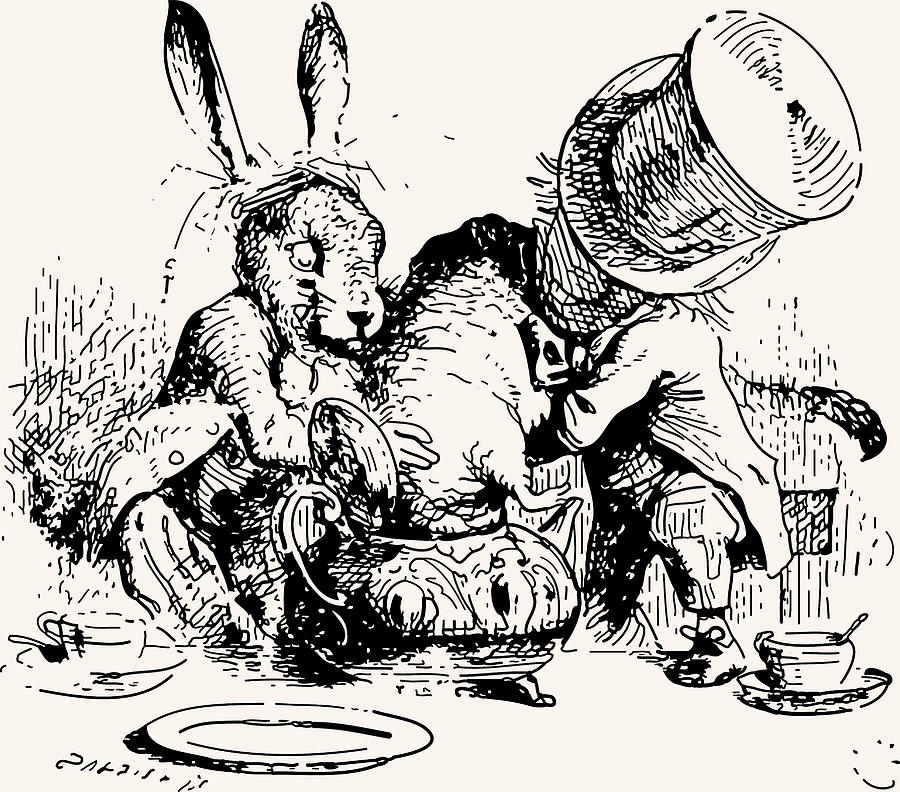
Image result for dormouse teapot
Our old habits, too, may not take kindly to being ignored. The clean-swept room, and all that. If you find a certain comfort in piles of things, or enjoy having something of an Undiscovered Country in the basement, then trimming stuff down may seem akin to stripping naked. There are always things we would just as soon hide, and I don't mean the garbage bag (or three) full of mouldering stuffed animals or high school t-shirts, but the anxieties and old scripts that brought them in and left them there in the first place. Letting stuff go can feel like you've just been kicked in the hopes and dreams. Or like you've just let somebody down who would be very, very disappointed in you for not keeping that thing.
Image result for vintage vinyl baby doll
After giving it some thought, I would say that the biggest thing you might lose, on the way to living with less, is a sense of urgency. Or emergency. That is (as the Welder's Wife said), you miss not only the fun of searching for a needle in a clutter haystack or an overstuffed desk drawer, but the embarrassment, panic, and threatened consequences that sometimes go with those searches. We can find more enjoyable ways to get that adrenaline rush.

And it's true, as that post says, that if we suddenly are freed from shopping and maintaining and paying for things, we may have to face questions like "what else is there to do with my time?" As with silence, many of us are a little uncomfortable with empty spaces, both physical and temporal.

But reality sometimes (thankfully) steps in and gives us no choice, or at least makes very clear what choices we need to make, and fast. A Sold sign out front is one way to do it. For some people like Courtney Carver, change comes after a health crisis.  Or someone asks us to come on a dragon-hunting adventure, with dwarves...and pack light.

Thursday, January 21, 2016

Why we were never meant to do it for them (Review of a book review)

I'm fascinated by Annie Kate's review of Smart but Scattered Teens by Guare, Dawson, and Guare. Books like this say a huge amount about our culture, and the healing that parents may need to initiate if their teenage children have become infected with "do it for me" syndrome.

Check out the list of "executive skills" that the authors feel teenagers may be lacking:
"working memory, planning/prioritization, organization, time management, metacognition, response inhibition, emotional control, sustained attention, task initiation, goal-directed persistence, flexibility."
 Do you see a connection between those skills? Every single one is something that Charlotte Mason would say we must not do for children who are capable of taking it on for themselves. And yet, so often, we do...just because we do. We try so hard and worry so much, like Aunt Frances, when we should be  letting them take the reins, like Uncle Henry.

The sad thing is that the teenage years may be almost too late to change some of those lifelong habits, although the point of the book is that there's still time. (I haven't read the book, just the review.) If you have younger children in your care, these are the things you should be doing, or rather, not doing. Letting them begin an activity and encouraging them to stick with it for a reasonable amount of time, to get some "goal-directed persistence" (see Charlotte Mason's "Inconstant Kitty"). Teaching them to be prompt and orderly (organization, time management). Using learning methods such as narration (working memory, sustained attention). Dealing with tantrums and other emotional disruptions (emotional control, response inhibition). I would add, seeing a situation from the other person's point of view and deciding to do what benefits another person, or the larger group or community, rather than yourself; developing empathy. As I've discussed here and elsewhere, I'm with those who believe that one of the best ways to gain empathy and flexibility in thinking is to have a very good store of stories.

That is what we can do for our children: give them that store, train them in habits, and allow them to develop their wills. What we can't or shouldn't do: think for them, remember for them, rob them of their initiative.

Monday, March 02, 2015

Herbartianism Made Fun and Easy, Part Six: On observation and interest

Part Five is here.

Quick, what colour are the bottoms of the shoes you're wearing?

If you're not wearing shoes, what colour are your socks?

How much milk is in your refrigerator?

What, exactly, does it say on the front of your computer printer?

How did you do? Don't worry if you did not pass these typical tests of observation skills, because Sir John Adams asserts (in Herbartian Psychology, Chapter VI) that those facts are at present of no consequence. There is no shame in not knowing exactly how many buttons are on a shirt.
But what is observation for? Is the habit itself more important than actual facts? Adams beats around the bush on this one:
"The observationist educationist...wants the pupil to observe everything. He writes books like that tiresome 'Eyes and No Eyes.' He tells us of one-eyed dervishes who see more with their one eye than most of the rest of the world do with two....he points to the marvellous deeds of Sherlock Holmes."
Then he has the temerity to poke fun at nature walks.
"The pupil is supposed to go along with all his senses on the alert. He is to observe the note of the skylark, the scent of the violets, the form of the clouds, the colour of the primroses, the smoothness of the grass, the springiness of the turf. he is to amble along with all the Five Gateways of knowledge wide open, and we know that the mouth is one of them." 
So what's wrong with taking children outdoors to take it all in? The Herbartian answers:
"Interest and knowledge...mutually determine and react upon each other. In view of this, the teacher's first duty is to ascertain the contents of the mind of his pupils, and then to bring within their reach material specially prepared for those minds to react upon. Children can observe only what their apperception masses are prepared to act upon; to all else they are literally blind, deaf, callous."
What do you think Charlotte Mason would say to that? My guess is that she might partially agree, because I don't think her intent in nature walks, or anything else of that sort, was that they should be entirely random. Of course going anywhere is more interesting if you are at least somewhat prepared, if you've been given something ahead of time to look for or look at. Think about an art gallery, Westminster Abbey, a fort, a bird sanctuary. The more real interest and information you bring with you, the more likely it is that you're going to find the visit worthwhile. Think of crowds of children being dragged through museums, with nothing more on their minds than getting a day off school. Of course it's a waste of time. (I'm not so sure about the "specially prepared" material; I think that's where CM and Herbart part company.) You can stare at the night sky with nothing more than the idea that it's very big and that there are a lot of stars, but how much richer your experience would be if you knew a little astronomy. You start to form a relationship with what's out there, make "sense of those first-born affinities."
Back to Herbartian Psychology: Adams then spends several pages on the methods of Sherlock Holmes, and plays a little game with perspective (like those puzzles where the answer is "an elephant on his back in a swimming pool"). What it comes down to, he says, both in what-do-you-see puzzles and in Sherlock Holmes-type stories, is often not observation or even deduction, but specialized knowledge. There is something that the writer or the artist knows, that you don't know, and that makes the whole thing not 100% fair. It's like those maddening Encyclopedia Brown books where the solution is always something like "Encyclopedia knew that those sorts of nickels were not made until 1960, so therefore the dealer was lying."
It helps to be observant, but it also helps to have knowledge, and the Herbartian will say that you can't put knowledge in a mind unless there's already an apperception mass there to stick it to. Charlotte Mason said that it was important to begin with what you know.
Adams ends the chapter with a paragraph that sounds very CMish:
"To cultivate observation, then, is not to train the eye, the ear, the hand, to extreme sensitiveness, but rather to work up well-organized knowledge within the mind itself. If we desire minute observation in a definite direction, we must cultivate special knowledge to correspond. If we wish to encourage general observation, we can only succeed by cultivating wide interests. The reciprocal interaction of interest and knowledge in relation to external facts, is what ought truly to be called observation."
How that well-organized knowledge gets into the mind is another issue, but the point that you have to know something in order to see something or to learn something is well made.

Photos from My Cousin Vinny. 

Part Seven is here.

Saturday, November 08, 2014

Education is a discipline: use the tools

"...this way delight is necessary for happiness. For it is caused by the appetite being at rest in the good attained ~~ St. Thomas Aquinas

I'm thinking about "enough."  Knowing when you have read enough, bought enough, eaten enough.  It takes discipline to start a task, and discipline to stop at the right time or the right amount. However, my bread machine does exactly those things when I push a button, and human beings aren't machines, so it's not simply a matter of having the right parameters programmed into us.

Or is it? If we are first shaped by our habits, we have accepted a certain amount of "programming," and that's probably a good thing. Maybe our kids are used to taking one or two cookies, no more, and the habit puts that particular limit on their cookie appetite. Habit is ten natures, as Charlotte Mason reminds us; adults "cursed" with a bad temper or procrastination might have been able to avoid the worst of those things simply by being trained out of those habits. And as the conversation goes in Formation of Character, that in no way diminishes the theology of sin and salvation, or our need for grace and the work of the Holy Spirit; it is simply making use of the natural laws of how we are made.  

That distinction is really important, because, as in CM's original conversation, some will see it still as "bypassing God."  There was a popular teaching in my area, back in the 1980's, that emphasized repentance in all things, and it taught a prayer that said, "I am not willing to ___, but make me willing, or make me willing to be willing." This may have been solid enough at its start, but it got misused, and I think some people got stalled on the "I am not willing" part--as in, well, the Lord hasn't made me willing on that one yet, so we can blame the Lord. In Charlotte Mason's thinking, this makes about as much sense as owning a vacuum cleaner but blaming the Lord for your dirty floor, or owning a toolbox and allowing the house to fall apart but saying that God just hasn't fixed it. That, in her view, was the real blasphemy, and she applied that thinking to people. If our understanding of human nature allows us to treat our children well, or to resolve conflict well, or to teach a class well, or to change a habit, then we should use those tools, within the bounds of respect for people's individuality etc., but without saying that any of those actions are usurping God's work.

As Mason had one of her characters say particularly, not to use those opportunities is, itself, a demonstration of ingratitude. I posted a real-life example of this last year:
"I was going to say, "stay tuned for Part Three" and leave it at that, but something funny (and suggestive, as CM would say) happened. We are having some tree work done this morning in the Treehouse yard. (Aftermath of the quite violent storms last month.) One of the tree guys said that he had planned to put a bolt into one of the trees, but he couldn't do it this morning, because his drill was broken. Mr. Fixit told him to hold on. He disappeared into the workshop and came back with his late grandpa's 1950's brace and bit. The tree guy was very impressed.  "Do you know how hard it is to find good equipment like this?" We just have to know how to use [the tools]. And provide sufficient amounts of material (mind-food) to make it worthwhile."

Thursday, November 06, 2014

Education is a life: the gift

So...discipline, as Kathy commented on the last post, is a gift that we give our children rather than something we impose on them.

This fits well with some of the thinking I've heard about rediscovering the monastic "horarium," with specific prayers and readings, devotions and duties--disciplines--tied to certain hours of the clock or times of the year.

It also fits with the terms that Laurie Bestvater uses in her writings on CM-style notebooking: paper postures, paper graces. Could we also say paper disciplines? Again, notebooks are meant to be a lifelong habit for the student, not an artificial, teacher-constructed demand with little longterm meaning.

What we can give is the idea to begin, and the support to continue, along with the practical tools children need. But we can't do the habits of attentiveness or the rituals of nature notebooking for them, any more than we can take over other people's spiritual disciplines.  If there is no education but self-education, there is also no true discipline but self-discipline.

Wednesday, November 05, 2014

Are you a disciplinarian? Do you want to be one?

"By Education is a discipline, is meant the discipline of habits formed definitely and thoughtfully, whether habits of mind or body." ~~ Charlotte Mason

Are you a disciplinarian?

Do you want to be one?

Charlotte Mason says that if she were, hypothetically, asked about discipline-that-really-means-punishment, she would say that punishment has a necessary time and place. Like medicine. A necessary evil.  She says, "But punishment, like physic, is a casualty only of occasional occurrence at the worst, and punishment and physic alike are reduced to a minimum in proportion as we secure healthy conditions of body and mind."

Oh my, the connections that pop up here.

I'll start with our middle-school standby, Uncle Eric (Richard J. Maybury).  Uncle Eric preaches against big prisons full of lots of people being punished for lots of things. For one thing, they're expensive; they eat up taxpayers' money. In his view, prevention of crime would be much more advantageous than an overdeveloped penal system. Sick societies are expensive to run. So in a healthy society, yes, we would probably have jails, but they wouldn't have a lot of inmates.

Then there's Louisa May Alcott's novel Eight Cousins. It's a good story, but it's also a mouthpiece for Alcott's views on healthy lifestyle.  Rose is being cared for by a clutch of aunts, and most of them have particular agendas for her. One in particular, gloomy Aunt Myra, insists on seeing Rose as sickly, and would use any excuse to dose her with favourite medicines. In a rather troubling aside, it's hinted that Aunt Myra may have "dosed" her own daughter to death. Clearly this is a well-meaning woman who should be given a wide berth.

But into the story comes Uncle Alec, a doctor, who takes away Rose's morning coffee, as well as her corset and her silly dresses, and makes her go out and play and build up her constitution. "Healthy conditions of body and mind."  Aunt Myra's medicines are to be avoided at all costs; but even Uncle Alec's would be reserved for actual sickness. Later in the book, Rose does catch pleurisy, ironically, when Uncle Alec pushes his "healthfulness" envelope a little too far, and Aunt Myra gets her chance to gloat...but not to medicate.

What part does Discipline play in Uncle Alec's approach to health? What part does it play in Uncle Eric's just society? We think that Uncle Alec (or Alcott) and Uncle Eric (or Maybury) would, like Charlotte Mason, say something about method vs. system.
"We have a method of education, it is true [not a system], but method is no more than a way to an end, and is free, yielding, adaptive as Nature herself. Method has a few comprehensive laws according to which details shape themselves, as one naturally shapes one's behaviour to the acknowledged law that fire burns. (Ooh, Natural Law!) System, on the contrary, has an infinity of rules and instructions as to what you are to do and how you are to do it. (Political Law?) Method in education follows Nature humbly; stands aside and gives her fair play." ~~ Charlotte Mason, Parents and Children, chapter 16
"Not mere spurts of occasional punishment, but the incessant watchfulness and endeavour which go to the forming and preserving of the habits of the good life, is what we mean by discipline; and, from this point of view, never were there such disciplinarians as the parents who labour on the lines we would indicate. Every habit of courtesy, consideration, order, neatness, punctuality, truthfulness, is itself a schoolmaster, and orders life with the most unfailing diligence." ~~ C.M., same.
So yes, yes, yes, in those terms, we need to be the biggest disciplinarians that ever were!  But not in the style of Miss Norrie (Martha's old governess), but of Miss Crow instead. Like Miss Dunbar (in the tree there), in Belle Dorman Rugh's Crystal Mountain. (But not Mary Poppins, she's too tricky.) We are teaching "the good life." We are diligent to teach that spirit of the law, rather than satisfied only with the letter.

If you want to read a whole chapter of Charlotte Mason's thinking on discipline, the place to go is her Volume 2, Chapter 16.

Monday, November 03, 2014

Education is a discipline: Hello, Mrs. Piggle-Wiggle?

Quick, what comes to mind when you think of discipline?

Spiritual disciplines? Jesus and the disciples?

Military discipline?

The years of practice needed to become a dancer or a musician?

The grammarian slash disciplinarian attitude of many teachers in books and films, such as the vice-principal in Mr. Holland's Opus (the one who wants to cut all the arts programs) and Norman Lloyd's character in Dead Poets' Society (the one who wants to fire Robin Williams)?

Do you think of kindness or unkindness, grace or law? Is it Mr. Phillips in Anne of Green Gables, who really can't "keep order" at all, or is it Miss Stacy, who brings a friendlier atmosphere to the classroom? Is it Anne herself as teacher, endeavouring to win her pupils with love, until the day she gives Anthony Pye a well-deserved licking? (After that, he behaves himself.)

In Formation of Character, Charlotte Mason's Volume 5, she describes an approach to taming temper tantrums, and Tammy mentioned this chapter also at L'Harmas.  You can read "The Philosopher at Home" yourself, but this is the point: that the "cure" of "Guy" (the little boy) takes two distinct stages. The first stage is an attempt to control the environment, avoid Guy's triggers, and divert him out of the habit of blowing up. The second stage comes when, after a period of peace, Guy relapses, and his father says that it is now time to put the responsibility on the child himself. He suggests a couple of tools that Guy can use, but from this point on it is up to the boy to manage his own temper.

It reminds me of the Mrs. Piggle-Wiggle stories, where the first stage of a magic cure often involves parents secretly wafting invisibility powder or sprinkling radish seeds, but where, after the usual crisis (the dirty child appears covered in sprouting radishes), the end involves recognition and a certain amount of will.  Sometimes this takes the form of a parent-child conversation where they agree that there was a problem but that they will try not to let it recur (especially if the parents were enabling the misbehaviour). The magic bottles are returned to Mrs. Piggle-Wiggle, and the responsibility shifts from the parents needing to teach a lesson or break a habit, to the children who may not always act perfectly from now on, but who are capable of recognizing and changing their own thoughts when they see old behaviours trying to break out.

If education is a discipline, it begins, ideally, when our children are young and we work on instilling habits of attentiveness, truthfulness and so on.  When they are old enough for school lessons, if we control the environment just enough, say, to avoid too many distractions and interruptions; if we make the first reading, writing, number experiences positive, successful ones; if they're given small things to do perfectly, and then the bar is raised just a little at a time; then good learning habits are formed without much need for extra schoolroom discipline.

And then, when they're older? How do we shift the responsibility for education, as in the tantrum story, onto the shoulders of our old-enough children?  I recommend reading Melissa Wiley's Down to the Bonny Glen, the chapters about Martha's new governess Miss Crow, as an example of CMish masterly inactivity:
"But still Martha had the feeling that her every move was being watched. As if to confirm this suspicion, Miss Crow, eyes still fixed upon the needles, slowly raised her left eyebrow. Martha jumped as though the governess had pricked her with a pin. She wrenched her gaze back to her copywork and wrote without daring to look up until all the assigned lines had been copied...Martha had just finished the last letter of the last word when the governess laid the knitting aside. She rose and looked at the copywork. Martha waited anxiously for stern words about the blots...But the governess merely nodded her head once and said, "Now then, let us have a look at your sewing."

Friday, May 09, 2014

Quote for the Day: St. Louis on Food, Drink, and Clothing

"Of his meat he was so sober, that on no day of my life did I ever hear him order special meats, as many rich men are wont to do; but he ate patiently whatever his cooks had made ready, and was set before him....He put water into his wine by measure, according as he saw that the strength of the wine would suffer it....[he told me that] if I drink pure wine in my old age, I should get drunk every night, and that it was too foul a thing for a brave man to get drunk.

"He said that men ought to clothe and arm their bodies in such wise that men of worth and age would never say, this man has done too much, nor young men say, this man has done too little.  And I repeated this saying to the father of the king that now is [Philip], when speaking of the embroidered coats of arms that are made nowadays; and I told him that never, during our voyage oversea, had I seen embroidered coats, either belonging to the king or to any one else.  And the king that now is  told me that he had such suits, with arms embroidered, as had cost him eight hundred pounds parisis.  And I told him he would have employed the money to better purpose if he had given it to God, and had had his suits made of good taffeta (satin) ornamented with his arms, as his father had done." ~~ Sieur de Joinville, Memoirs of the Crusades

Tuesday, September 17, 2013

Carnivals this week, and one extra Charlotte Mason link

Yes, carnivals are still happening!  They seem to be getting a smaller, with all the other kinds of media competing for our time...but these old faithfuls are still running.

The Charlotte Mason Blog Carnival is to be hosted right at its mama site, Fisher Academy International.  Not up yet, but that's where to look.

In the meantime, you can peruse "Charlotte Mason and the Latest in Education Research", at The Common Room.  I really hope the DHM sent this to the CM carnival, but I'll pass it along anyway.  This is an amazing post--lots to think about.

HomeschoolBuzz.com hosts the Carnival of Homeschooling: In the Clouds.  The only word that comes to mind for this edition is "cute."  Several of the posts have their own little word clouds (good thing the carnival hasn't been as extensive lately!).  I particularly liked the post Switching Key Habits in the Home and Homeschool: Cultivate a Growth Mindset, at Simply Convivial.  (How is a child's "can't do it" attitude towards math similar to an adult's "I'm burned out, so I'll always be burned out" thinking?)

Enjoy the carnivals!

Monday, September 03, 2012

Homeschool things to do for Tuesday: figure out what we're doing, finally?

How do you start off your homeschool year?  Plunk the math books down and tell the kids to get to work?  Take a nature walk?  Start right in with an exciting novel?

Lynn Bruce once told a gathering of Ambleside Online parents that there were certain things that needed to be put into place in a school year before you ever thought about getting into the books.  One was making sure that your children understood the need to listen perfectly and follow directions (she had them practice this by making cookies AND cleaning up on the first day of school).  On the second day of school, she had them go through the schedule and talk about why they were studying certain subjects, how math and science and good handwriting glorify God. On the third day, they talked about good habits, and how the teacher and students could work together to make all those transitions go smoothly, such as having the right supplies and equipment ready when it was time to start the next subject.

THEN they started school.

I don't have very little children, and we are not just starting out, but there is still a great deal of wisdom in what Lynn said all those years ago.  So what are we doing tomorrow?

Our opening time:  a favourite hymn; the first chapter of Proverbs; and a prayer together.

As Lynn suggested, we will look at the weekly schedule together and talk about some of the things we will be studying and the books we will be using.  We will talk about the subjects that will be done independently vs. those that we will read or do together; what the expectations are for free reading; what the expectations are for homework (we don't do much, but I do give a few assignments to be done "out of class").  We will talk about our space and our supplies.  What kind of notebooks will work best for which subjects?  What kind of fun things like handicrafts can we do?

Since it's Tuesday and our Tuesday schedule says to start with Geography, Shakespeare, and Math, and Copywork, we will do those subjects.  But first we're going to start The Hobbit.  Dollygirl will be reading this mostly to herself, but  I think it's a good way to start out the year together.

And that's it for the first day.  The high schoolers get a short day on the first day, so Ponytails will be home early too.

(No cookies this time, but maybe we'll make some treats later.)

Linked from Charlotte Mason Blog Carnival: What We Love the Most.

Friday, April 16, 2010

A Month with Charlotte Mason, #16

[Update: this has been somewhat shortened from its original posting.]

I promised something slightly different today...so I have invited Charlotte Mason and some online friends to participate in an online discussion. Watch out, you may find yourself quoted.

Mama Squirrel: Miss Mason, there are some principles discussed at the end of Home Education that I had to skip over in my description of your methods. Could you please tell us about those?

Charlotte Mason: There are two secrets of moral and intellectual self management which should be offered to children; these we may call the Way of the Will and the Way of the Reason. The Way of the Will is that children should be taught to distinguish between 'I want' and 'I will.' They should be taught that the way to will effectively is to turn our thoughts from that which we desire but do not will; that the best way to turn our thoughts is to think of or do some quite different thing, entertaining or interesting; and that, after a little rest in this way, the will returns to its work with new vigour.

Mama Squirrel: So we are to will ourselves not to will something?

Charlotte Mason: No, the aim of diversion is to ease us for a time from will effort, that we may 'will' again with added power.

Mama Squirrel: So this is a method that we can give to children to use?

Charlotte Mason: No; in the first place, the Will is something that is developed as the children mature; before they are ready to use it fully, they must make more use of Habit. While the child has no character to speak of, but only natural disposition, who is to keep humming-tops out of a geography lesson, or a doll's sofa out of a French verb? And where is the harm? In this: not merely that the children are wasting time, though that is a pity; but that they are forming a habit of never focusing fully on anything, and reducing their own capacity for mental effort. The help, then, is not the will of the child but in the habit of attention, a habit to be cultivated even in the infant.

Second, the Way of the Will is not a tool of behavioural change such as hypnosis. The use of suggestion––even self suggestion––as an aid to the will, is to be condemned, as tending to stultify and stereotype character.

Mama Squirrel: I don’t quite understand that. You are saying that by repeating something like “I will not have another chocolate” or “No, I really don’t want to do that” even if you really do, you are misdirecting the power of the will by treating yourself like a robot?

Charlotte Mason: Yes. It is better to stop trying to force the will, to think of something different, and then to put it back to work after a short break.

Mama Squirrel: If something very systematic, on the order of self-hypnosis, would be more effective in teaching you to want something or to change a habit, why would it not be a better idea to use it? Perhaps it would be even less of an effort for us, if we could just have that little voice talking to our subconscious. Like those motivational tapes that say, “Yes, I really am a good housekeeper. I always wash dirty dishes whenever I see them. Dust bunnies make me cringe. I attack clutter viciously. I love housework.”

Charlotte Mason: It would seem that spontaneity is a condition of development, and that human nature needs the discipline of failure as well as of success.

Mama Squirrel: So if I changed my dusting habits through suggestion, then I might have a cleaner house but I would have not have developed my Will?

Charlotte Mason: Yes. This also applies more generally to education. A System is easier than a Method. A 'system of education' is an alluring fancy; more so, on some counts, than a method, because it is pledged to more definite calculable results. By means of a system certain developments may be brought about through the observance of given rules. It is so successful in achieving precise results, that it is no wonder there should be endless attempts to confine the whole field of education to the limits of a system.

Cindy: This exactness is so appealing. It gives us a feeling of accomplishment and success. It allows us to focus on classroom management rather than ideas. We use the tools of learning as weapons against our students. We don't give them the tools, we use the tools on them.

Charlotte Mason: If a human being were a machine, education could do no more for him than to set him in action in prescribed ways, and the work of the educator would be simply to adopt a good working system or set of systems.

Mama Squirrel: All right--what about the Way of the Reason?

Charlotte Mason: The Way of the Reason means that we should teach children not to 'lean' (too confidently) 'unto their own understanding,' because of the function of reason is, to give logical demonstration (a) of mathematical truth; and (b) of an initial idea, accepted by the will. In the former case reason is, perhaps, an infallible guide, but in the second it is not always a safe one, for whether that initial idea be right or wrong, reason will confirm it by irrefragable proofs.

Mama Squirrel: I find that easier to understand than the Way of the Will. Most people would probably agree that we can rationalize even our irrational beliefs and behaviour.

Charlotte Mason: Children should be taught, as they become mature enough to understand such teaching, that the chief responsibility which rests on them as persons is the acceptance or rejection of initial ideas. To help them in this choice we should give them principles of conduct and a wide range of the knowledge fitted for them. This should save children from some of the loose thinking and heedless action which cause most of us to live at a lower level than we need.

Mama Squirrel: Some Christians reading this may feel that we are putting undue emphasis on our own abilities to reason and to will. Does that mean we are not depending on God to guide us or to make us willing to do certain things?

Charlotte Mason: We should allow no separation to grow up between the intellectual and 'spiritual' life of children; but should teach them that the divine Spirit has constant access to their spirits, and is their continual helper in all the interests, duties and joys of life.

Mama Squirrel: You mention duty…but you also speak of not encroaching on children. Aren’t we encroaching by imposing our demands on them, likely with the thought that they will be punished if they don’t obey us?

Charlotte Mason: The principles of authority on the one hand and obedience on the other are natural, necessary and fundamental...limited, of course, by the respect that is due to the child’s personality. The mother who takes pains to endow her children with good habits secures for herself smooth and easy days; while she who lets their habits take care of themselves has a weary life of endless friction with the children. All day she is crying out, 'Do this!' and they do it not; 'Do that!' and they do the other. In fact it is less tiring for everyone when good habits are in place. The mother herself acquires the habit of training her children in a given habit, so that by-and-by it becomes, not only no trouble, but a pleasure to her.

More tomorrow.

Thursday, April 01, 2010

A Month with Charlotte Mason #5: Only Three Tools

...and studying the subjects we do cover with books, Real Books—with Real Things as well, but largely with Real Books, inspiring real ideas and real questions, modeling real vocabulary, awakening real curiosity, offering real mind-food.

Real Things are important. A Charlotte Mason education can and should have lots of hands-on, feet-on, five-senses activity. It should have maps and globes, dominoes and math beans, coins, CDs, paint boxes, animals, games of tag, costumes and sets, physical exercises, field trips, singing, building, household skills, outdoor play, clay, magnifying glasses, caterpillars, shells, even tea parties.

But the one indispensable factor is books—lots of books, and the right kind of books, a rich, varied, generous serving that makes them want more. And using those books in a way that makes use of all the habits and skills, intelligence and imagination, powers of attention and observation, that are already in our children and that are being built up by the training we have been giving them.

We want whole books, and real books—not cut apart, rewritten, and sugar coated, but with their ideas intact. Even the more difficult books can be a vital part of the children’s education, without our worrying too much about whether they’re totally understood by 21st-century children.

Recently I read The Guernsey Literary and Potato Peel Pie Society, which is about a wartime book club and how each person in the group formed a relationship with one author or another in his or her own way, just by reading that person’s book, whether it was an ancient Roman or a 19th-century essayist. They were just plain people, some with more education than others, but they heard those voices speaking into their own minds, without anybody else telling them what they should think about the books; and they understood them, argued with them, loved or hated them. The books fed them, in the midst of a literal time of famine.

In the children’s classic Understood Betsy, the main character is surprised, during her first day in a country school, to be not only allowed but expected to read more than a line at a time out loud--just as she is surprised, in another scene, to be invited to drink all the milk she wants. The teacher tests her further by having her read “Barbara Frietchie,” and all the other children stop their work to listen (and are not scolded for listening). That evening as Betsy recounts her day to the supposedly ignorant old “Putney cousins” with whom she has come to stay, they suggest that she read to them from one of the books on their shelf: Scott’s Lady of the Lake. Their mutual enjoyment of “The Stag at Eve” creates the first real bond between Betsy and her new family.

Third--we're still talking about the three questions parents should ask themselves--how should the students learn? Charlotte Mason wrote about her early days of teaching, which she said were often frustrating because each year the children seemed able to do harder sums, and read harder books, but they did not really grow, in the sense of having minds more awake, or in gaining moral power to overcome problems like habitual lying or dawdling at lessons. She wanted to help them more, but wasn’t sure how. Over many years of experience teaching children, and then training teachers herself, several ideas seemed to come together for her.

She knew of many things that certainly might change behaviour, but most of them were not allowable if you started out by viewing each child as a person made in God’s image, who “must not be encroached upon whether by the direct use of fear or love, suggestion or influence, or by undue play upon any one natural desire,” like competition for marks. In other words, fear could certainly affect someone's behaviour; but that wasn't a route she wanted to take. The personal influence of a strong teacher could definitely change someone's behaviour, and probably for the better in some respects; but what would happen when that teacher was gone and the student did not know how to think for himself? None of these options were respectful of a young human being's moral rights. (Hm, so much for accusations of homeschool brainwashing.)

So that left only three valid, allowable instruments or tools that an educator could use to go beyond the "horse in a mill" school routine of endless recitations and sums. Those three were:

"the Atmosphere of Environment,
the Discipline of Habit,
and the Presentation of Living Ideas.”

This is sometimes cut down to “Education is an atmosphere, a discipline, a life.” I'll go through those in the next post.

A Month With Charlotte Mason will be taking a break for the holidays this weekend.